Department of Nanobiotechnology, New Technologies Research Group, Pasteur Institute of Iran, Tehran, Iran.
Sci Rep. 2021 Feb 25;11(1):4576. doi: 10.1038/s41598-021-84188-8.
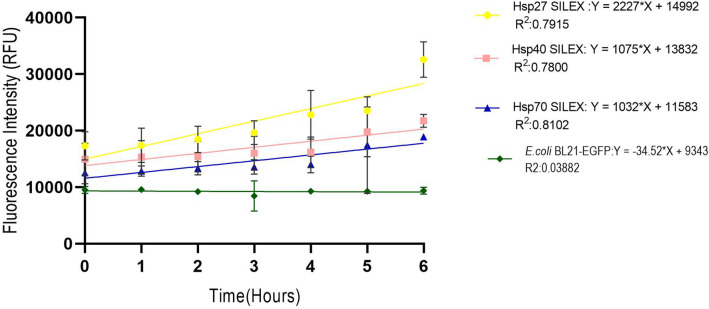
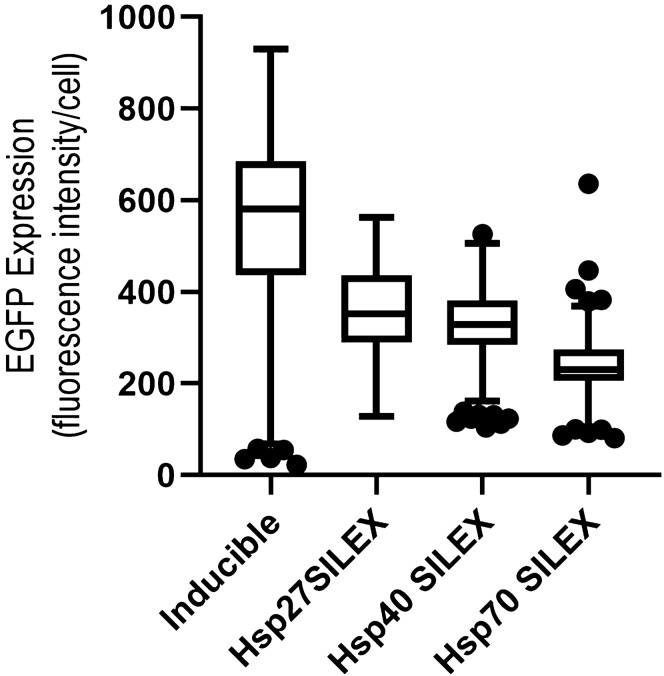
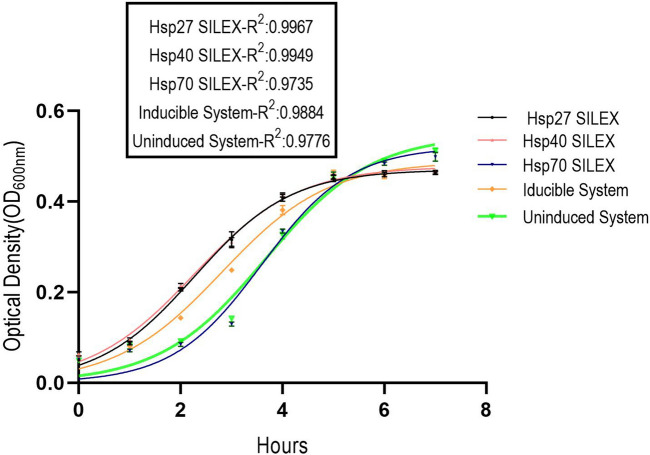
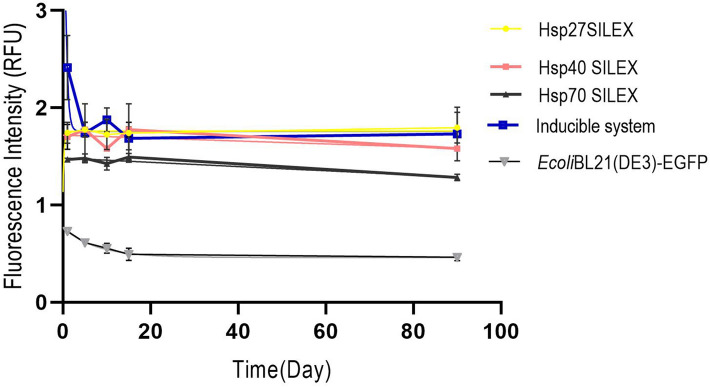
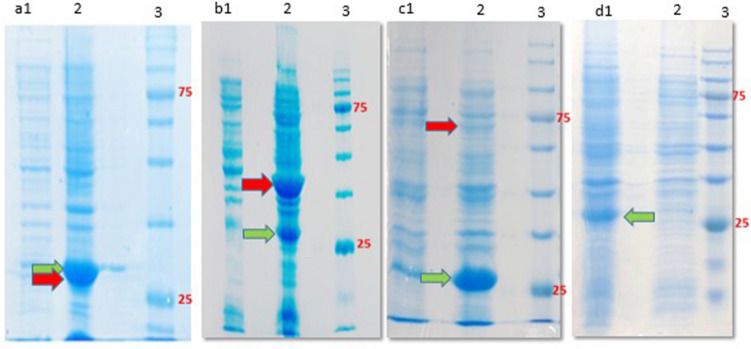
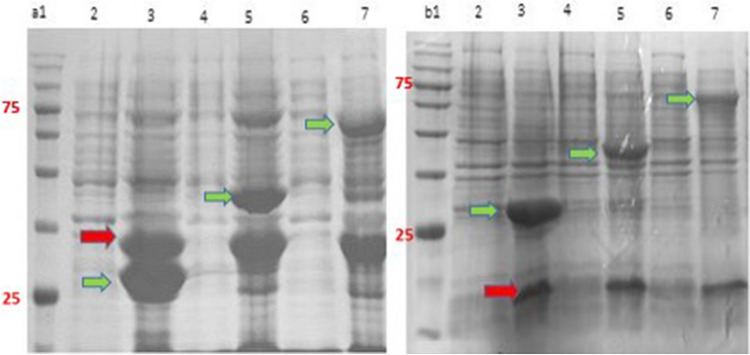
IPTG-inducible promoter is popularly used for the expression of recombinant proteins. However, it is not suitable at the industrial scale due to the high cost and toxicity on the producing cells. Recently, a Self-Inducible Expression (SILEX) system has developed to bypass such problems using Hsp70 as an autoinducer. Herein, the effect of other heat shock proteins on the autoinduction of green fluorescent protein (EGFP), romiplostim, and interleukin-2 was investigated. For quantitative measurements, EGFP expression was monitored after double-transformation of pET28a-EGFP and pET21a-(Hsp27/Hsp40/Hsp70) plasmids into E. coli using fluorimetry. Moreover, the expression level, bacterial growth curve, and plasmid and expression stability were compared to an IPTG- inducible system using EGFP. Statistical analysis revealed a significant difference in EGFP expression between autoinducible and IPTG-inducible systems. The expression level was higher in Hsp27 system than Hsp70/Hsp40 systems. However, the highest amount of expression was observed for the inducible system. IPTG-inducible and Hsp70 systems showed more lag-time in the bacterial growth curve than Hsp27/Hsp40 systems. A relatively stable EGFP expression was observed in SILEX systems after several freeze-thaw cycles within 90 days, while, IPTG-inducible system showed a decreasing trend compared to the newly transformed bacteria. Moreover, the inducible system showed more variation in the EGFP expression among different clones than clones obtained by SILEX systems. All designed SILEX systems successfully self-induced the expression of protein models. In conclusion, Hsp27 system could be considered as a suitable autoinducible system for protein expression due to less metabolic burden, lower variation in the expression level, suitable plasmid and expression stability, and a higher expression level.
IPTG 诱导启动子常用于表达重组蛋白。然而,由于其成本高和对生产细胞的毒性,在工业规模上并不适用。最近,开发了一种自诱导表达(SILEX)系统,使用 Hsp70 作为自动诱导剂来绕过这些问题。在此,研究了其他热休克蛋白对绿色荧光蛋白(EGFP)、罗米司亭和白细胞介素-2的自动诱导作用。为了进行定量测量,使用荧光法监测将 pET28a-EGFP 和 pET21a-(Hsp27/Hsp40/Hsp70)质粒双转化到大肠杆菌后 EGFP 的表达。此外,与使用 EGFP 的 IPTG 诱导系统相比,比较了表达水平、细菌生长曲线、质粒和表达稳定性。统计分析显示,自动诱导和 IPTG 诱导系统之间的 EGFP 表达有显著差异。在 Hsp27 系统中,表达水平高于 Hsp70/Hsp40 系统。然而,诱导系统的表达量最高。与 Hsp27/Hsp40 系统相比,IPTG 诱导和 Hsp70 系统的细菌生长曲线中的迟滞时间更长。在 90 天内进行多次冻融循环后,SILEX 系统中观察到相对稳定的 EGFP 表达,而与新转化的细菌相比,IPTG 诱导系统的表达呈下降趋势。此外,与 SILEX 系统获得的克隆相比,诱导系统中不同克隆之间的 EGFP 表达变化更大。所有设计的 SILEX 系统均成功地自我诱导了蛋白模型的表达。总之,由于代谢负担较小、表达水平变化较小、适合质粒和表达稳定性以及更高的表达水平,Hsp27 系统可以被认为是一种适合的蛋白表达的自动诱导系统。