Auzmendi-Iriarte Jaione, Matheu Ander
Cellular Oncology Group, Biodonostia Health Research Institute, San Sebastian, Spain.
CIBER de Fragilidad y Envejecimiento Saludable (CIBERfes), Madrid, Spain.
Front Aging Neurosci. 2021 Jan 28;12:630743. doi: 10.3389/fnagi.2020.630743. eCollection 2020.
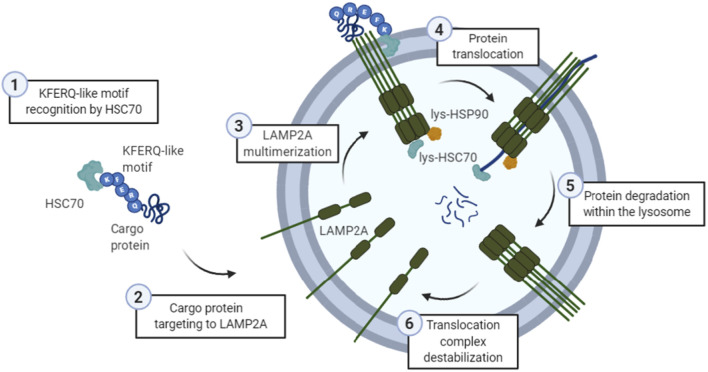
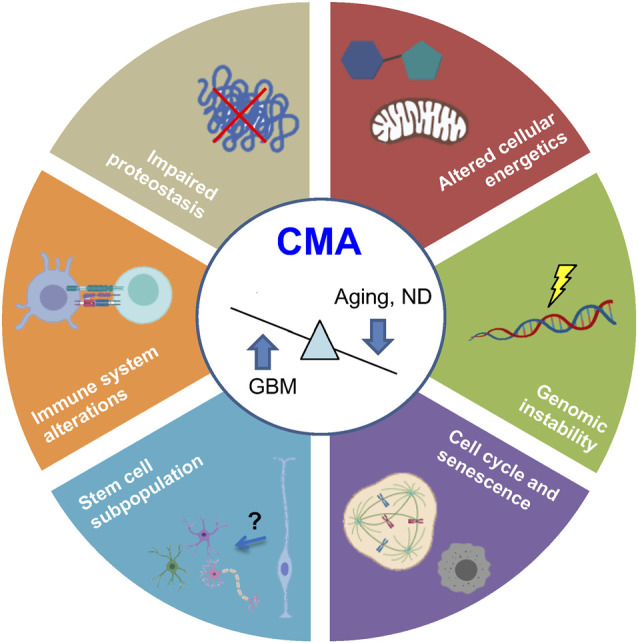
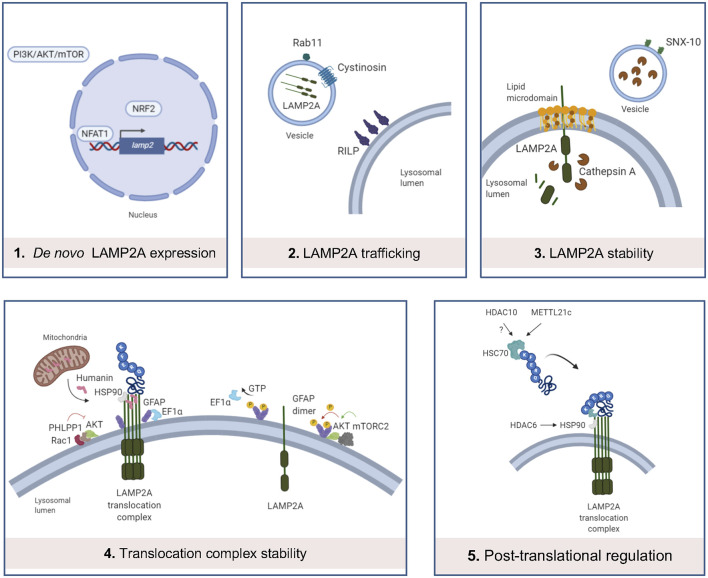
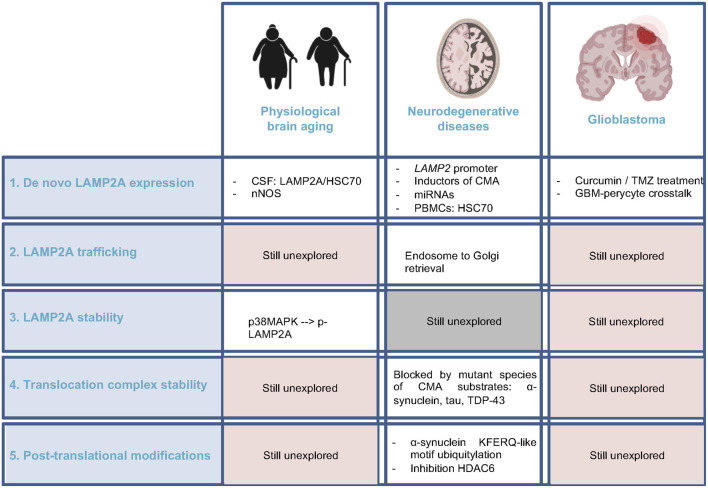
Brain aging is characterized by a time-dependent decline of tissue integrity and function, and it is a major risk for neurodegenerative diseases and brain cancer. Chaperone-mediated autophagy (CMA) is a selective form of autophagy specialized in protein degradation, which is based on the individual translocation of a cargo protein through the lysosomal membrane. Regulation of processes such as proteostasis, cellular energetics, or immune system activity has been associated with CMA, indicating its pivotal role in tissue homeostasis. Since first studies associating Parkinson's disease (PD) to CMA dysfunction, increasing evidence points out that CMA is altered in both physiological and pathological brain aging. In this review article, we summarize the current knowledge regarding the impact of CMA during aging in brain physiopathology, highlighting the role of CMA in neurodegenerative diseases and glioblastoma, the most common and aggressive brain tumor in adults.
脑老化的特征是组织完整性和功能随时间下降,它是神经退行性疾病和脑癌的主要风险因素。伴侣介导的自噬(CMA)是一种专门用于蛋白质降解的自噬选择性形式,它基于货物蛋白通过溶酶体膜的个体转运。诸如蛋白质稳态、细胞能量代谢或免疫系统活动等过程的调节已与CMA相关联,表明其在组织稳态中起关键作用。自从最初的研究将帕金森病(PD)与CMA功能障碍联系起来以来,越来越多的证据表明,CMA在生理性和病理性脑老化中均发生改变。在这篇综述文章中,我们总结了关于CMA在脑生理病理学老化过程中的影响的当前知识,强调了CMA在神经退行性疾病和胶质母细胞瘤(成人群体中最常见且侵袭性最强的脑肿瘤)中的作用。