Evans School of Public Policy and Governance, University of Washington, Seattle, Washington, USA.
Vera Institute of Justice, New York, NY, USA.
Int J Prison Health. 2020 Jul 15;16(3):263-279. doi: 10.1108/IJPH-01-2020-0005.
This paper aims to determine whether criminal justice (CJ) stigma affects health outcomes and health care utilization.
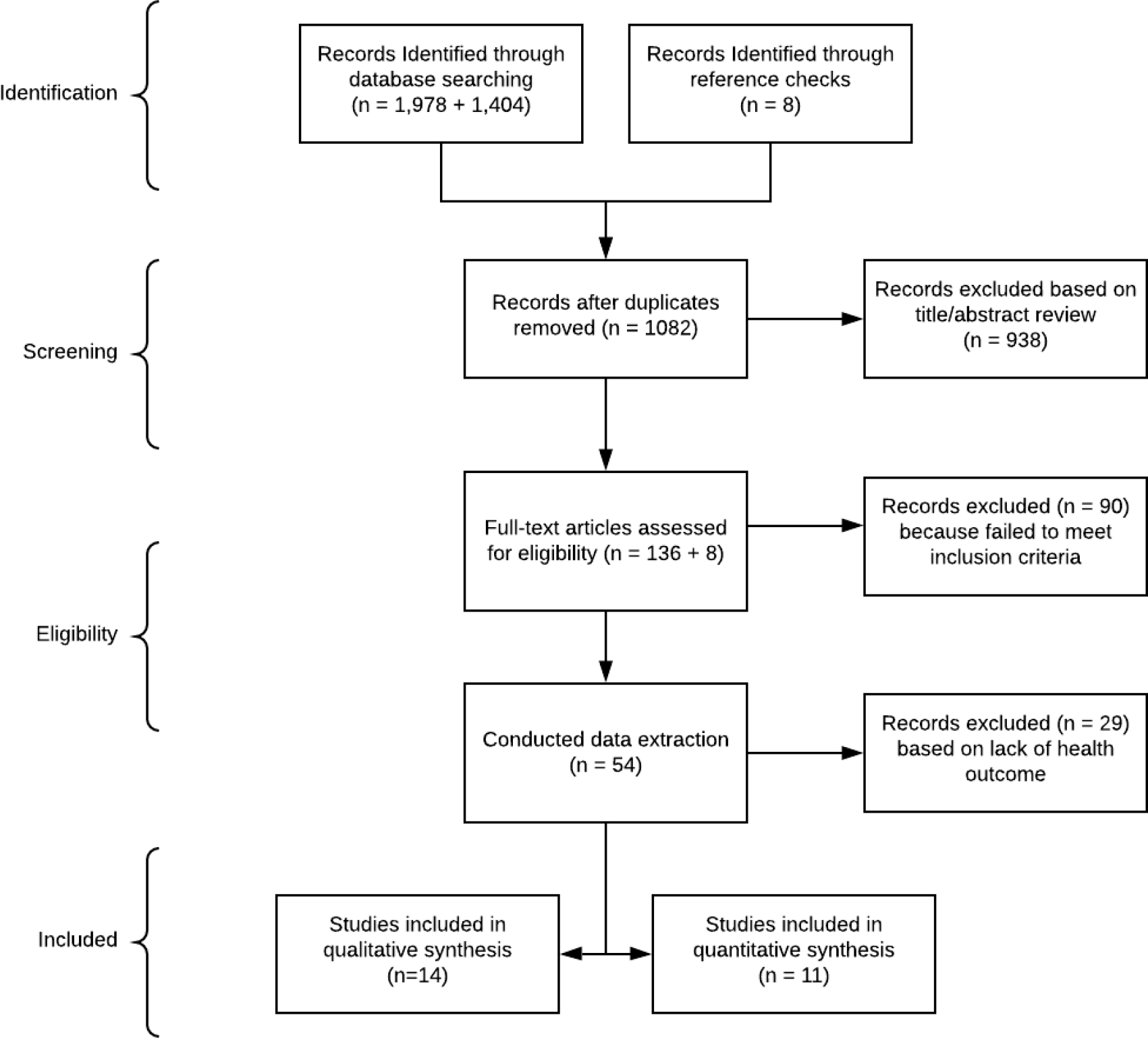
DESIGN/METHODOLOGY/APPROACH: The authors reviewed medical and public health literature through May 2020. Structured terms were used to search four databases identifying articles that related to CJ stigma. Included articles were in English, examined CJ stigma and had people with CJ involvement as subjects. The studies without health outcomes were excluded. Quantitative and qualitative studies were reviewed and assessed for bias. Results were synthesized into a systematic review.
The search yielded 25 studies relating to CJ stigma and health. Three stigma domains were described in the literature: perceived or enacted, internalized and anticipated stigma. Tenuous evidence linked CJ stigma to health directly (psychological symptoms) and indirectly (social isolation, health care utilization, high-risk behaviors and housing or employment). Multiple stigmatized identities may interact to affect health and health care utilization.
RESEARCH LIMITATIONS/IMPLICATIONS: Few studies examined CJ stigma and health. Articles used various measures of CJ stigma, but psychometric properties for instruments were not presented. Prospective studies with standard validated measures are needed.
Understanding whether and how CJ stigma affects health and health care utilization will be critical for developing health-promoting interventions for people with CJ involvement. Practical interventions could target stigma-related psychological distress or reduce health care providers' stigmatizing behaviors.
ORIGINALITY/VALUE: This was the first systematic review of CJ stigma and health. By providing a summary of the current evidence and identifying consistent findings and gaps in the literature, this review provides direction for future research and highlights implications for policy and practice.
本文旨在确定刑事司法(CJ)耻辱感是否会影响健康结果和卫生保健利用。
设计/方法/途径:作者通过 2020 年 5 月检索了医学和公共卫生文献。使用结构化术语搜索了四个数据库,以确定与 CJ 耻辱感相关的文章。纳入的文章为英文,检查了 CJ 耻辱感,并将涉及 CJ 的人作为研究对象。排除了没有健康结果的研究。审查了定量和定性研究,并评估了偏倚。结果综合为系统评价。
搜索结果涉及 CJ 耻辱感和健康的 25 项研究。文献中描述了三个耻辱感领域:感知或实施、内化和预期耻辱感。间接证据表明 CJ 耻辱感与健康直接(心理症状)和间接(社会隔离、卫生保健利用、高风险行为和住房或就业)相关。多种耻辱化身份可能相互作用影响健康和卫生保健利用。
研究局限性/影响:很少有研究检查 CJ 耻辱感和健康。文章使用了各种 CJ 耻辱感措施,但未呈现仪器的心理测量特性。需要进行前瞻性研究,使用标准验证措施。
了解 CJ 耻辱感是否以及如何影响健康和卫生保健利用,对于为涉及 CJ 的人制定促进健康的干预措施至关重要。实际干预措施可以针对与耻辱感相关的心理困扰,或减少卫生保健提供者的耻辱化行为。
原创性/价值:这是对 CJ 耻辱感和健康的首次系统评价。通过总结当前证据并确定文献中的一致发现和差距,本综述为未来研究提供了方向,并强调了对政策和实践的影响。