
基于 GEO 数据集和文本挖掘的潜在脑胶质瘤相关基因和药物的计算筛选。
Computational screening of potential glioma-related genes and drugs based on analysis of GEO dataset and text mining.
机构信息
Department of Neurosurgery, Xiamen Key Laboratory of Brain Center, the First Affiliated Hospital of Xiamen University, Xiamen, China.
Institute of Neurosurgery, School of Medicine, Xiamen University, Xiamen, China.
出版信息
PLoS One. 2021 Feb 26;16(2):e0247612. doi: 10.1371/journal.pone.0247612. eCollection 2021.
BACKGROUND
Considering the high invasiveness and mortality of glioma as well as the unclear key genes and signaling pathways involved in the development of gliomas, there is a strong need to find potential gene biomarkers and available drugs.
METHODS
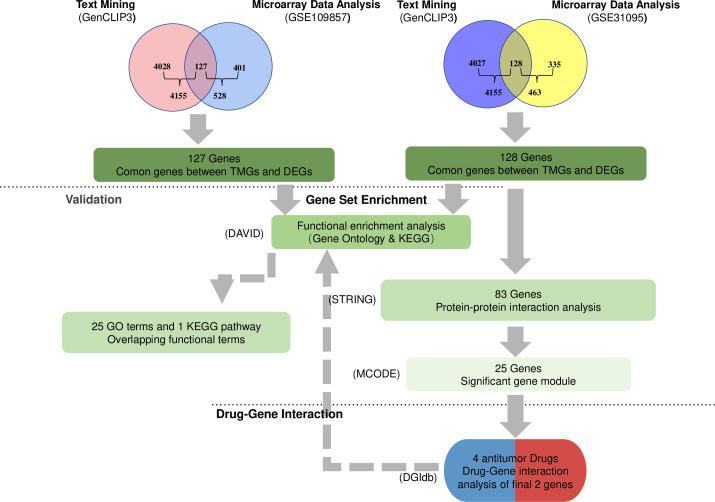
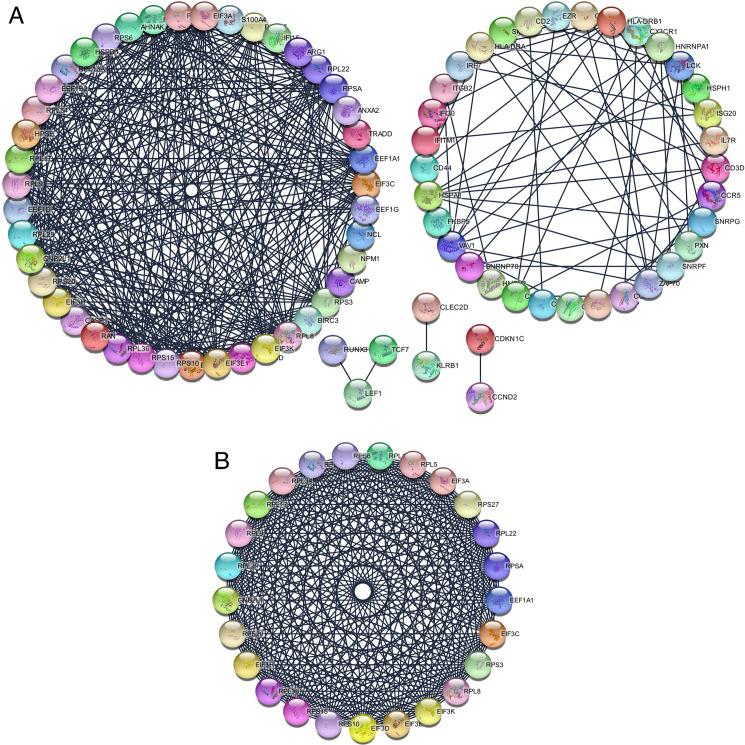
Eight glioma samples and twelve control samples were analyzed on the GSE31095 datasets, and differentially expressed genes (DEGs) were obtained via the R software. The related glioma genes were further acquired from the text mining. Additionally, Venny program was used to screen out the common genes of the two gene sets and DAVID analysis was used to conduct the corresponding gene ontology analysis and cell signal pathway enrichment. We also constructed the protein interaction network of common genes through STRING, and selected the important modules for further drug-gene analysis. The existing antitumor drugs that targeted these module genes were screened to explore their efficacy in glioma treatment.
RESULTS
The gene set obtained from text mining was intersected with the previously obtained DEGs, and 128 common genes were obtained. Through the functional enrichment analysis of the identified 128 DEGs, a hub gene module containing 25 genes was obtained. Combined with the functional terms in GSE109857 dataset, some overlap of the enriched function terms are both in GSE31095 and GSE109857. Finally, 4 antitumor drugs were identified through drug-gene interaction analysis.
CONCLUSIONS
In this study, we identified that two potential genes and their corresponding four antitumor agents could be used as targets and drugs for glioma exploration.
背景
鉴于脑胶质瘤的高侵袭性和高死亡率,以及脑胶质瘤发生过程中涉及的关键基因和信号通路尚不清楚,因此强烈需要寻找潜在的基因生物标志物和可用的药物。
方法
在 GSE31095 数据集上分析了 8 个脑胶质瘤样本和 12 个对照样本,通过 R 软件获得差异表达基因(DEGs)。通过文本挖掘进一步获得相关的脑胶质瘤基因。此外,使用 Venny 程序筛选出两个基因集的共同基因,并用 DAVID 分析进行相应的基因本体分析和细胞信号通路富集。我们还通过 STRING 构建了共同基因的蛋白质相互作用网络,并选择重要的模块进行进一步的药物-基因分析。筛选针对这些模块基因的现有抗肿瘤药物,以探讨其在治疗脑胶质瘤中的疗效。
结果
通过文本挖掘获得的基因集与之前获得的 DEGs 进行了交集,得到了 128 个共同基因。通过对鉴定的 128 个 DEGs 的功能富集分析,得到了一个包含 25 个基因的核心基因模块。结合 GSE109857 数据集的功能术语,在 GSE31095 和 GSE109857 中都有一些富集功能术语的重叠。最后,通过药物-基因相互作用分析,鉴定出 4 种抗肿瘤药物。
结论
在这项研究中,我们鉴定了两个潜在的基因及其对应的四种抗肿瘤药物,可作为脑胶质瘤探索的靶点和药物。


 Zotero 插件