Department of Pharmacology and Toxicology, School of Pharmacy, Ardabil University of Medical Sciences, Ardabil, Iran.
Traditional Medicine and Hydrotherapy Research Center, Ardabil University of Medical Sciences, Ardabil, Iran.
PLoS One. 2021 Feb 26;16(2):e0247776. doi: 10.1371/journal.pone.0247776. eCollection 2021.
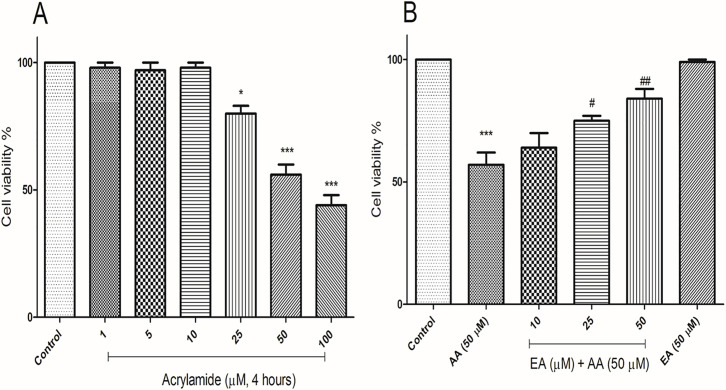
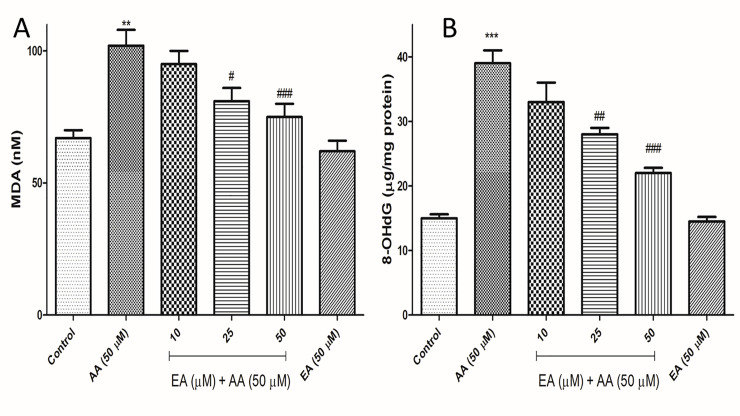
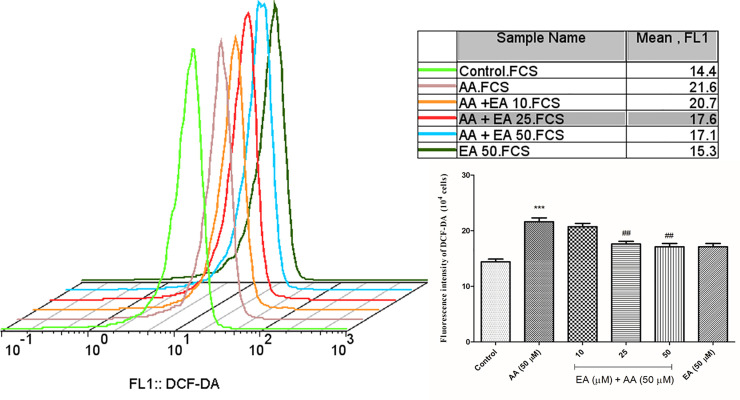
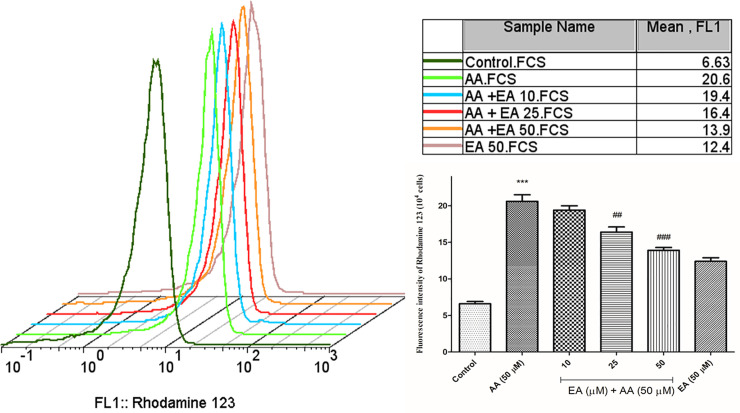
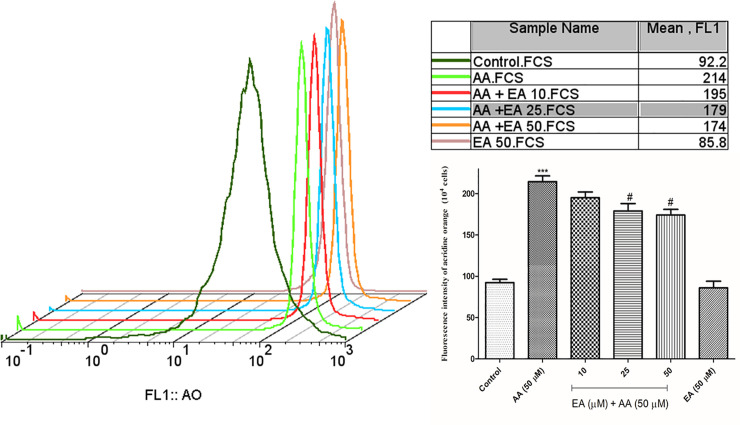
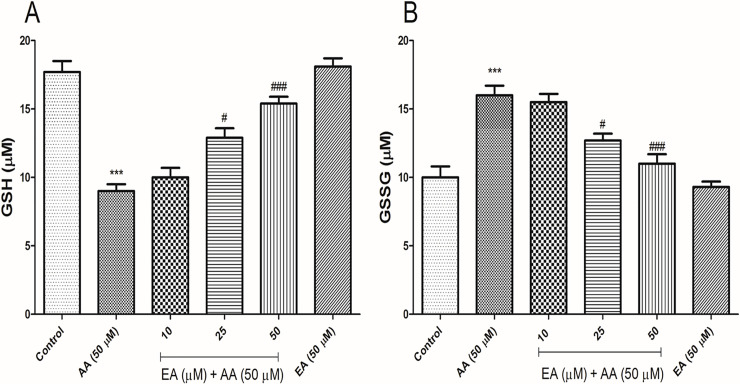
Acrylamide (AA), is an important contaminant formed during food processing under high temperature. Due to its potential neurotoxicity, reproductive toxicity, hepatotoxicity, immunotoxicity, genotoxicity and carcinogenicity effects, this food contaminant has been recognized as a human health concern. Previous studies showed that acrylamide-induced toxicity is associated with active metabolite of acrylamide by cytochrome P450 enzyme, oxidative stress, mitochondrial dysfunction and DNA damage. In the current study, we investigated the role of oxidative stress in acrylamide's genotoxicity and therapeutic potential role of ellagic acid (EA) in human lymphocytes. Human lymphocytes were simultaneously treated with different concentrations of EA (10, 25 and 50 μM) and acrylamide (50 μM) for 4 h at 37°C. After 4 hours of incubation, the toxicity parameters such cytotoxicity, ROS formation, oxidized/reduced glutathione (GSH/GSSG) content, malondialdehyde (MDA) level, lysosomal membrane integrity, mitochondria membrane potential (ΔΨm) collapse and 8-hydroxy-2'-deoxyguanosine (8-OHdG) were analyzed using biochemical and flow cytometry evaluations. It has been found that acrylamide (50 μM) significantly increased cytotoxicity, ROS formation, GSH oxidation, lipid peroxidation, MMP collapse, lysosomal and DNA damage in human lymphocytes. On the other hand, cotreatment with EA (25 and 50 μM) inhibited AA-induced oxidative stress which subsequently led to decreasing of the cytotoxicity, GSH oxidation, lipid peroxidation, MMP collapse, lysosomal and DNA damage. Together, these results suggest that probably the co-exposure of EA with foods containing acrylamide could decrease mitochondrial, lysosomal and DNA damages, and oxidative stress induced by acrylamide in human body.
丙烯酰胺(AA)是在高温下加工食品时形成的一种重要污染物。由于其潜在的神经毒性、生殖毒性、肝毒性、免疫毒性、遗传毒性和致癌性,这种食品污染物已被认为是对人类健康的关注。先前的研究表明,丙烯酰胺诱导的毒性与细胞色素 P450 酶的活性代谢物、氧化应激、线粒体功能障碍和 DNA 损伤有关。在本研究中,我们研究了氧化应激在丙烯酰胺遗传毒性中的作用以及鞣花酸(EA)在人淋巴细胞中的治疗潜力。人淋巴细胞同时用不同浓度的 EA(10、25 和 50 μM)和丙烯酰胺(50 μM)在 37°C 下处理 4 小时。孵育 4 小时后,使用生化和流式细胞术评估细胞毒性、ROS 形成、氧化/还原谷胱甘肽(GSH/GSSG)含量、丙二醛(MDA)水平、溶酶体膜完整性、线粒体膜电位(ΔΨm)崩溃和 8-羟基-2'-脱氧鸟苷(8-OHdG)等毒性参数。结果发现,丙烯酰胺(50 μM)显著增加了人淋巴细胞的细胞毒性、ROS 形成、GSH 氧化、脂质过氧化、MMP 崩溃、溶酶体和 DNA 损伤。另一方面,EA(25 和 50 μM)的共处理抑制了 AA 诱导的氧化应激,随后降低了细胞毒性、GSH 氧化、脂质过氧化、MMP 崩溃、溶酶体和 DNA 损伤。总之,这些结果表明,EA 与含丙烯酰胺的食物共同暴露可能会降低人体中线粒体、溶酶体和 DNA 的损伤以及丙烯酰胺诱导的氧化应激。