Joshi Shruti S, Singh Trisha, Newby David E, Singh Jagdeep
BHF Centre for Cardiovascular Science, The University of Edinburgh, Edinburgh, UK
BHF Centre for Cardiovascular Science, The University of Edinburgh, Edinburgh, UK.
Heart. 2021 Jun 11;107(13):1032-1038. doi: 10.1136/heartjnl-2020-318060.
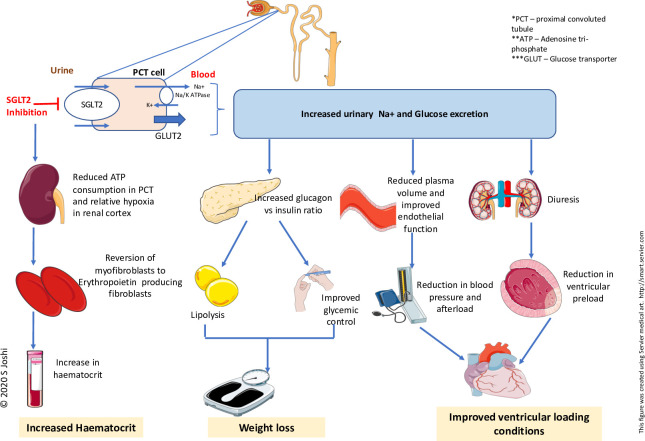
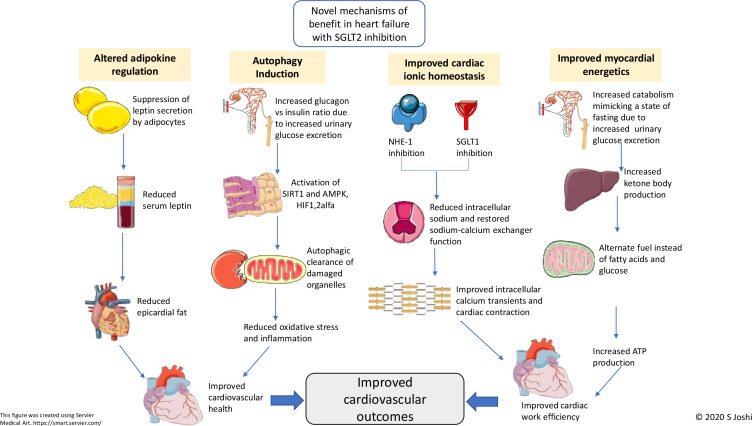
Patients with type 2 diabetes mellitus are at a higher risk of developing heart failure compared with the healthy population. In recent landmark clinical trials, sodium-glucose co-transporter 2 (SGLT2) inhibitor therapies improve blood glucose control and also reduce cardiovascular events and heart failure hospitalisations in patients with type 2 diabetes. Intriguingly, such clinical benefits have also been seen in patients with heart failure in the absence of type 2 diabetes although the underlying mechanisms are not clearly understood. Potential pathways include improved glycaemic control, diuresis, weight reduction and reduction in blood pressure, but none fully explain the observed improvements in clinical outcomes. More recently, novel mechanisms have been proposed to explain these benefits that include improved cardiomyocyte calcium handling, enhanced myocardial energetics, induced autophagy and reduced epicardial fat. We provide an up-to-date review of cardiac-specific SGLT2 inhibitor-mediated mechanisms and highlight studies currently underway investigating some of the proposed mechanisms of action in cardiovascular health and disease.
与健康人群相比,2型糖尿病患者发生心力衰竭的风险更高。在最近具有里程碑意义的临床试验中,钠-葡萄糖协同转运蛋白2(SGLT2)抑制剂疗法可改善血糖控制,并减少2型糖尿病患者的心血管事件和心力衰竭住院率。有趣的是,在没有2型糖尿病的心力衰竭患者中也观察到了此类临床益处,尽管其潜在机制尚不清楚。潜在途径包括改善血糖控制、利尿、体重减轻和血压降低,但这些都无法完全解释所观察到的临床结局改善情况。最近,有人提出了新的机制来解释这些益处,包括改善心肌细胞钙处理、增强心肌能量代谢、诱导自噬和减少心外膜脂肪。我们对心脏特异性SGLT2抑制剂介导的机制进行了最新综述,并重点介绍了目前正在进行的一些研究,这些研究正在探究心血管健康和疾病中一些提出的作用机制。