Chen Xingren, Zhu Xiaobo, Wei Ai, Chen Fang, Gao Qi, Lu Ke, Jiang Qing, Cao Wangsen
Department of Sports Medicine and Adult Reconstructive Surgery, State Key Laboratory of Pharmaceutical Biotechnology, The Affiliated Nanjing Drum Tower Hospital of Nanjing University Medical School, Nanjing, 210008, China.
Center for Organ Fibrosis and Remodeling Research, Jiangsu Key Lab of Molecular Medicine, Nanjing University Medical School, Nanjing, 210093, China.
Bone Res. 2021 Feb 26;9(1):15. doi: 10.1038/s41413-020-00128-8.
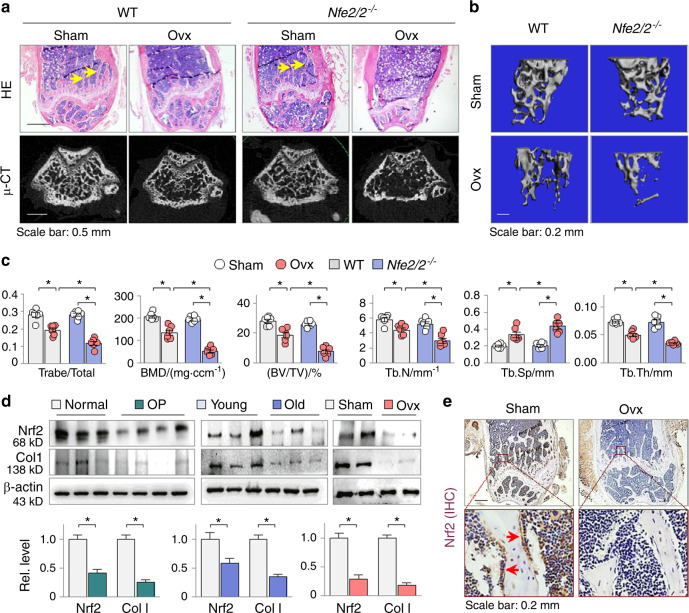
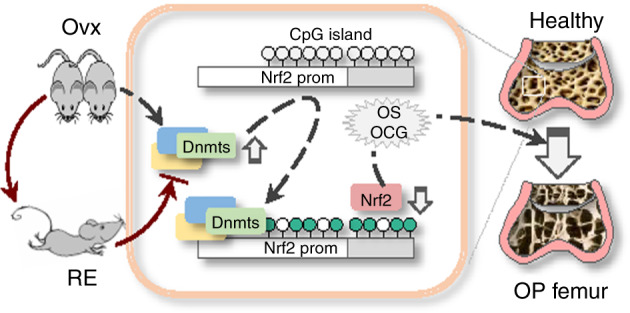
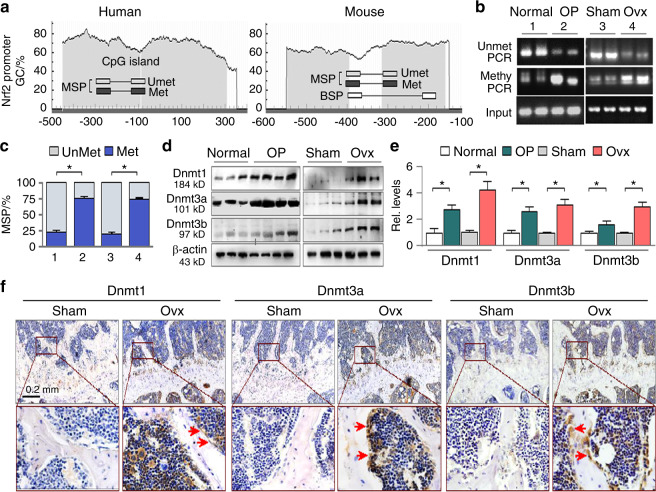
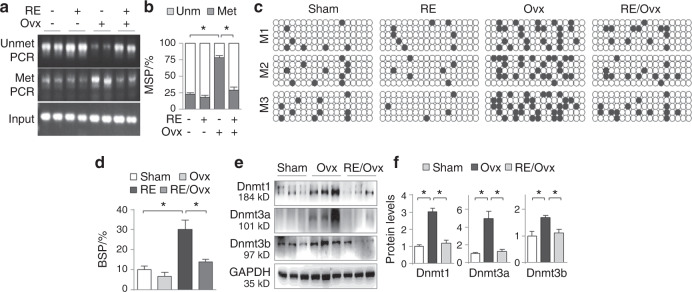
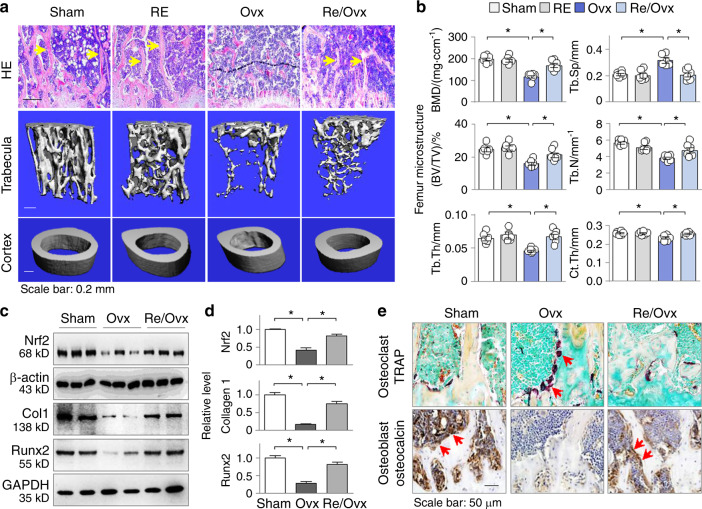
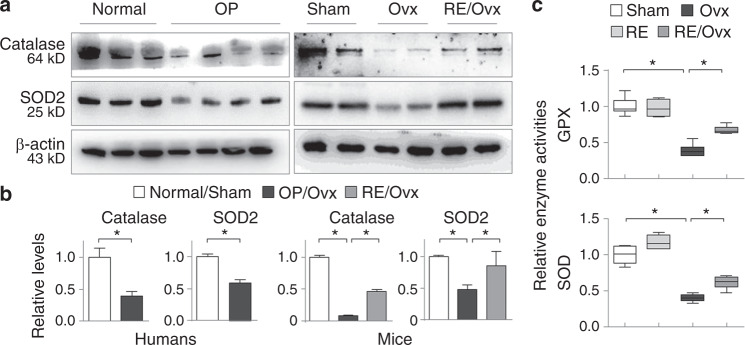
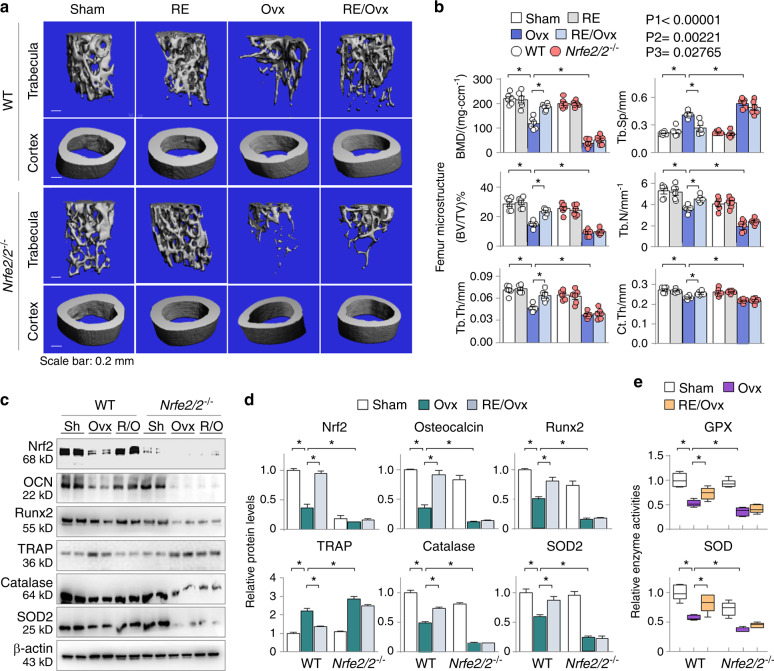
Osteoporosis (OP) is a common skeletal disease involving low bone mineral density (BMD) that often leads to fragility fracture, and its development is affected by multiple cellular pathologies and associated with marked epigenetic alterations of osteogenic genes. Proper physical exercise is beneficial for bone health and OP and reportedly possesses epigenetic modulating capacities; however, whether the protective effects of exercise on OP involve epigenetic mechanisms is unclear. Here, we report that epigenetic derepression of nuclear factor erythroid derived 2-related factor-2 (Nrf2), a master regulator of oxidative stress critically involved in the pathogenesis of OP, mediates the significant osteoprotective effects of running exercise (RE) in a mouse model of OP induced by ovariectomy. We showed that Nrf2 gene knockout (Nfe2l2) ovariectomized mice displayed a worse BMD reduction than the controls, identifying Nrf2 as a critical antiosteoporotic factor. Further, femoral Nrf2 was markedly repressed with concomitant DNA methyltransferase (Dnmt) 1/Dnmt3a/Dnmt3b elevations and Nrf2 promoter hypermethylation in both patients with OP and ovariectomized mice. However, daily 1-h treadmill RE significantly corrected epigenetic alterations, recovered Nrf2 loss and improved the femur bone mass and trabecular microstructure. Consistently, RE also normalized the adverse expression of major osteogenic factors, including osteoblast/osteoclast markers, Nrf2 downstream antioxidant enzymes and proinflammatory cytokines. More importantly, the RE-conferred osteoprotective effects observed in the wild-type control mice were largely abolished in the Nfe2l2 mice. Thus, Nrf2 repression due to aberrant Dnmt elevation and subsequent Nrf2 promoter hypermethylation is likely an important epigenetic feature of the pathogenesis of OP, and Nrf2 derepression is essential for the antiosteoporotic effects of RE.
骨质疏松症(OP)是一种常见的骨骼疾病,涉及骨矿物质密度(BMD)降低,常导致脆性骨折,其发展受多种细胞病变影响,并与成骨基因的显著表观遗传改变相关。适当的体育锻炼有益于骨骼健康和OP,据报道具有表观遗传调节能力;然而,运动对OP的保护作用是否涉及表观遗传机制尚不清楚。在此,我们报告,核因子红细胞衍生2相关因子2(Nrf2)的表观遗传去抑制,这是一种氧化应激的主要调节因子,在OP发病机制中起关键作用,介导了跑步运动(RE)在卵巢切除诱导的OP小鼠模型中的显著骨保护作用。我们发现,Nrf2基因敲除(Nfe2l2)的去卵巢小鼠的BMD降低比对照组更严重,确定Nrf2为关键的抗骨质疏松因子。此外,在OP患者和去卵巢小鼠中,股骨Nrf2均被显著抑制,同时DNA甲基转移酶(Dnmt)1/Dnmt3a/Dnmt3b升高,Nrf2启动子高甲基化。然而,每天1小时的跑步机RE显著纠正了表观遗传改变,恢复了Nrf2缺失,改善了股骨骨量和小梁微结构。一致地,RE还使主要成骨因子的不良表达正常化,包括成骨细胞/破骨细胞标志物、Nrf2下游抗氧化酶和促炎细胞因子。更重要的是,在野生型对照小鼠中观察到的RE赋予的骨保护作用在Nfe2l2小鼠中基本消除。因此,由于异常的Dnmt升高和随后的Nrf2启动子高甲基化导致的Nrf2抑制可能是OP发病机制的一个重要表观遗传特征,Nrf2去抑制对于RE的抗骨质疏松作用至关重要。