Department of Orthopaedics, University Clinic Aachen, RWTH Aachen University Clinic, Aachen, Germany.
Department of Spine Surgery, Eifelklinik St. Brigida, Simmerath, Germany.
Eur Spine J. 2021 Jul;30(7):1998-2006. doi: 10.1007/s00586-021-06768-6. Epub 2021 Feb 27.
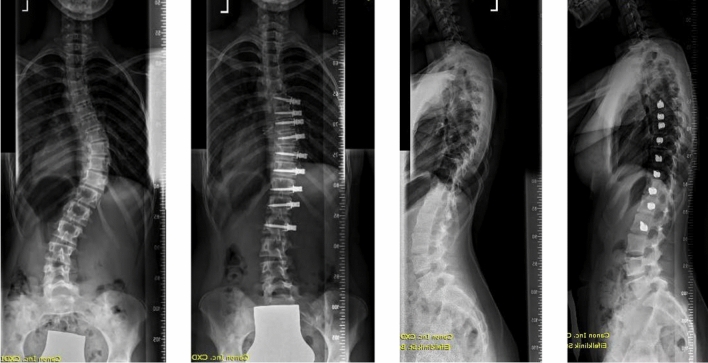
Vertebral body tethering (VBT) is an alternative to fusion for selected scoliosis patients. As VBT does not limit spine mobility, it has been propagated that this technique allows a quicker return to physical activity than fusion. However, no data are available to support this statement. Aim of this study was to quantify how much time patients required to resume preoperative activity level and to seek possible associations between return to physical activity and demographic, radiographic and surgical data.
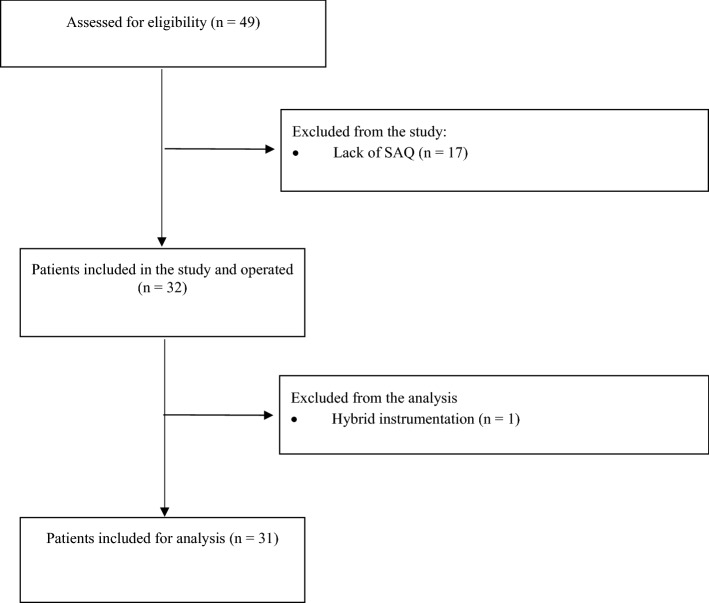
One year postoperatively, the validated sport activity questionnaire (SAQ) was administered to all skeletally immature patients who underwent VBT at our institution. SAQ data were analyzed and a multivariate analysis was conducted to investigate associations between SAQ and demographic, radiographic and surgical data.
Thirty-one patients aged 14.5 years completed the SAQ. Within 3 months from VBT, 97% returned to school, 61% resumed physical education, 97% carried a backpack, 68% run, and 82% rode a bike; 70% bent within a month from VBT. Ninety-four percent of patients returned to their preoperative athletic level. Within 3 months, 63% of responders resumed noncontact, 61% contact and 53% collision sports. No relevant associations were observed between the SAQ and demographic, radiographic and surgical data. In particular, number of instrumented vertebrae, level of the lowest instrumented vertebra and postoperative Cobb angle did not influence patients' return to preoperative activities.
VBT allows patients to quickly return to their preoperative activity level, irrespectively of the postoperative Cobb angle or type of instrumentation.
椎体拴系术(VBT)是一种替代融合术的方法,适用于某些脊柱侧凸患者。由于 VBT 不限制脊柱的活动度,因此有人认为该技术比融合术能更快地恢复体力活动。然而,目前尚无数据支持这一说法。本研究旨在量化患者恢复术前活动水平所需的时间,并探讨与体力活动恢复相关的可能因素,包括人口统计学、影像学和手术数据。
术后 1 年,对在我院接受 VBT 的所有骨骼未成熟患者进行了经过验证的运动活动问卷(SAQ)调查。分析了 SAQ 数据,并进行了多变量分析,以研究 SAQ 与人口统计学、影像学和手术数据之间的关联。
31 名年龄为 14.5 岁的患者完成了 SAQ。VBT 后 3 个月内,97%的患者返校,61%恢复体育教育,97%携带背包,68%跑步,82%骑自行车;70%的患者在 VBT 后 1 个月内弯腰。94%的患者恢复到术前的运动水平。术后 3 个月内,63%的应答者恢复了非接触性运动,61%恢复了接触性运动,53%恢复了碰撞性运动。SAQ 与人口统计学、影像学和手术数据之间没有观察到显著关联。特别是,器械固定的椎体数量、最低固定椎体的水平和术后 Cobb 角均不影响患者恢复术前活动。
VBT 可使患者快速恢复到术前的活动水平,与术后 Cobb 角或器械类型无关。