BGI College, Zhengzhou University, Zhengzhou, 450001, China.
School of Life Sciences, Zhengzhou University, Zhengzhou, 450001, China.
BMC Med Genomics. 2021 Feb 27;14(1):61. doi: 10.1186/s12920-021-00906-1.
Congenital hearing loss is one of the most common birth defects. Early identification and management play a crucial role in improving patients' communication and language acquisition. Previous studies demonstrated that genetic screening complements newborn hearing screening in clinical settings.
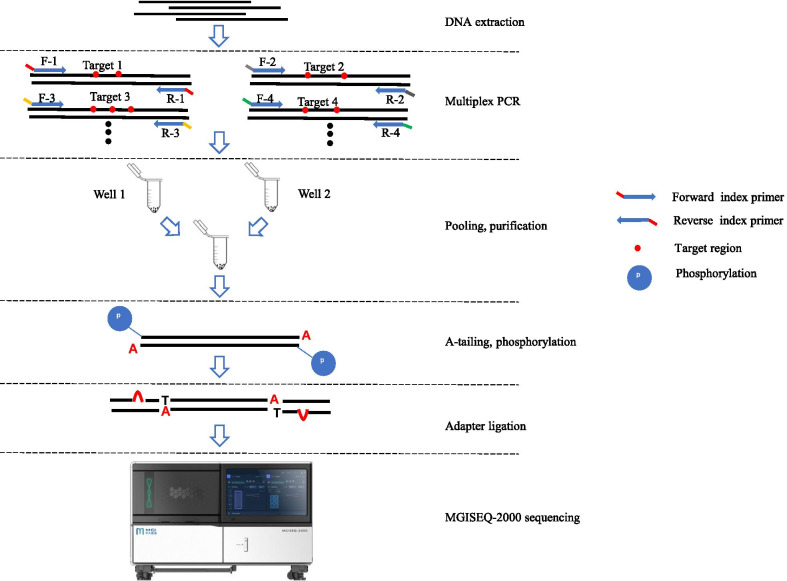
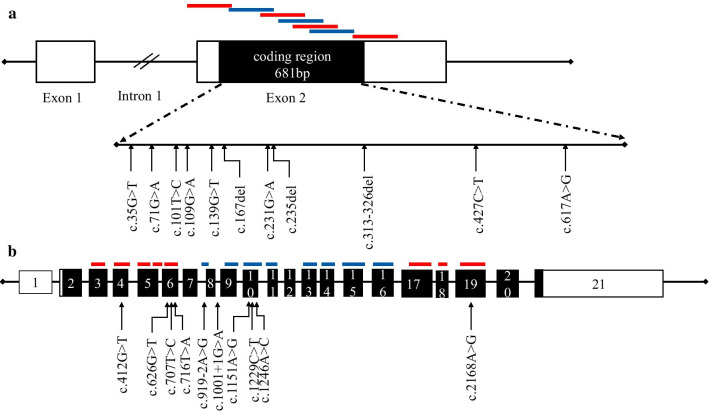
We developed a multiplex PCR amplicon sequencing assay to sequence the full coding region of the GJB2 gene, the most pathogenic variants of the SLC26A4 gene, and hotspot variants in the MT-RNR1 gene. The sensitivity, specificity, and reliability were validated via samples with known genotypes. Finally, a pilot study was performed on 300 anonymous dried blood samples.
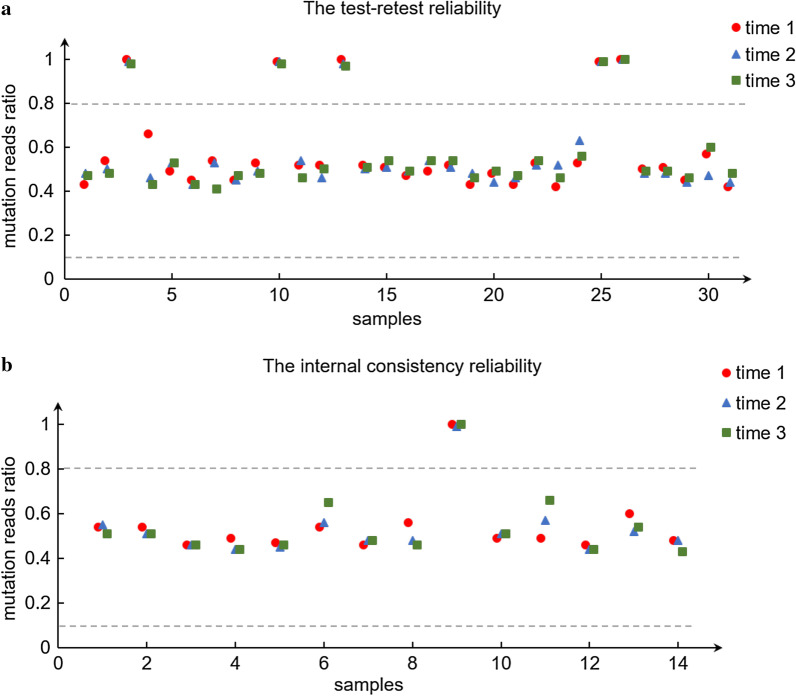
Of 103 samples with known genotypes, the multiplex PCR amplicon sequencing assay accurately identified all the variants, demonstrating a 100% sensitivity and specificity. The consistency is high in the analysis of the test-retest reliability and internal consistency reliability. In the pilot study, 12.3% (37/300) of the newborns were found to carry at least one pathogenic variant, including 24, 10, and 3 from the GJB2, SLC26A4, and MT-RNR1 gene, respectively. With an allele frequency of 2.2%, the NM_004004.6(GJB2):c.109G>A was the most prevalent variant in the study population.
The multiplex PCR amplicon sequencing assay is an accurate and reliable test to detect hearing loss variants in the GJB2, SLC26A4, and MT-RNR1 genes. It can be used to screen genetic hearing loss in newborns.
先天性听力损失是最常见的出生缺陷之一。早期识别和管理对改善患者的沟通和语言习得能力至关重要。先前的研究表明,遗传筛查在临床环境中补充了新生儿听力筛查。
我们开发了一种多重 PCR 扩增子测序分析方法,用于对 GJB2 基因的完整编码区、SLC26A4 基因的最常见致病性变异体以及 MT-RNR1 基因中的热点变异体进行测序。通过具有已知基因型的样本验证了敏感性、特异性和可靠性。最后,对 300 份匿名干血斑样本进行了试点研究。
在 103 个具有已知基因型的样本中,多重 PCR 扩增子测序分析准确地识别了所有的变异体,显示出 100%的敏感性和特异性。在测试-再测试可靠性和内部一致性可靠性的分析中,一致性很高。在试点研究中,发现 12.3%(37/300)的新生儿携带至少一种致病性变异体,分别来自 GJB2、SLC26A4 和 MT-RNR1 基因的 24、10 和 3 个。在研究人群中,最常见的变异体是 NM_004004.6(GJB2):c.109G>A,其等位基因频率为 2.2%。
多重 PCR 扩增子测序分析是一种准确可靠的检测 GJB2、SLC26A4 和 MT-RNR1 基因中听力损失变异体的方法。它可用于筛查新生儿遗传性听力损失。