Department of Dermatology, SUNY Downstate Medical Center, Brooklyn, New York; Dermatology Service, VA New York Harbor Healthcare System, Brooklyn Campus, Brooklyn, New York.
CUNY School of Medicine, New York, New York.
J Am Acad Dermatol. 2021 May;84(5):1219-1231. doi: 10.1016/j.jaad.2021.02.048. Epub 2021 Feb 25.
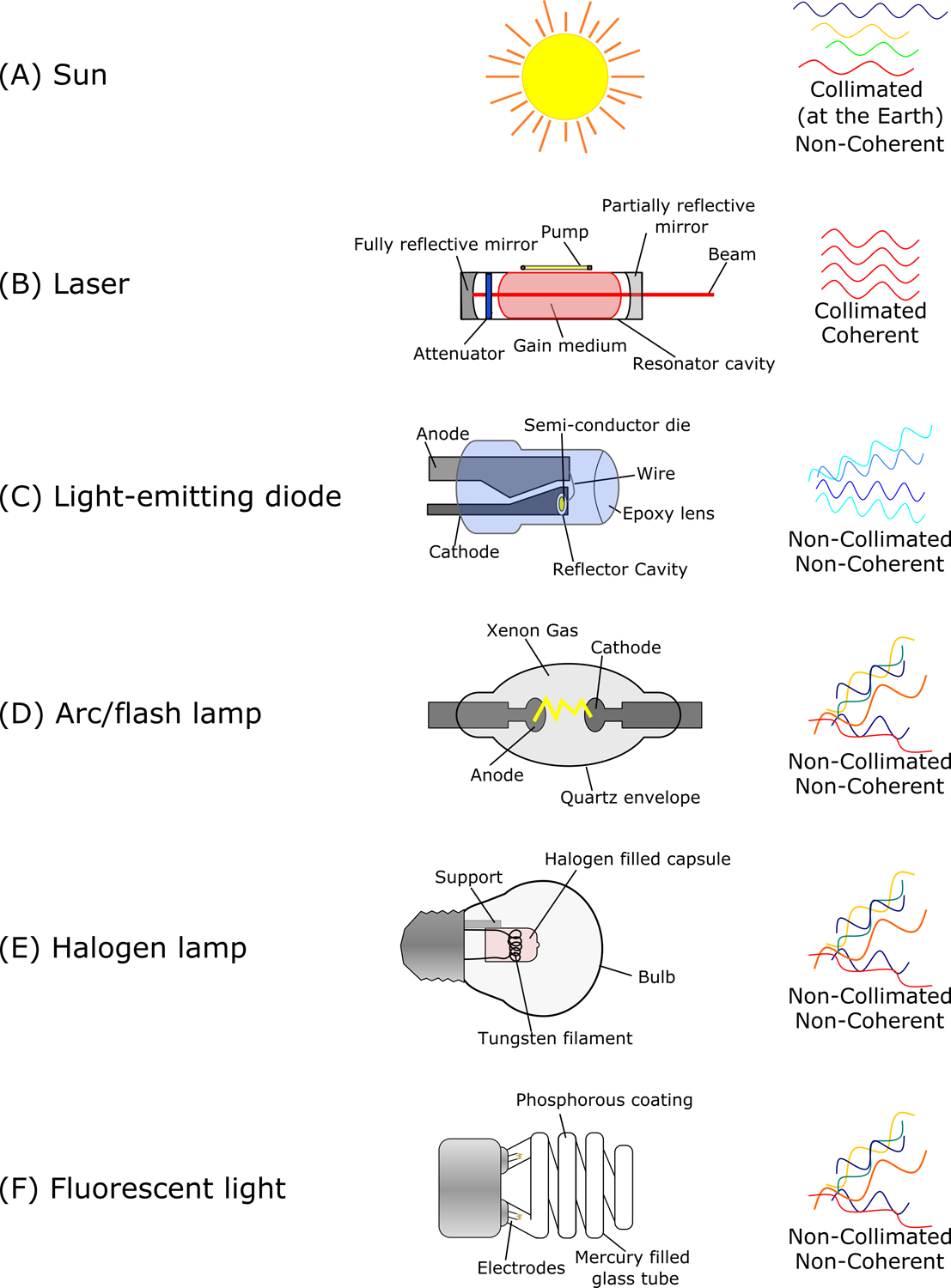
Approximately 50% of the sunlight reaching the Earth's surface is visible light (400-700 nm). Other sources of visible light include lasers, light-emitting diodes, and flash lamps. Photons from visible light are absorbed by photoreceptive chromophores (e.g., melanin, heme, and opsins), altering skin function by activating and imparting energy to chromophores. Additionally, visible light can penetrate the full thickness of the skin and induce pigmentation and erythema. Clinically, lasers and light devices are used to treat skin conditions by utilizing specific wavelengths and treatment parameters. Red and blue light from light-emitting diodes and intense pulsed light have been studied as antimicrobial and anti-inflammatory treatments for acne. Pulsed dye lasers are used to treat vascular lesions in adults and infants. Further research is necessary to determine the functional significance of visible light on skin health without confounding the influence of ultraviolet and infrared wavelengths.
到达地球表面的阳光大约有 50%是可见光(400-700nm)。其他可见光的来源包括激光、发光二极管和闪光灯。可见光的光子被光感受器发色团(例如,黑色素、血红素和视蛋白)吸收,通过激活发色团并向其传递能量来改变皮肤功能。此外,可见光可以穿透皮肤的全部厚度,并诱导色素沉着和红斑。临床上,激光和光设备通过利用特定的波长和治疗参数来治疗皮肤疾病。发光二极管的红光和蓝光以及强脉冲光已被研究作为治疗痤疮的抗菌和抗炎治疗方法。脉冲染料激光用于治疗成人和婴儿的血管病变。需要进一步的研究来确定可见光对皮肤健康的功能意义,而不会干扰紫外线和红外线波长的影响。