Ma Long, Tang Jing-Yuan, Zhou Jin-Yong, Zhu Chen, Zhang Xin, Zhou Ping, Yu Qiu, Wang Yan, Gu Xiao-Jian
Department of Urology, Jiangsu Province Hospital of Chinese Medicine, Affiliated Hospital of Nanjing University of Chinese Medicine, Nanjing, Jiangsu Province, China.
Department of Central Laboratory, Jiangsu Province Hospital of Chinese Medicine, Affiliated Hospital of Nanjing University of Chinese Medicine, Nanjing, Jiangsu Province, China.
Neural Regen Res. 2021 Oct;16(10):2093-2098. doi: 10.4103/1673-5374.308667.
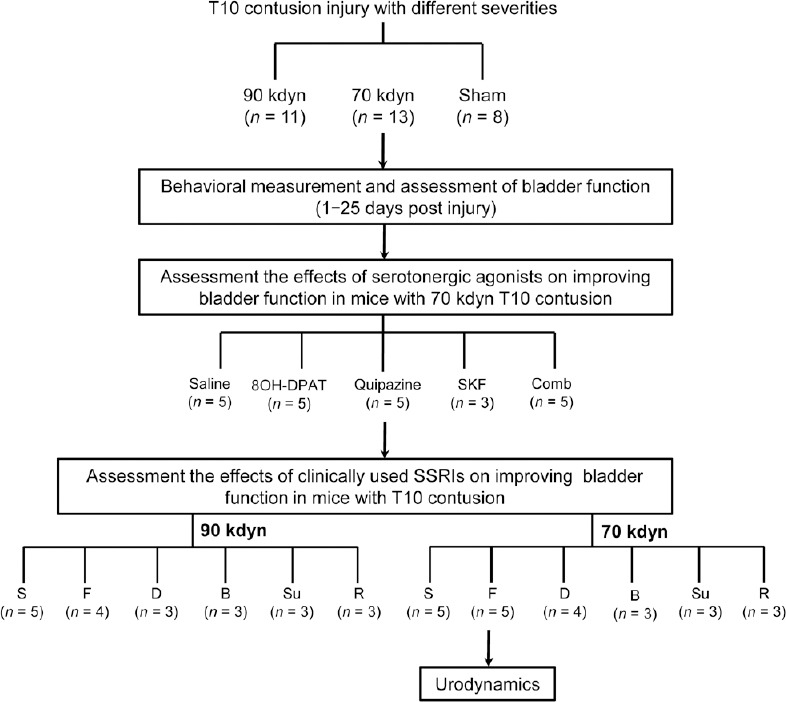
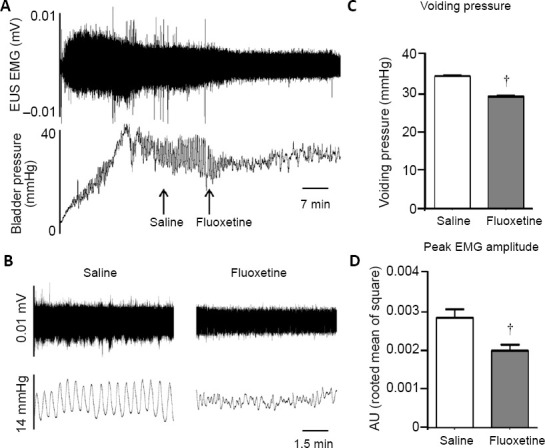
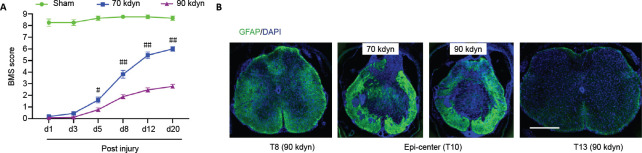
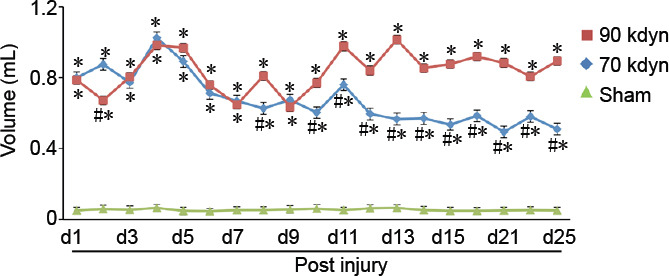
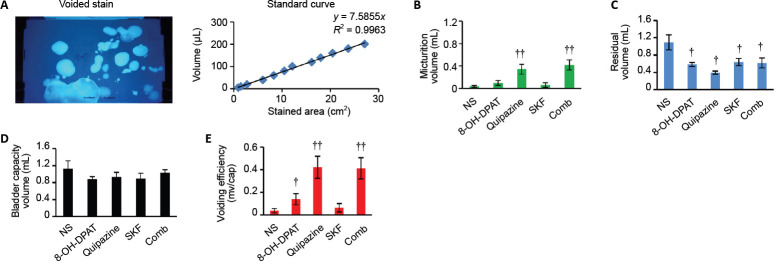
After spinal cord injury, the upward conduction of the spinal cord is lost, resulting in the loss of micturition control, which manifests as detrusor sphincter dyssynergia and insufficient micturition. Studies have shown that serotonergic axons play important roles in the control of the descending urination tract. In this study, mouse models of moderate spinal cord contusions were established. The serotonin agonists quipazine (0.2 mg/kg), 8-hydroxy-2-(di-n-propylamino) tetralin (8-OH-DAPT, 0.1 mg/kg), buspirone (1 mg/kg), sumatriptan (1 mg/kg), and rizatriptan (50 mg/kg), the serotonin reuptake inhibitors fluoxetine (20 mg/kg) and duloxetine (1 mg/kg), and the dopamine receptor agonist SKF-82197 (0.1 mg/kg) were intraperitoneally administered to the model mice 35 days post-injury in an acute manner. The voided stain on paper method and urodynamics revealed that fluoxetine reduced the amount of residual urine in the bladder and decreased bladder and external urethral sphincter pressure in a mouse model of moderate spinal cord injury. However, fluoxetine did not improve the micturition function in a mouse model of severe spinal cord injury. In contrast, the other serotonergic drugs had no effects on the micturition functions of spinal cord injury model mice. This study was ethically approved by the Institutional Animal Care and Use Committee of Jiangsu Province Hospital of Chinese Medicine (approval No. 2020DW-20-02) on September 11, 2020.
脊髓损伤后,脊髓的上行传导丧失,导致排尿控制功能丧失,表现为逼尿肌括约肌协同失调和排尿不足。研究表明,5-羟色胺能轴突在下行排尿通路的控制中起重要作用。在本研究中,建立了中度脊髓挫伤的小鼠模型。在损伤后35天,以急性方式给模型小鼠腹腔注射5-羟色胺激动剂喹哌嗪(0.2mg/kg)、8-羟基-2-(二正丙基氨基)四氢萘(8-OH-DAPT,0.1mg/kg)、丁螺环酮(1mg/kg)、舒马曲坦(1mg/kg)和利扎曲坦(50mg/kg),5-羟色胺再摄取抑制剂氟西汀(20mg/kg)和度洛西汀(1mg/kg),以及多巴胺受体激动剂SKF-82197(0.1mg/kg)。纸上排尿染色法和尿动力学显示,氟西汀减少了中度脊髓损伤小鼠模型膀胱中的残余尿量,并降低了膀胱和尿道外括约肌压力。然而,氟西汀并未改善重度脊髓损伤小鼠模型的排尿功能。相比之下,其他5-羟色胺能药物对脊髓损伤模型小鼠的排尿功能没有影响。本研究于2020年9月11日获得江苏省中医院实验动物管理与使用委员会的伦理批准(批准号:2020DW-20-02)。