Xie Hui, Yuan Ce, Li Jin-Jiang, Li Zhao-Yang, Lu Wei-Cheng
Department of Histology and Embryology, College of Basic Medicine, Shenyang Medical College, Shenyang, China.
Graduate Program in Bioinformatics and Computational Biology, University of Minnesota, Minneapolis, MN, United States.
Front Neurol. 2021 Feb 11;12:576382. doi: 10.3389/fneur.2021.576382. eCollection 2021.
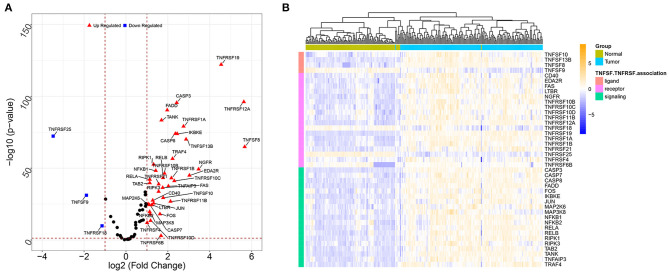
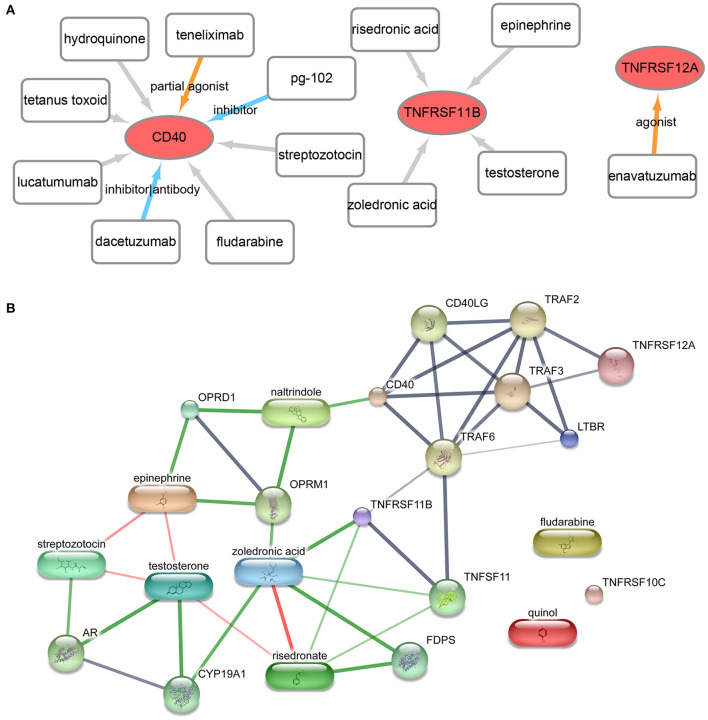
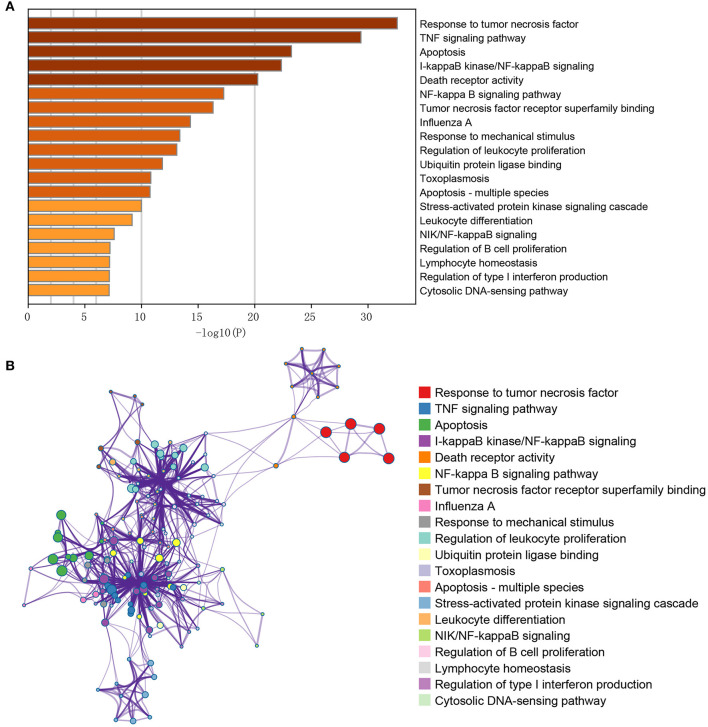
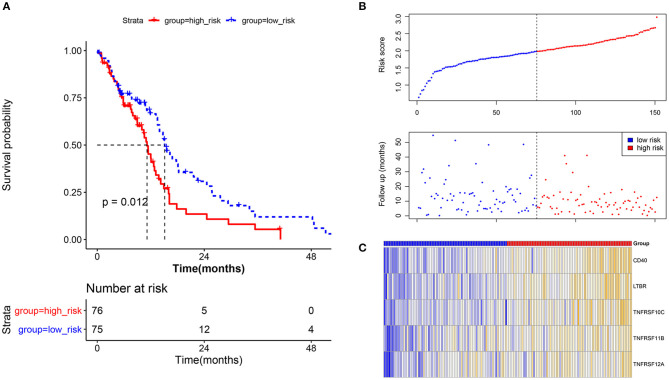
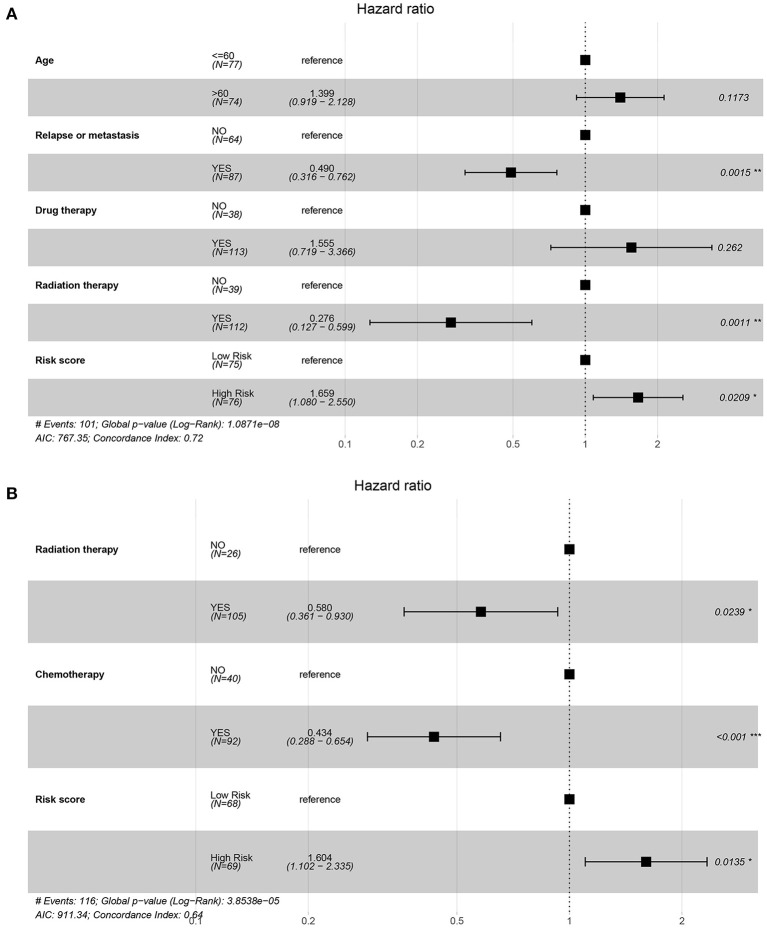
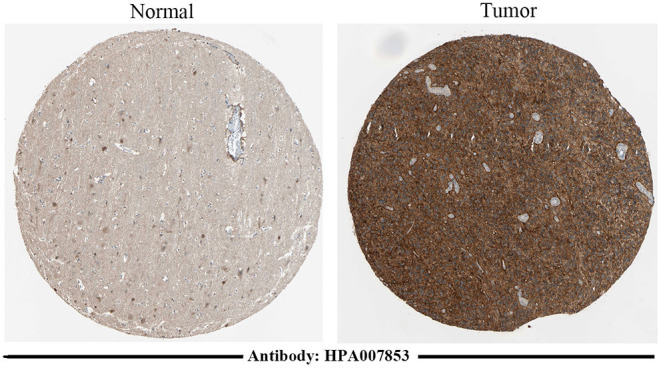
This study aimed to investigate the molecular mechanism of tumor necrosis factor (TNF) superfamily-related genes and potential therapeutic drugs for glioblastoma multiforme (GBM) patients based on transcriptome and epigenome. Gene expression data, corresponding clinical data, and methylation data of GBM samples and normal samples in the TCGA-GBM and GTEx datasets were downloaded. The TNF-related genes were obtained, respectively, from two groups in the TCGA dataset. Then, the TNF-related differentially expressed genes (DEGs) were investigated between two groups, followed by enrichment analysis. Moreover, TNF superfamily-related gene expression and upstream methylation regulation were investigated to explore candidate genes and the prognostic model. Finally, the protein expression level of candidate genes was performed, followed by drug prediction analysis. A total of 41 DEGs including 4 ligands, 18 receptors, and 19 downstream signaling molecules were revealed between two groups. These DEGs were mainly enriched in pathways like TNF signaling and functions like response to TNF. A total of 5 methylation site-regulated prognosis-related genes including TNF Receptor Superfamily Member (TNFRSF) 12A, TNFRSF11B, and CD40 were explored. The prognosis model constructed by 5 genes showed a well-prediction effect on the current dataset and verification dataset. Finally, drug prediction analysis showed that zoledronic acid (ZA)-TNFRSF11B was the unique drug-gene relation in both two databases. Methylation-driven gene TNFRSF12A might participate in the development of GBM via response to the TNF biological process and TNF signaling pathway and significantly associated with prognosis. ZA that targets TNFRSF11B expression might be a potential effective drug for clinical treatment of GBM.
本研究旨在基于转录组和表观基因组,探究肿瘤坏死因子(TNF)超家族相关基因的分子机制以及多形性胶质母细胞瘤(GBM)患者的潜在治疗药物。下载了TCGA-GBM和GTEx数据集中GBM样本及正常样本的基因表达数据、相应临床数据和甲基化数据。分别从TCGA数据集中的两组获取TNF相关基因。然后,研究两组之间的TNF相关差异表达基因(DEG),接着进行富集分析。此外,研究TNF超家族相关基因表达及上游甲基化调控,以探索候选基因和预后模型。最后,检测候选基因的蛋白表达水平,随后进行药物预测分析。两组之间共揭示了41个DEG,包括4种配体、18种受体和19种下游信号分子。这些DEG主要富集于TNF信号传导等通路以及对TNF的反应等功能。共探索了5个甲基化位点调控的预后相关基因,包括TNF受体超家族成员(TNFRSF)12A、TNFRSF11B和CD40。由这5个基因构建的预后模型对当前数据集和验证数据集均显示出良好的预测效果。最后,药物预测分析表明唑来膦酸(ZA)-TNFRSF11B是两个数据库中唯一的药物-基因关系。甲基化驱动基因TNFRSF12A可能通过对TNF生物学过程和TNF信号通路的反应参与GBM的发生发展,且与预后显著相关。靶向TNFRSF11B表达的ZA可能是GBM临床治疗的一种潜在有效药物。