McGuire Michelle K, Randall Arlo Z, Seppo Antti E, Järvinen Kirsi M, Meehan Courtney L, Gindola Debela, Williams Janet E, Sellen Daniel W, Kamau-Mbuthia Elizabeth W, Kamundia Egidioh W, Mbugua Samwel, Moore Sophie E, Prentice Andrew M, Foster James A, Otoo Gloria E, Rodríguez Juan M, Pareja Rossina G, Bode Lars, McGuire Mark A, Campo Joseph J
Margaret Ritchie School of Family and Consumer Sciences, University of Idaho, Moscow, ID, United States.
Antigen Discovery Incorporated, Irvine, CA, United States.
Front Immunol. 2021 Feb 11;11:614372. doi: 10.3389/fimmu.2020.614372. eCollection 2020.
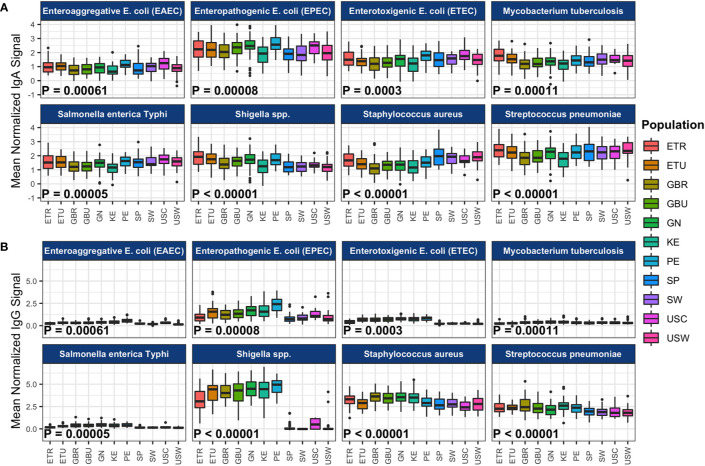
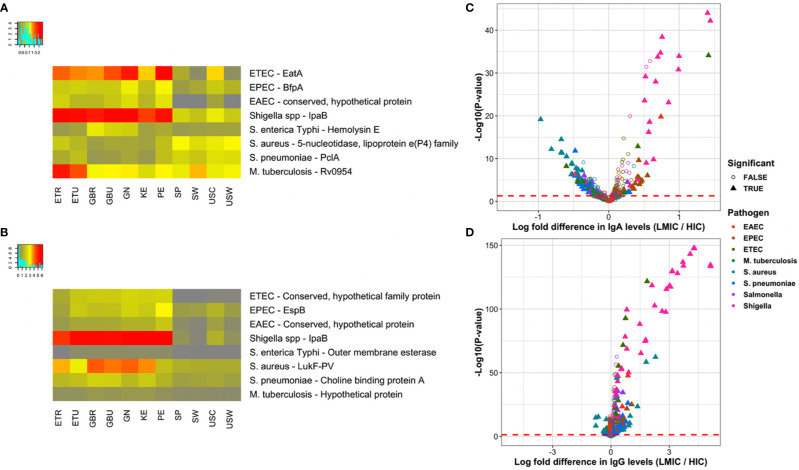
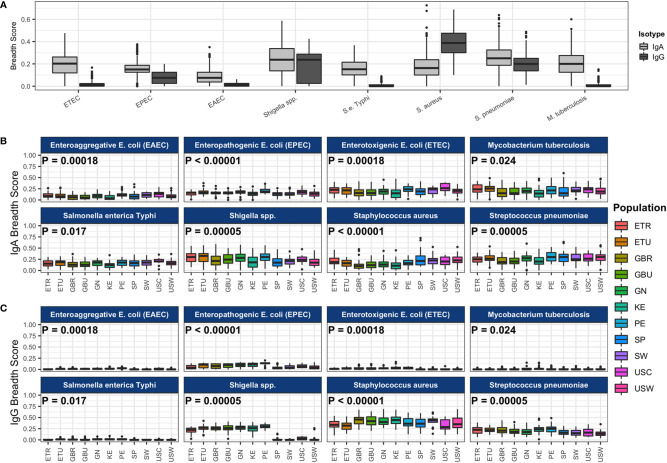
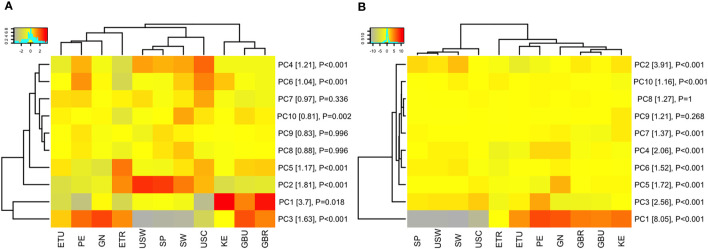
Breastfeeding provides defense against infectious disease during early life. The mechanisms underlying this protection are complex but likely include the vast array of immune cells and components, such as immunoglobulins, in milk. Simply characterizing the concentrations of these bioactives, however, provides only limited information regarding their potential relationships with disease risk in the recipient infant. Rather, understanding pathogen and antigen specificity profiles of milk-borne immunoglobulins might lead to a more complete understanding of how maternal immunity impacts infant health and wellbeing. Milk produced by women living in 11 geographically dispersed populations was applied to a protein microarray containing antigens from 16 pathogens, including diarrheagenic , spp. serovar Typhi, , and other pathogens of global health concern, and specific IgA and IgG binding was measured. Our analysis identified novel disease-specific antigen responses and suggests that some IgA and IgG responses vary substantially within and among populations. Patterns of antibody reactivity analyzed by principal component analysis and differential reactivity analysis were associated with either lower-to-middle-income countries (LMICs) or high-income countries (HICs). Antibody levels were generally higher in LMICs than HICs, particularly for and diarrheagenic antigens, although sets of , , and some antigens were more reactive in HICs. Differential responses were typically specific to canonical immunodominant antigens, but a set of nondifferential but highly reactive antibodies were specific to antigens possibly universally recognized by antibodies in human milk. This approach provides a promising means to understand how breastfeeding and human milk protect (or do not protect) infants from environmentally relevant pathogens. Furthermore, this approach might lead to interventions to boost population-specific immunity in at-risk breastfeeding mothers and their infants.
母乳喂养为生命早期提供抗感染保护。这种保护作用的潜在机制很复杂,但可能包括乳汁中大量的免疫细胞和成分,如免疫球蛋白。然而,仅仅测定这些生物活性物质的浓度,对于它们与受哺婴儿疾病风险之间的潜在关系所提供的信息有限。相反,了解乳汁中免疫球蛋白的病原体和抗原特异性谱,可能会更全面地理解母体免疫如何影响婴儿的健康和福祉。采集了来自11个地理分布广泛的人群的母乳,将其应用于包含16种病原体抗原的蛋白质微阵列上,这些病原体包括致腹泻的大肠杆菌、伤寒杆菌、沙门氏菌以及其他全球关注的健康病原体,然后测定特异性IgA和IgG的结合情况。我们的分析确定了新的疾病特异性抗原反应,并表明一些IgA和IgG反应在人群内部和人群之间存在很大差异。通过主成分分析和差异反应性分析得出的抗体反应模式与低收入和中等收入国家(LMICs)或高收入国家(HICs)相关。LMICs的抗体水平总体上高于HICs,特别是针对沙门氏菌和致腹泻大肠杆菌的抗原,不过,志贺氏菌、弯曲杆菌和一些大肠杆菌抗原在HICs中的反应性更强。差异反应通常针对典型的免疫显性抗原,但有一组非差异但高反应性的抗体针对的是可能被人乳中的抗体普遍识别的抗原。这种方法为理解母乳喂养和人乳如何保护(或不保护)婴儿免受环境相关病原体侵害提供了一种很有前景的手段。此外,这种方法可能会带来干预措施,以增强高危母乳喂养母亲及其婴儿的群体特异性免疫力。