Buffon Giseli, Blasi Édina Aparecida Dos Reis, Lamb Thainá Inês, Adamski Janete Mariza, Schwambach Joséli, Ricachenevsky Felipe Klein, Bertolazi Amanda, Silveira Vanildo, Lopes Mara Cristina Barbosa, Sperotto Raul Antonio
Graduate Program in Biotechnology, University of Taquari Valley-Univates, Lajeado, Brazil.
Biological Sciences and Health Center, University of Taquari Valley-Univates, Lajeado, Brazil.
Front Plant Sci. 2021 Feb 10;12:613568. doi: 10.3389/fpls.2021.613568. eCollection 2021.
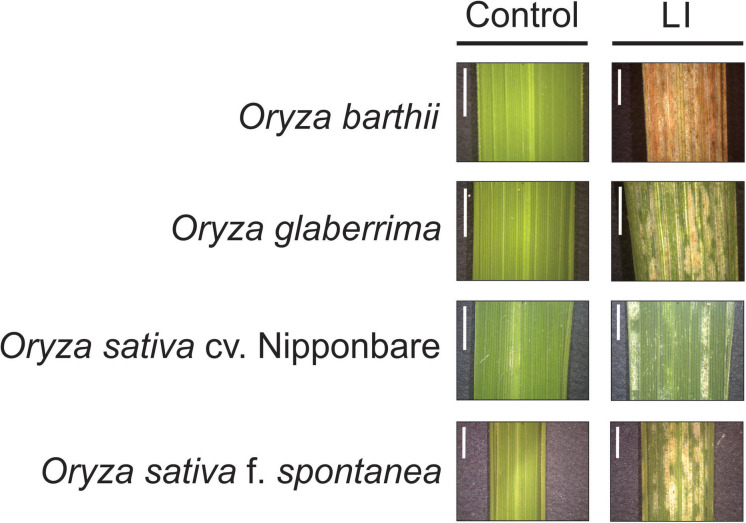
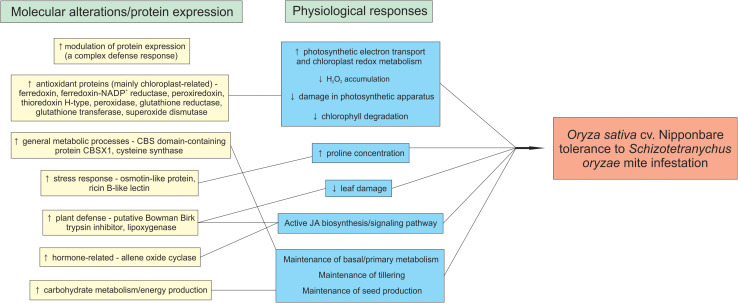
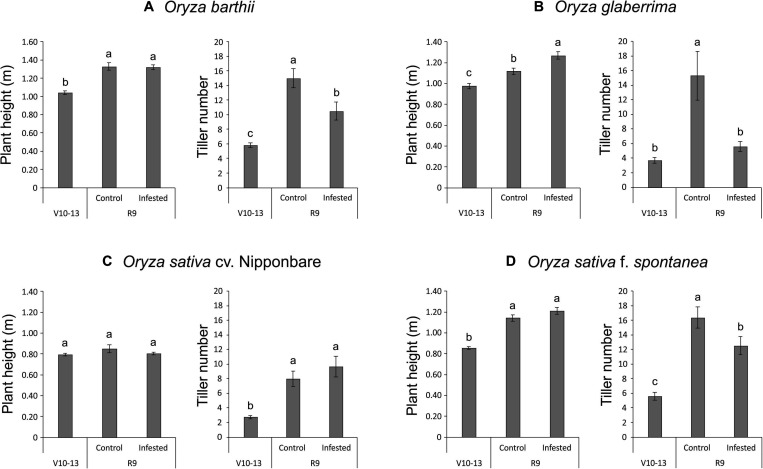
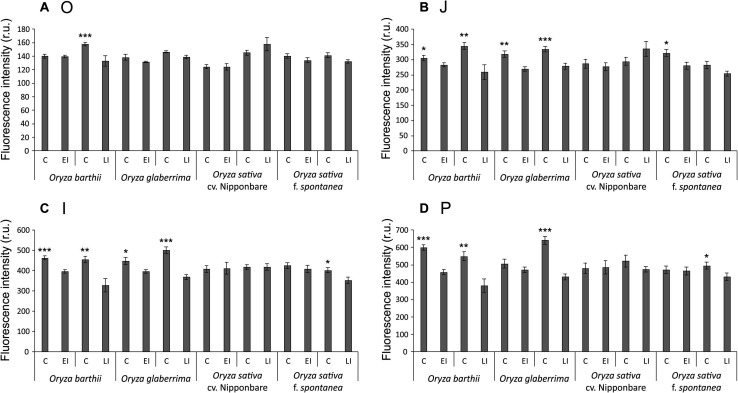
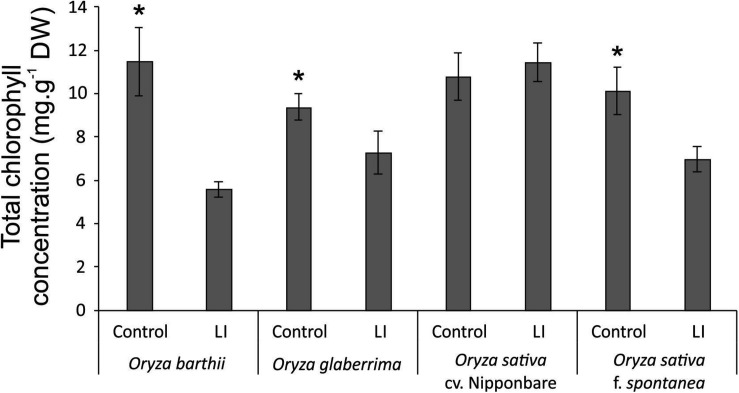
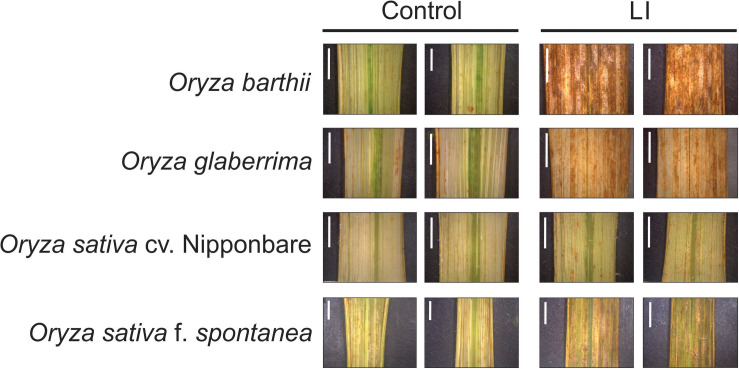
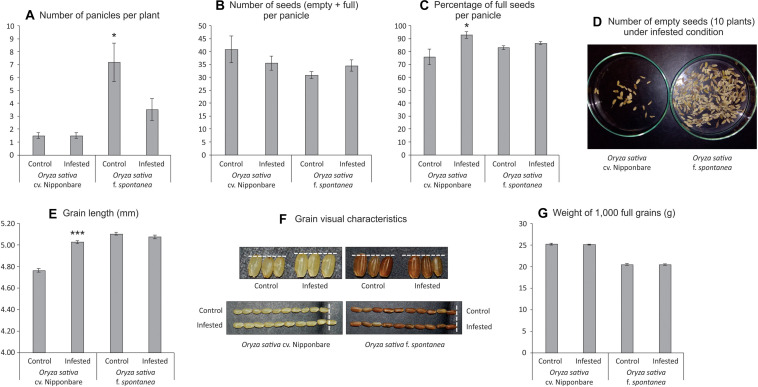
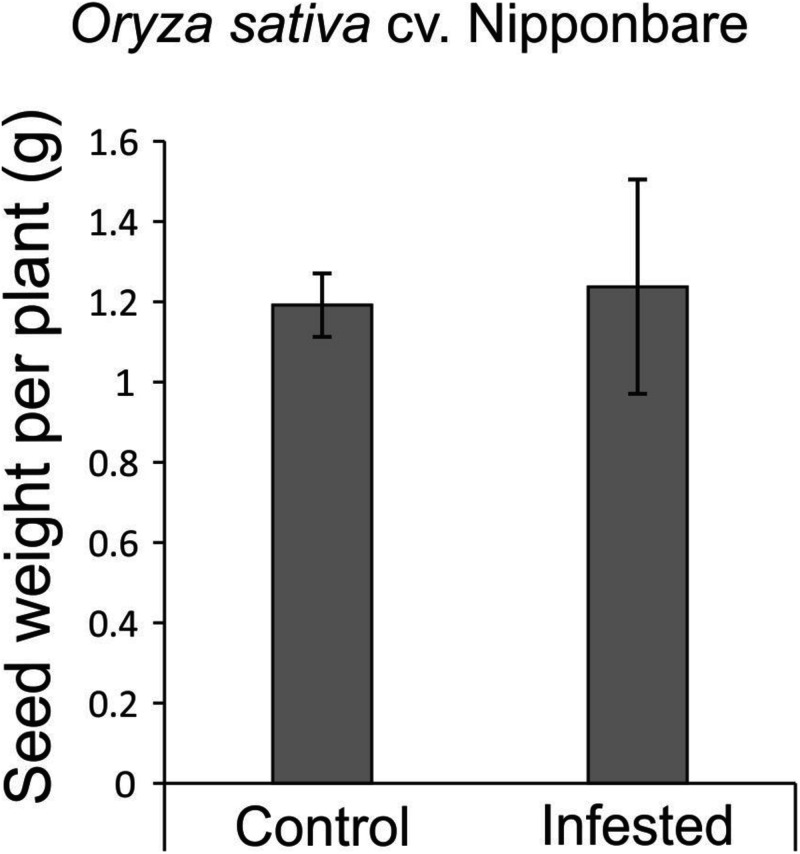
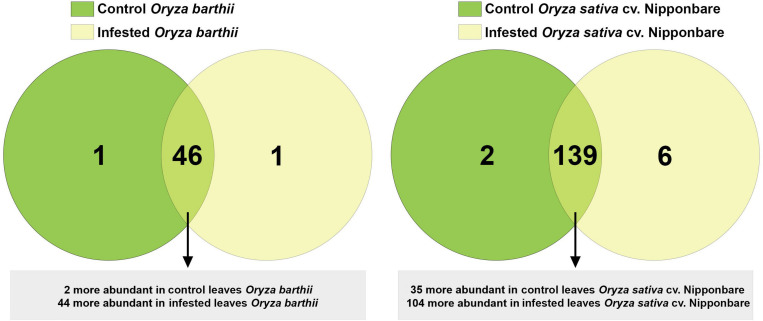
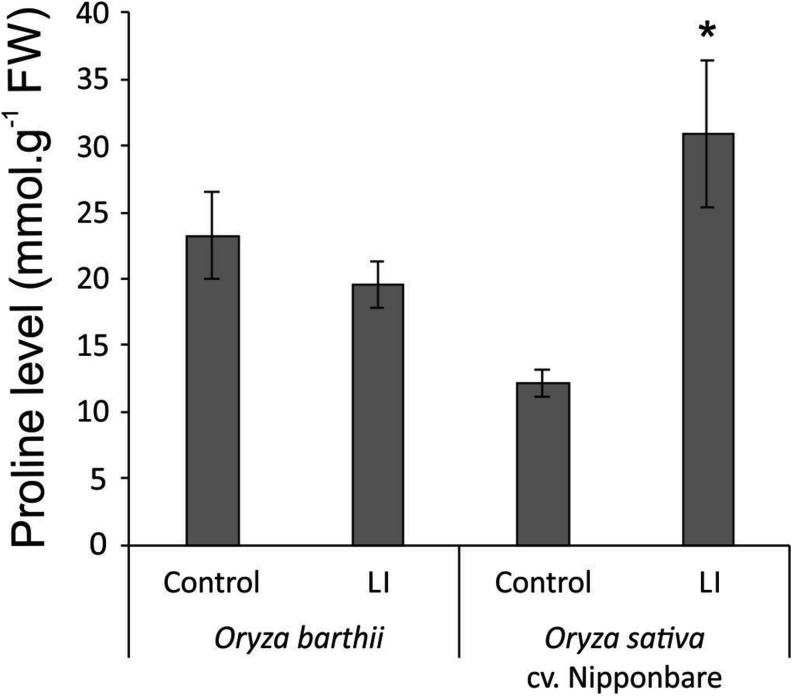
Cultivated rice ( L.) is frequently exposed to multiple stresses, including mite infestation. Rice domestication has narrowed the genetic diversity of the species, leading to a wide susceptibility. This work aimed to analyze the response of two African rice species ( and ), weedy rice ( f. ), and cv. Nipponbare to infestation. Surprisingly, leaf damage, histochemistry, and chlorophyll concentration/fluorescence indicated that the African species present a higher level of leaf damage, increased accumulation of HO, and lower photosynthetic capacity when compared to plants under infested conditions. Infestation decreased tiller number, except in Nipponbare, and caused the death of and plants during the reproductive stage. While infestation did not affect the weight of 1,000 grains in both , the number of panicles per plant was affected only in f. , and the percentage of full seeds per panicle and seed length were increased only in Nipponbare. Using proteomic analysis, we identified 195 differentially abundant proteins when comparing susceptible () and tolerant (Nipponbare) plants under control and infested conditions. presents a less abundant antioxidant arsenal and is unable to modulate proteins involved in general metabolism and energy production under infested condition. Nipponbare presents high abundance of detoxification-related proteins, general metabolic processes, and energy production, suggesting that the primary metabolism is maintained more active compared to under infested condition. Also, under infested conditions, Nipponbare presents higher levels of proline and a greater abundance of defense-related proteins, such as osmotin, ricin B-like lectin, and protease inhibitors (PIs). These differentially abundant proteins can be used as biotechnological tools in breeding programs aiming at increased tolerance to mite infestation.
栽培稻(Oryza sativa L.)经常面临多种胁迫,包括螨类侵害。水稻驯化使该物种的遗传多样性变窄,导致广泛的易感性。这项工作旨在分析两种非洲稻种(O. glaberrima和O. barthii)、杂草稻(O. sativa f. spontanea)和栽培品种日本晴对螨类侵害的反应。令人惊讶的是,叶片损伤、组织化学以及叶绿素浓度/荧光表明,与受螨类侵害条件下的O. sativa植株相比,非洲稻种的叶片损伤程度更高,H₂O₂积累增加,光合能力更低。螨类侵害减少了分蘖数,但日本晴除外,并且在生殖阶段导致O. glaberrima和O. barthii植株死亡。虽然螨类侵害对两种非洲稻种的千粒重均无影响,但仅在杂草稻中每株穗数受到影响,并且仅在日本晴中每穗饱满种子的百分比和种子长度增加。通过蛋白质组学分析,我们在对照和受螨类侵害条件下比较易感品种(O. sativa)和耐性品种(日本晴)植株时,鉴定出195种差异丰富的蛋白质。O. sativa具有较少的抗氧化剂库,并且在受螨类侵害条件下无法调节参与一般代谢和能量产生的蛋白质。日本晴具有高丰度的解毒相关蛋白质、一般代谢过程和能量产生,这表明与受螨类侵害条件下的O. sativa相比,其初级代谢保持更活跃。此外,在受螨类侵害条件下,日本晴脯氨酸水平更高,并且防御相关蛋白质如渗透素、蓖麻毒蛋白B样凝集素和蛋白酶抑制剂(PIs)的丰度更高。这些差异丰富的蛋白质可作为生物技术工具用于育种计划,以提高对螨类侵害的耐受性。