Li Yi-Ming, Tsauo Jia-Yu, Jia Kai-Yu, Liao Yan-Biao, Xia Fan, Zhao Zheng-Gang, Chen Mao, Peng Yong
Department of Cardiology, West China Hospital, Sichuan University, Chengdu, China.
Department of Neurosurgery, West China Hospital, Sichuan University, Chengdu, China.
Front Cardiovasc Med. 2021 Feb 10;7:612155. doi: 10.3389/fcvm.2020.612155. eCollection 2020.
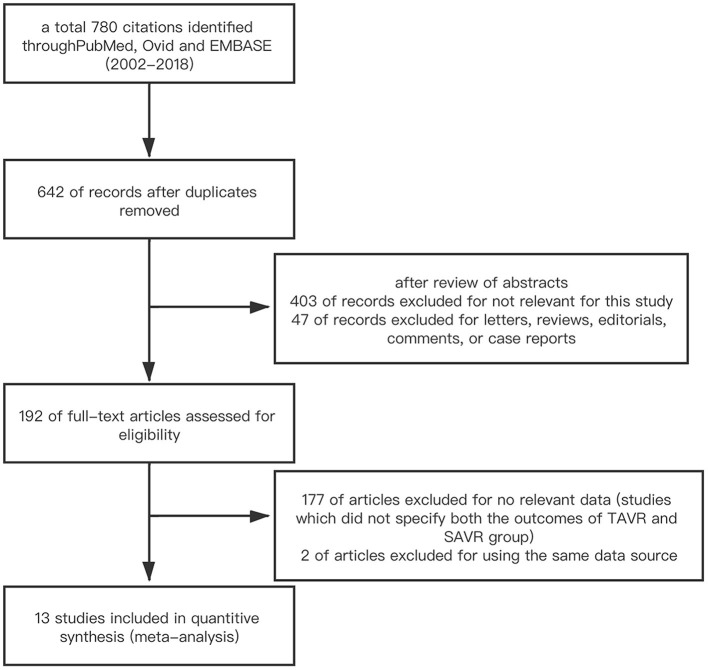
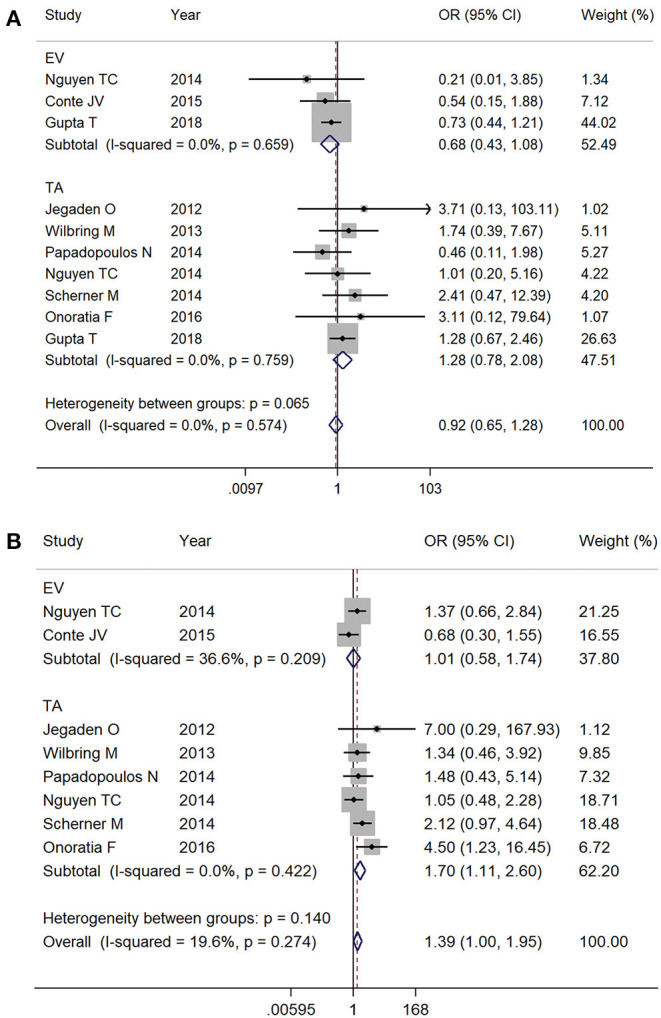
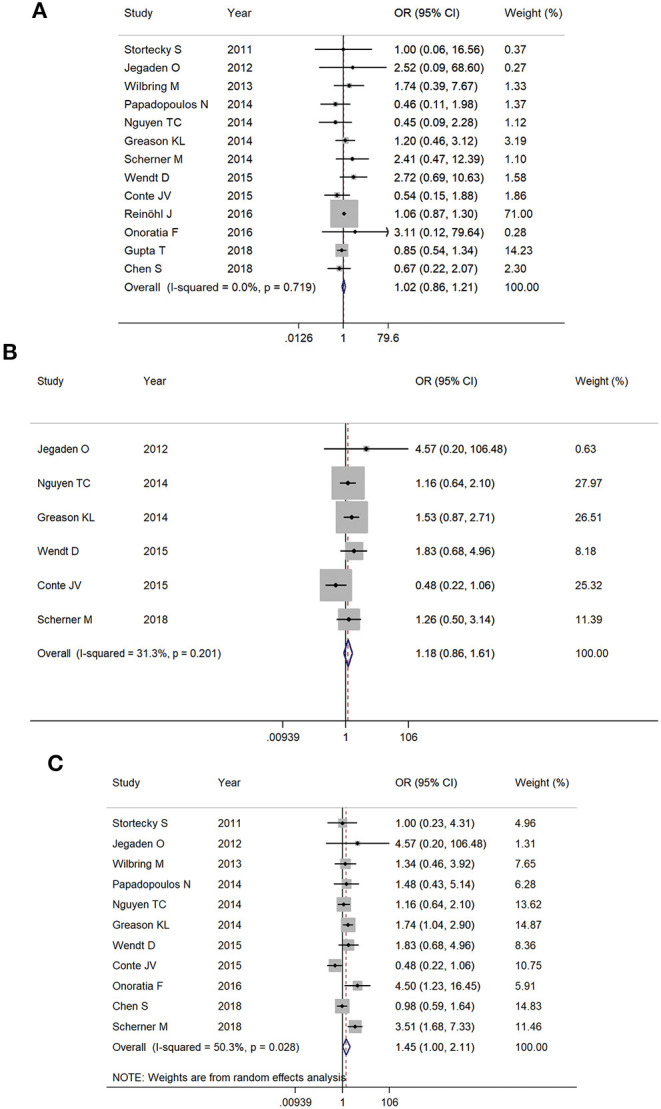
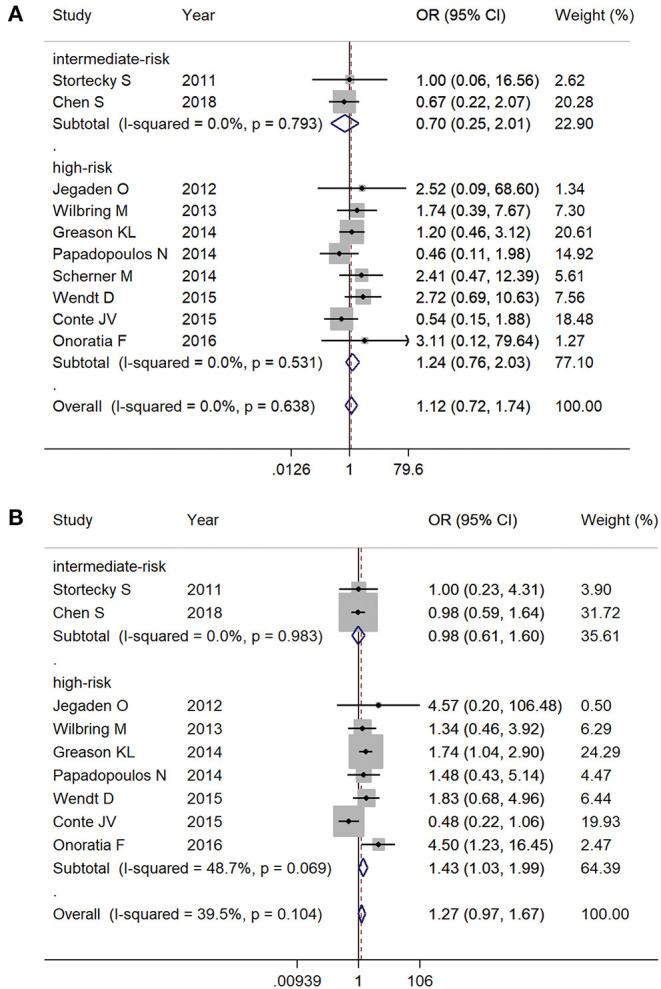
Many patients who have aortic stenosis and are transcatheter aortic valve replacement (TAVR) candidates have underwent prior cardiac surgery (PCS). The aim of this study was to provide a robust summary comparison between patients with PCS who underwent TAVR vs. surgical aortic valve replacement (SAVR). We conducted a systematic review and meta-analysis of all published articles on PubMed/Medline, Ovid, EMBASE, and Scopus from 2002 to 2019. A total of 13 studies were finally included, yielding a total of 23,148 participants. There was no statistical difference with 30-day [OR: 1.02 (0.86-1.21)] or 1-year mortality [OR: 1.18 (0.86-1.61)] between the two groups. Subgroup analysis revealed that high-risk patients who underwent TAVR with the transapical approach were associated with increased risk of mortality [OR: 1.45 (1.00-2.11)]. However, those who underwent TAVR with endovascular approach had a comparable outcome with SAVR. Primary outcomes after endovascular TAVR were similar to those with SAVR and superior to transapical TAVR treatment group in patients with PCS.
许多患有主动脉瓣狭窄且符合经导管主动脉瓣置换术(TAVR)条件的患者此前已接受过心脏手术(PCS)。本研究的目的是对接受TAVR的PCS患者与接受外科主动脉瓣置换术(SAVR)的患者进行全面的汇总比较。我们对2002年至2019年在PubMed/Medline、Ovid、EMBASE和Scopus上发表的所有文章进行了系统评价和荟萃分析。最终纳入了13项研究,共有23148名参与者。两组在30天[比值比(OR):1.02(0.86 - 1.21)]或1年死亡率[OR:1.18(0.86 - 1.61)]方面无统计学差异。亚组分析显示,经心尖途径接受TAVR的高危患者死亡风险增加[OR:1.45(1.00 - 2.11)]。然而,采用血管内途径接受TAVR的患者与SAVR的结局相当。血管内TAVR后的主要结局与SAVR相似,且在PCS患者中优于经心尖TAVR治疗组。