Division of Rheumatology, Mayo Clinic, 200 First Street SW, Rochester, MN, 55905, USA.
Curr Rheumatol Rep. 2021 Mar 1;23(4):21. doi: 10.1007/s11926-021-00993-0.
Over the last few years, the scientific community has made significant progress in understanding the etiology of rheumatoid arthritis (RA). In this review, we summarize those key findings and trends.
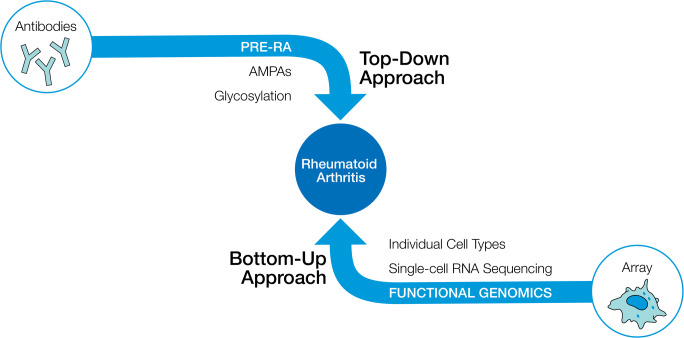
New data strongly implicates respiratory exposures, obesity, diet and microbiome, genetics, and their interactions in the etiology of RA. Furthermore, anti-posttranslationally modified protein antibodies (AMPAs) and abnormal glycosylation may be additional biomarkers for RA. Finally, functional genomics techniques implicate loss of certain macrophage populations and proliferation of synovial fibroblasts in RA. These findings support the notion that RA originates at mucosal sites, augmented by genetic predisposition, and mediated by certain cell types including macrophages and fibroblasts. Weight loss, physical activity, and diet are additional modifiable factors beyond smoking cessation that can reduce risk of RA. Future epidemiologic and translational studies leveraging multi-omics approaches will help map the precise sequence of events in RA pathogenesis.
在过去的几年里,科学界在理解类风湿关节炎(RA)的病因学方面取得了重大进展。在这篇综述中,我们总结了这些关键发现和趋势。
新数据强烈提示,呼吸道暴露、肥胖、饮食和微生物组、遗传及其相互作用与 RA 的病因有关。此外,翻译后修饰蛋白抗体(AMPAs)和异常糖基化可能是 RA 的其他生物标志物。最后,功能基因组学技术提示某些巨噬细胞群的缺失和滑膜成纤维细胞的增殖与 RA 有关。这些发现支持这样一种观点,即 RA 起源于黏膜部位,由遗传易感性增强,并由包括巨噬细胞和成纤维细胞在内的某些细胞类型介导。除了戒烟之外,减轻体重、身体活动和饮食是可以降低 RA 风险的其他可改变因素。未来的流行病学和转化研究利用多组学方法将有助于绘制 RA 发病机制中确切的事件序列。