KU Leuven, Department of Neurosciences, ExpORL, Herestraat 49, Box 721, Leuven 3000, Belgium.
Cambridge Hearing Group, MRC Cognition and Brain Sciences Unit, University of Cambridge, 15 Chaucer Road, Cambridge CB2 7EF, United Kingdom.
Hear Res. 2021 May;404:108200. doi: 10.1016/j.heares.2021.108200. Epub 2021 Feb 11.
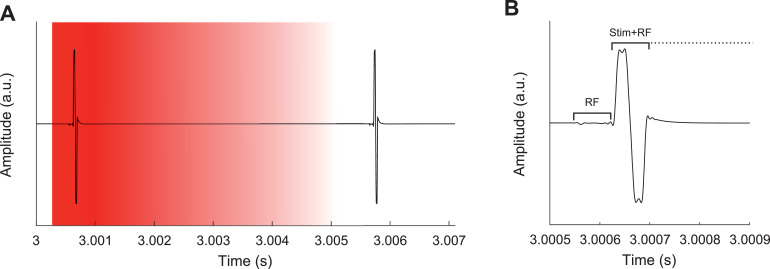
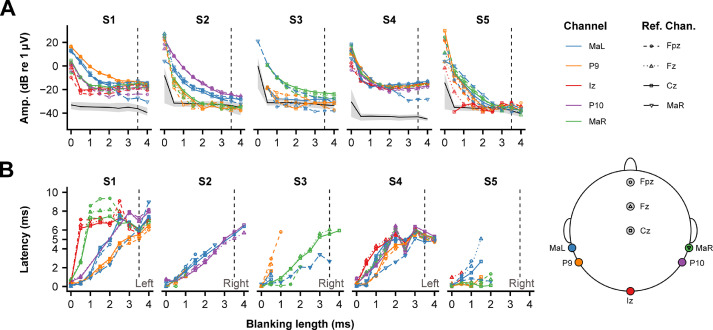
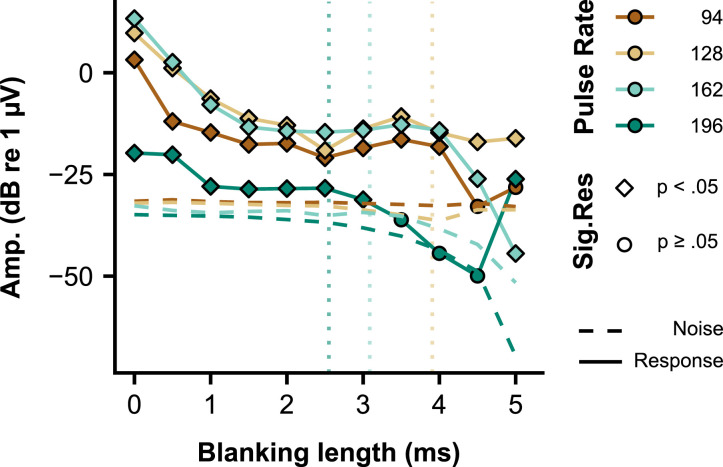
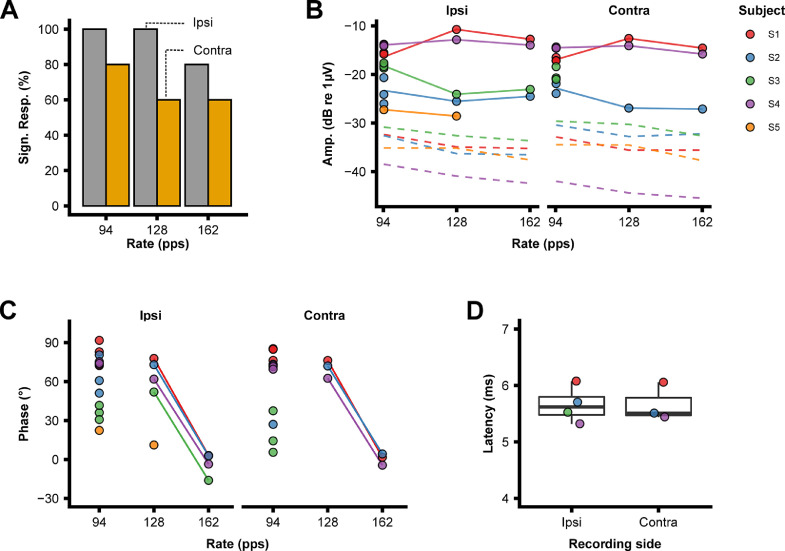
The upper limit of rate-based pitch perception and rate discrimination can differ substantially across cochlear implant (CI) users. One potential reason for this difference is the presence of a biological limitation on temporal encoding in the electrically-stimulated auditory pathway, which can be inherent to the electrical stimulation itself and/or to the degenerative processes associated with hearing loss. Electrophysiological measures, like the electrically-evoked frequency following response (eFFR) and auditory change complex (eACC), could potentially provide valuable insights in the temporal processing limitations at the level of the brainstem and cortex in the electrically-stimulated auditory pathway. Obtaining these neural responses, free from stimulation artifacts, is challenging, especially when the neural response is phase-locked to the stimulation rate, as is the case for the eFFR. In this study we investigated the feasibility of measuring eFFRs, free from stimulation artifacts, to stimulation rates ranging from 94 to 196 pulses per second (pps) and eACCs to pulse rate changes ranging from 36 to 108%, when stimulating in a monopolar configuration. A high-sampling rate EEG system was used to measure the electrophysiological responses in five CI users, and linear interpolation was applied to remove the stimulation artifacts from the EEG. With this approach, we were able to measure eFFRs for pulse rates up to 162 pps and eACCs to the different rate changes. Our results show that it is feasible to measure electrophysiological responses, free from stimulation artifacts, that could potentially be used as neural correlates for rate and pitch processing in CI users.
基于速率的音高感知和速率辨别能力的上限在不同的人工耳蜗(CI)使用者之间可能有很大的差异。造成这种差异的一个潜在原因是,电刺激听觉通路中的时间编码存在生物学限制,这种限制可能是电刺激本身固有的,也可能是与听力损失相关的退行性过程造成的。电生理测量,如电诱发频率跟随反应(eFFR)和听觉变化复合(eACC),可能会为电刺激听觉通路中脑干和皮层的时间处理限制提供有价值的见解。获得这些不受刺激伪影影响的神经反应是具有挑战性的,特别是当神经反应与刺激率锁相时,就像 eFFR 一样。在这项研究中,我们研究了在单极刺激配置下,从 94 到 196 脉冲/秒(pps)的刺激率下测量不受刺激伪影影响的 eFFR 和从 36 到 108%的脉冲率变化的 eACC 的可行性。使用高采样率 EEG 系统测量了 5 名 CI 用户的电生理反应,并应用线性插值从 EEG 中去除刺激伪影。通过这种方法,我们能够测量高达 162 pps 的脉冲率的 eFFR 和不同速率变化的 eACC。我们的结果表明,测量不受刺激伪影影响的电生理反应是可行的,这些反应可能被用作 CI 用户的速率和音高处理的神经相关物。