Medical Genetics, University of Siena, Italy; Med Biotech Hub and Competence Center, Department of Medical Biotechnologies, University of Siena, Italy.
University of Siena, DIISM-SAILAB, Siena, Italy; Department of Mathematics, University of Pavia, Pavia, Italy.
EBioMedicine. 2021 Mar;65:103246. doi: 10.1016/j.ebiom.2021.103246. Epub 2021 Feb 26.
While SARS-CoV-2 similarly infects men and women, COVID-19 outcome is less favorable in men. Variability in COVID-19 severity may be explained by differences in the host genome.
We compared poly-amino acids variability from WES data in severely affected COVID-19 patients versus SARS-CoV-2 PCR-positive oligo-asymptomatic subjects.
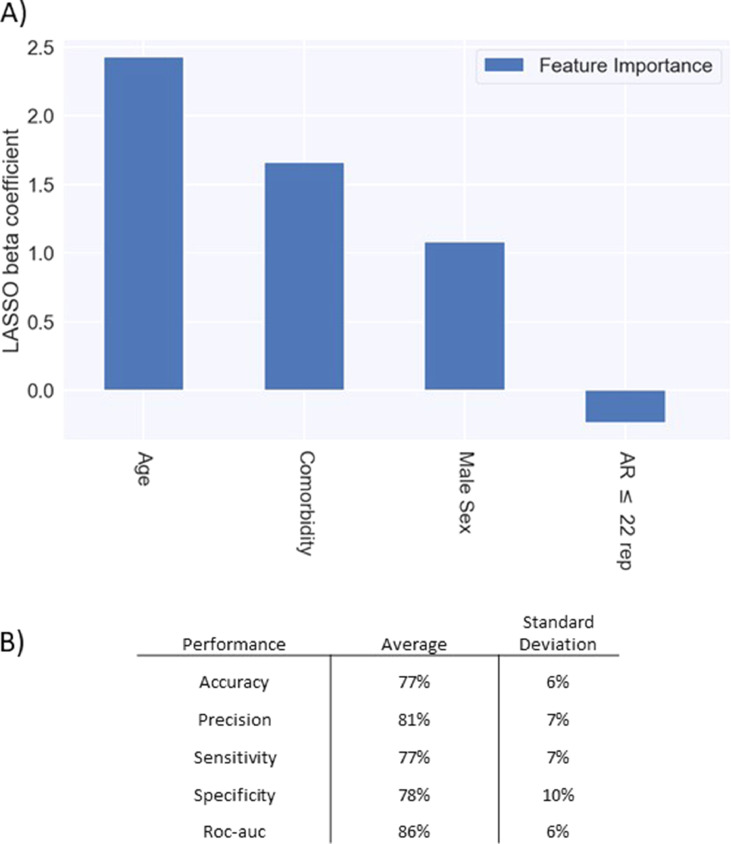
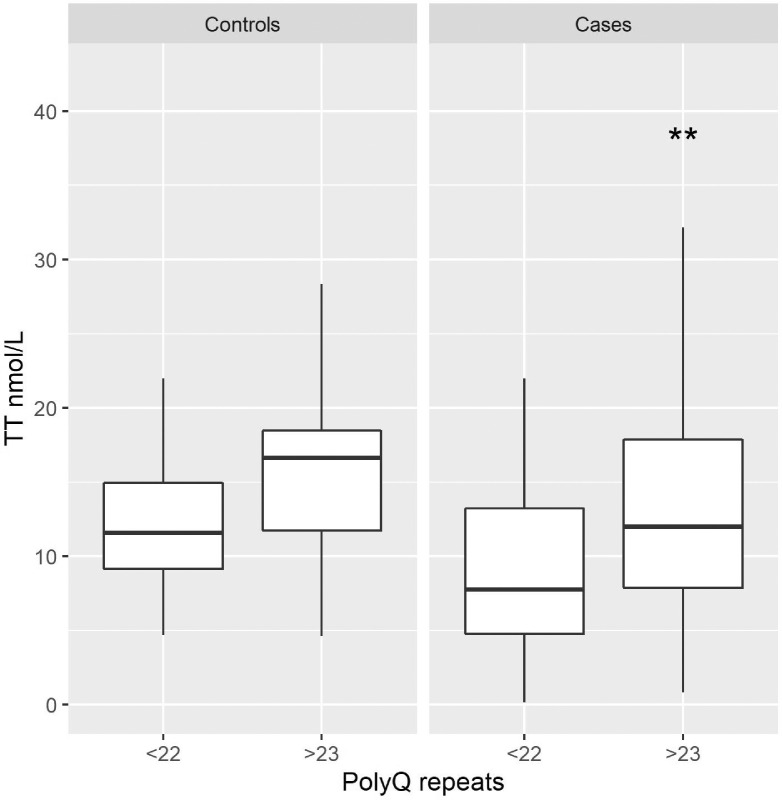
Shorter polyQ alleles (≤22) in the androgen receptor (AR) conferred protection against severe outcome in COVID-19 in the first tested cohort (both males and females) of 638 Italian subjects. The association between long polyQ alleles (≥23) and severe clinical outcome (p = 0.024) was also validated in an independent cohort of Spanish men <60 years of age (p = 0.014). Testosterone was higher in subjects with AR long-polyQ, possibly indicating receptor resistance (p = 0.042 Mann-Whitney U test). Inappropriately low serum testosterone level among carriers of the long-polyQ alleles (p = 0.0004 Mann-Whitney U test) predicted the need for intensive care in COVID-19 infected men. In agreement with the known anti-inflammatory action of testosterone, patients with long-polyQ and age ≥60 years had increased levels of CRP (p = 0.018, not accounting for multiple testing).
We identify the first genetic polymorphism that appears to predispose some men to develop more severe disease. Failure of the endocrine feedback to overcome AR signaling defects by increasing testosterone levels during the infection leads to the polyQ tract becoming dominant to serum testosterone levels for the clinical outcome. These results may contribute to designing reliable clinical and public health measures and provide a rationale to test testosterone as adjuvant therapy in men with COVID-19 expressing long AR polyQ repeats.
MIUR project "Dipartimenti di Eccellenza 2018-2020" to Department of Medical Biotechnologies University of Siena, Italy (Italian D.L. n.18 March 17, 2020) and "Bando Ricerca COVID-19 Toscana" project to Azienda Ospedaliero-Universitaria Senese. Private donors for COVID-19 research and charity funds from Intesa San Paolo.
虽然 SARS-CoV-2 同样感染男性和女性,但 COVID-19 在男性中的结局较差。COVID-19 严重程度的可变性可能是由宿主基因组的差异解释的。
我们比较了 WES 数据中严重 COVID-19 患者与 SARS-CoV-2 PCR 阳性寡症状患者的多氨基酸变异性。
在第一个接受测试的意大利 638 名受试者队列(男性和女性)中,雄激素受体 (AR) 中的较短多聚 Q 等位基因(≤22)可预防 COVID-19 的严重结局。长多聚 Q 等位基因(≥23)与严重临床结局之间的关联(p=0.024)也在年龄<60 岁的西班牙男性的独立队列中得到验证(p=0.014)。长多聚 Q 等位基因携带者的血清睾丸酮水平较高(可能表明受体抵抗,p=0.042 Mann-Whitney U 检验)。长多聚 Q 等位基因携带者血清睾丸酮水平过低(p=0.0004 Mann-Whitney U 检验)预示着 COVID-19 感染男性需要重症监护。与已知的睾丸酮的抗炎作用一致,长多聚 Q 且年龄≥60 岁的患者 CRP 水平升高(p=0.018,不考虑多次检测)。
我们确定了第一个似乎使某些男性易患更严重疾病的遗传多态性。感染期间,内分泌反馈未能通过增加睾丸酮水平克服 AR 信号缺陷,导致多聚 Q 片段对血清睾丸酮水平的临床结局变得占主导地位。这些结果可能有助于设计可靠的临床和公共卫生措施,并为测试睾丸酮作为表达长 AR 多聚 Q 重复的 COVID-19 男性的辅助治疗提供依据。
意大利教育部“卓越系 2018-2020 年”项目(意大利 D.L. 第 18 号法令,2020 年 3 月 17 日)和“Bando Ricerca COVID-19 Toscana”项目(意大利 Azienda Ospedaliero-Universitaria Senese),私人捐赠者用于 COVID-19 研究和慈善基金来自 Intesa San Paolo。