Department of Pediatrics, Peking University First Hospital, Beijing, 100034, China.
State Key Laboratory of Proteomics, Beijing Proteome Research Center, National Center for Protein Sciences • Beijing, Beijing Institute of Lifeomics, Beijing, 102206, China; Anhui Medical University, Hefei, 230032, China.
Redox Biol. 2021 May;41:101898. doi: 10.1016/j.redox.2021.101898. Epub 2021 Feb 18.
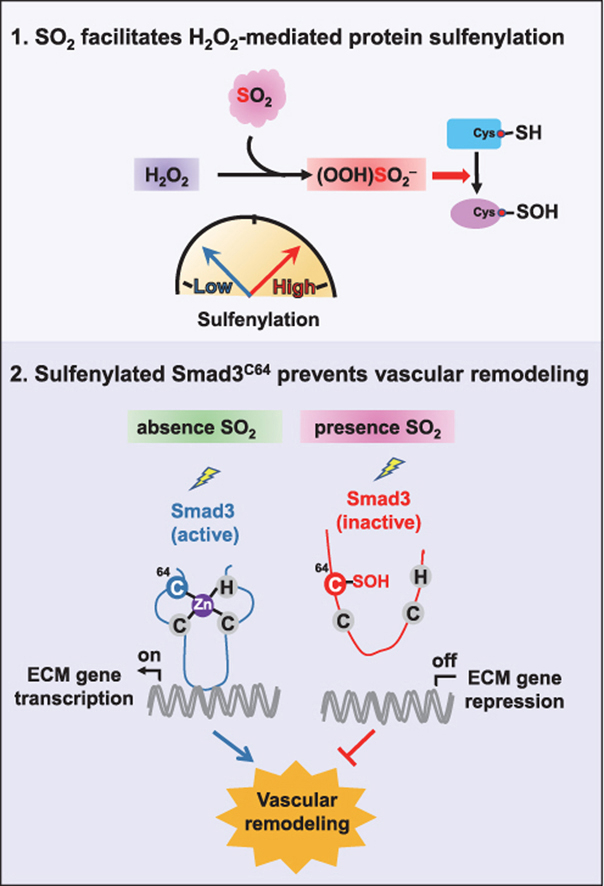
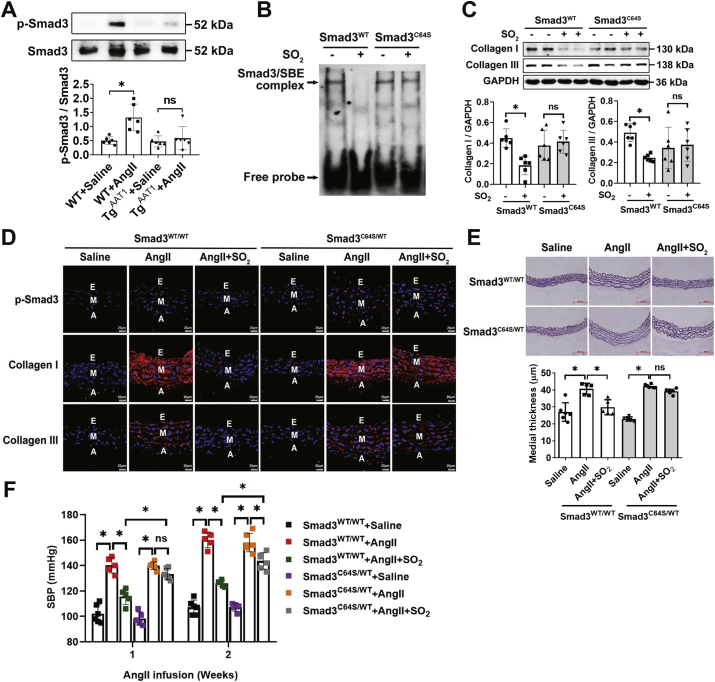
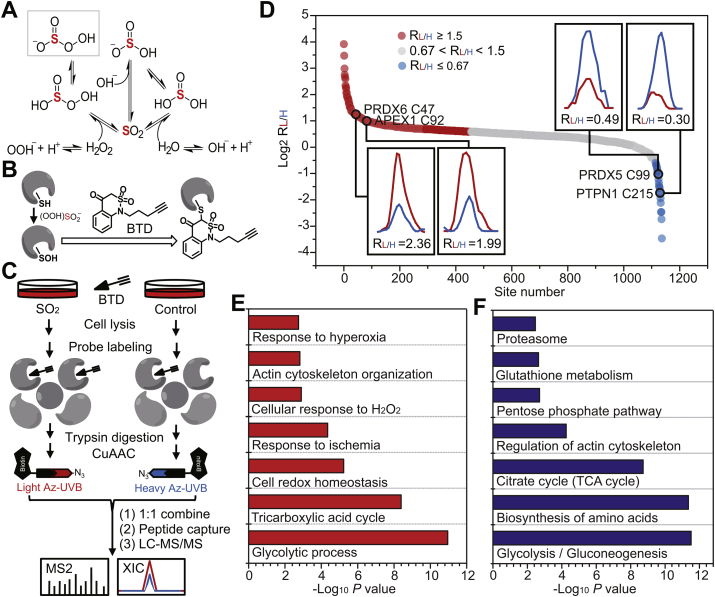
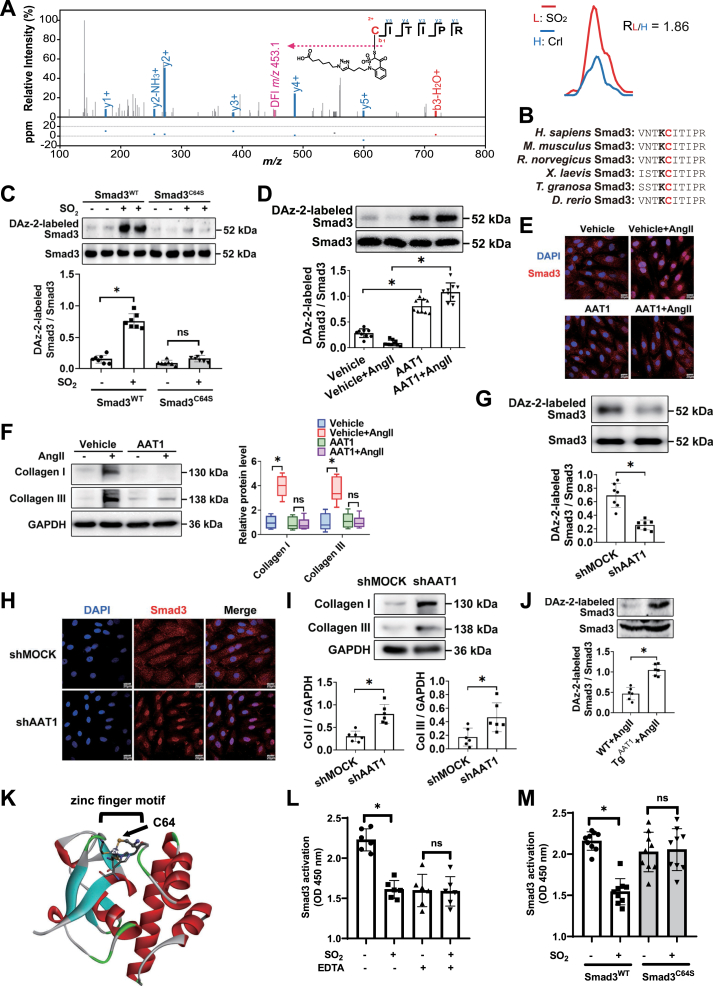
Sulfur dioxide (SO) has emerged as a physiological relevant signaling molecule that plays a prominent role in regulating vascular functions. However, molecular mechanisms whereby SO influences its upper-stream targets have been elusive. Here we show that SO may mediate conversion of hydrogen peroxide (HO) to a more potent oxidant, peroxymonosulfite, providing a pathway for activation of HO to convert the thiol group of protein cysteine residues to a sulfenic acid group, aka cysteine sulfenylation. By using site-centric chemoproteomics, we quantified >1000 sulfenylation events in vascular smooth muscle cells in response to exogenous SO. Notably, ~42% of these sulfenylated cysteines are dynamically regulated by SO, among which is cysteine-64 of Smad3 (Mothers against decapentaplegic homolog 3), a key transcriptional modulator of transforming growth factor β signaling. Sulfenylation of Smad3 at cysteine-64 inhibits its DNA binding activity, while mutation of this site attenuates the protective effects of SO on angiotensin II-induced vascular remodeling and hypertension. Taken together, our findings highlight the important role of SO in vascular pathophysiology through a redox-dependent mechanism.
二氧化硫 (SO) 已成为一种生理相关的信号分子,在调节血管功能方面发挥着重要作用。然而,SO 影响其上游靶标的分子机制仍不清楚。在这里,我们表明 SO 可能介导过氧化氢 (HO) 转化为更有效的氧化剂过氧单硫酸盐,为 HO 激活提供了一种途径,将蛋白质半胱氨酸残基的巯基转化为亚磺酸基团,即半胱氨酸亚磺酰化。通过使用基于位点的化学蛋白质组学,我们定量检测了血管平滑肌细胞对外源性 SO 反应中的 >1000 个半胱氨酸亚磺酰化事件。值得注意的是,这些半胱氨酸亚磺酰化中的约 42% 受到 SO 的动态调节,其中包括 Smad3(转化生长因子-β 信号的关键转录调节剂)中半胱氨酸 64 的亚磺酰化。Smad3 半胱氨酸 64 的亚磺酰化抑制其 DNA 结合活性,而该位点的突变会减弱 SO 对血管紧张素 II 诱导的血管重塑和高血压的保护作用。总之,我们的发现通过一种依赖于氧化还原的机制强调了 SO 在血管病理生理学中的重要作用。