Research and Development Service, James J. Peters Department of Veterans Affairs Medical Center, 130 West Kingsbridge Road, Bronx, NY, 10468, USA.
Department of Neurology, Icahn School of Medicine At Mount Sinai, One Gustave Levy Place, New York, NY, 10029, USA.
Acta Neuropathol Commun. 2021 Mar 1;9(1):33. doi: 10.1186/s40478-021-01128-3.
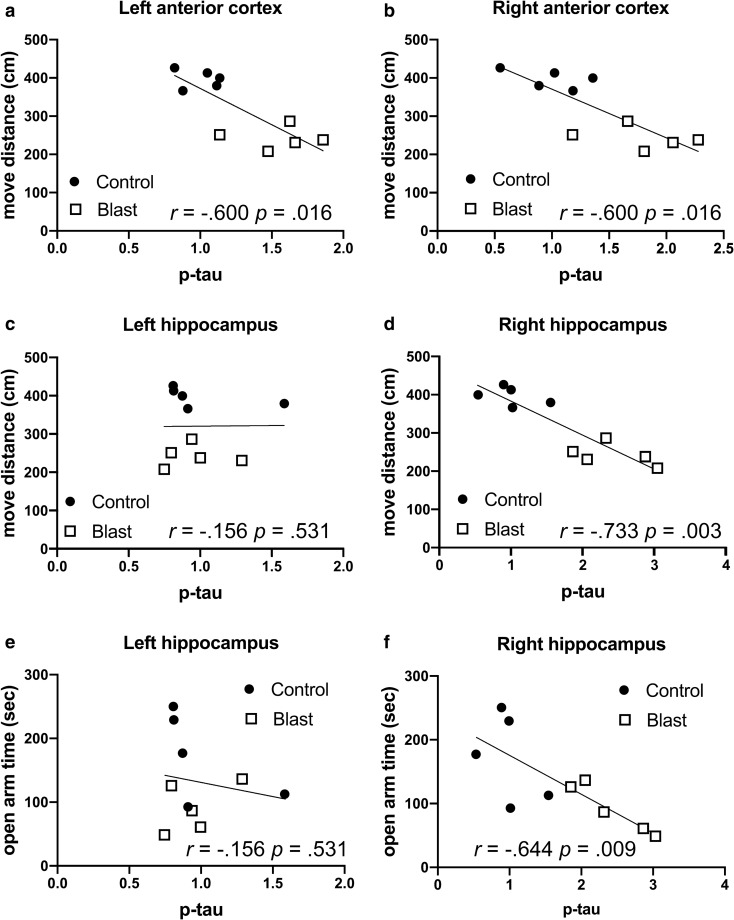
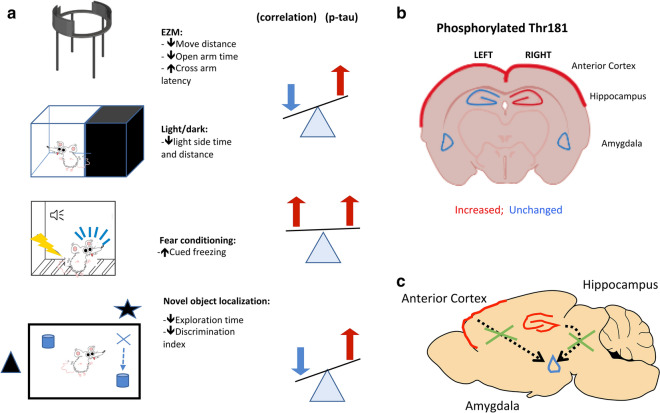
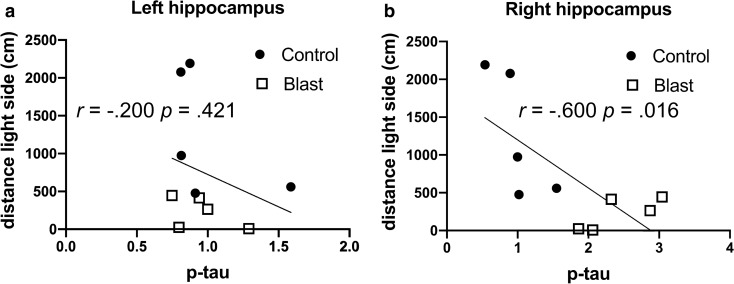
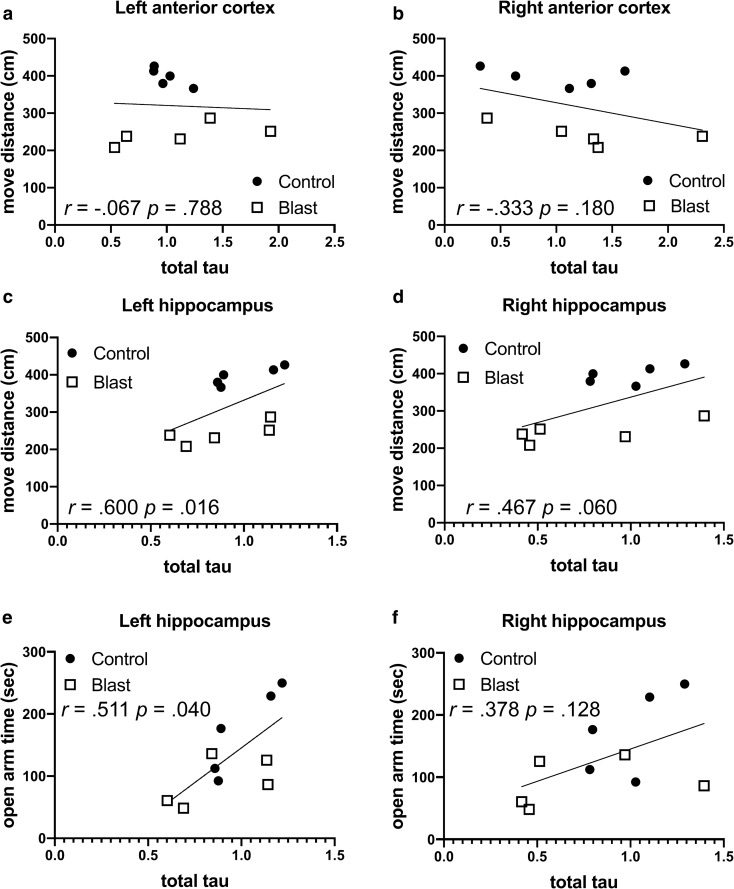
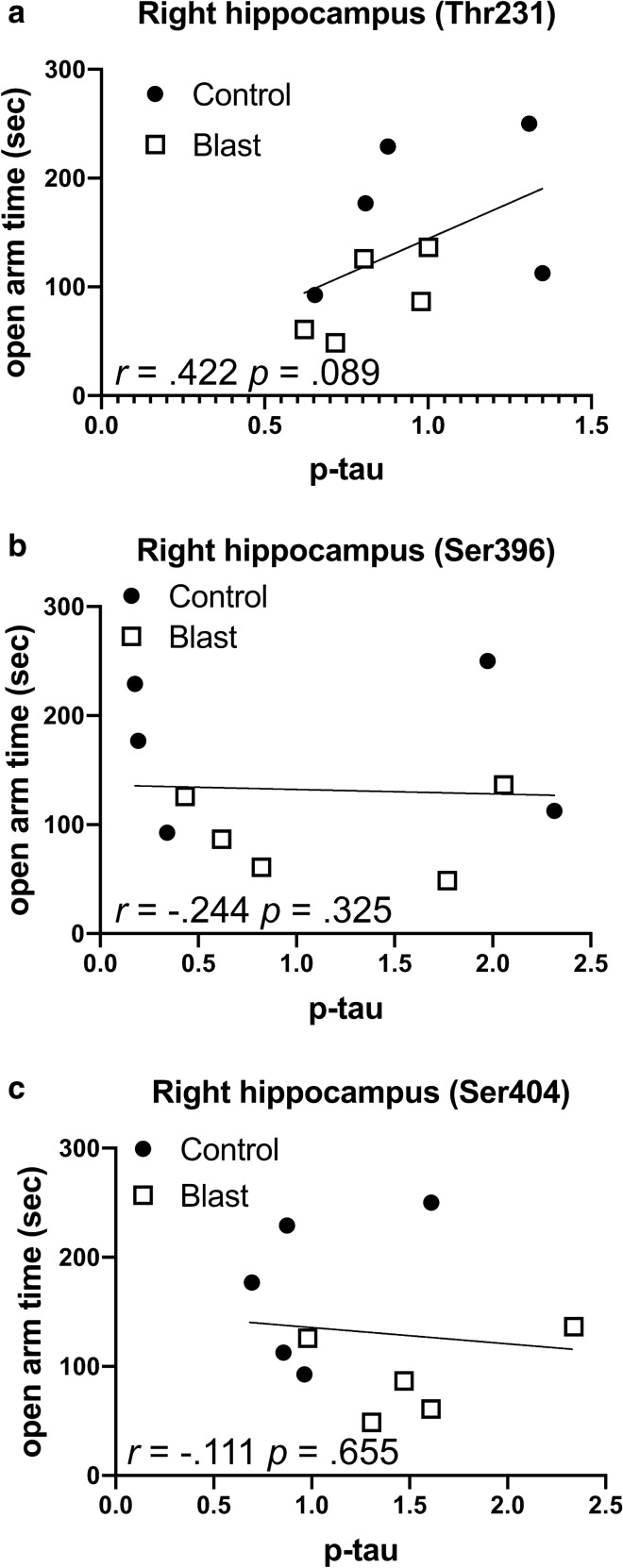
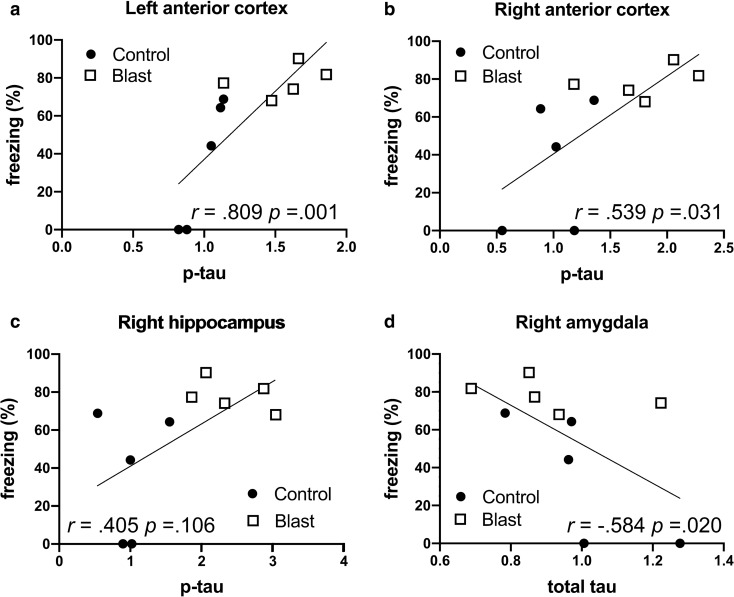
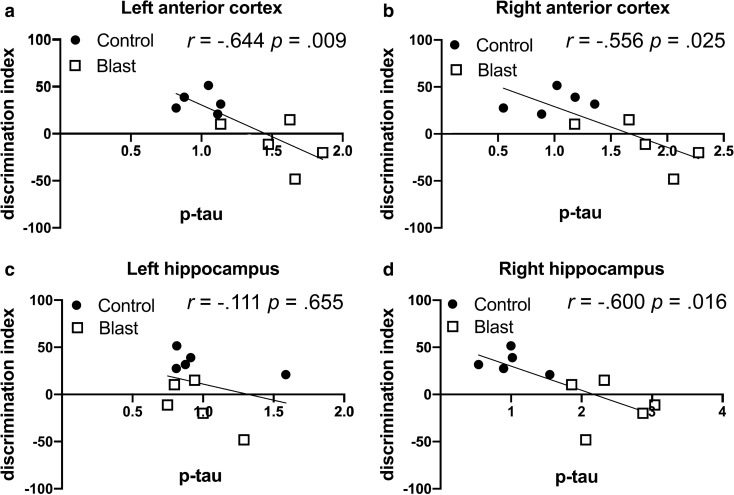
Military veterans who experience blast-related traumatic brain injuries often suffer from chronic cognitive and neurobehavioral syndromes. Reports of abnormal tau processing following blast injury have raised concerns that some cases may have a neurodegenerative basis. Rats exposed to repetitive low-level blast exhibit chronic neurobehavioral traits and accumulate tau phosphorylated at threonine 181 (Thr181). Using data previously reported in separate studies we tested the hypothesis that region-specific patterns of Thr181 phosphorylation correlate with behavioral measures also previously determined and reported in the same animals. Elevated p-tau Thr181 in anterior neocortical regions and right hippocampus correlated with anxiety as well as fear learning and novel object localization. There were no correlations with levels in amygdala or posterior neocortical regions. Particularly striking were asymmetrical effects on the right and left hippocampus. No systematic variation in head orientation toward the blast wave seems to explain the laterality. Levels did not correlate with behavioral measures of hyperarousal. Results were specific to Thr181 in that no correlations were observed for three other phospho-acceptor sites (threonine 231, serine 396, and serine 404). No consistent correlations were linked with total tau. These correlations are significant in suggesting that p-tau accumulation in anterior neocortical regions and the hippocampus may lead to disinhibited amygdala function without p-tau elevation in the amygdala itself. They also suggest an association linking blast injury with tauopathy, which has implications for understanding the relationship of chronic blast-related neurobehavioral syndromes in humans to neurodegenerative diseases.
经历爆炸相关创伤性脑损伤的退伍军人常患有慢性认知和神经行为综合征。爆炸伤后异常 tau 处理的报告引起了人们的关注,即某些病例可能具有神经退行性基础。反复接受低水平爆炸的大鼠表现出慢性神经行为特征,并积累了 threonine 181(Thr181)磷酸化的 tau。利用先前在单独研究中报告的数据,我们检验了这样一个假设,即 Thr181 磷酸化的区域特异性模式与先前在同一动物中确定和报告的行为测量结果相关。前皮质区域和右侧海马体中升高的 p-tau Thr181 与焦虑以及恐惧学习和新物体定位相关。在杏仁核或后皮质区域中没有相关性。在右侧和左侧海马体中存在明显的不对称效应尤其引人注目。似乎没有朝向爆炸波的头部定向的系统变化可以解释这种偏侧性。水平与过度唤醒的行为测量无关。结果对于 Thr181 是特异性的,因为在另外三个磷酸化受体位点(threonine 231、serine 396 和 serine 404)没有观察到相关性。与总 tau 也没有一致的相关性。这些相关性很重要,表明在前皮质区域和海马体中 p-tau 的积累可能导致杏仁核功能脱抑制,而杏仁核本身的 p-tau 没有升高。它们还表明,与 tau 病相关的爆炸伤之间存在关联,这对理解人类慢性爆炸相关神经行为综合征与神经退行性疾病之间的关系具有重要意义。