• 文献检索
  • 文档翻译
  • 深度研究
  • 学术资讯
  • Suppr Zotero 插件Zotero 插件
  • 邀请有礼
  • 套餐&价格
  • 历史记录
应用&插件
Suppr Zotero 插件Zotero 插件浏览器插件Mac 客户端Windows 客户端微信小程序
定价
高级版会员购买积分包购买API积分包
服务
文献检索文档翻译深度研究API 文档MCP 服务
关于我们
关于 Suppr公司介绍联系我们用户协议隐私条款
关注我们

Suppr 超能文献

核心技术专利:CN118964589B侵权必究
粤ICP备2023148730 号-1Suppr @ 2026

文献检索

告别复杂PubMed语法,用中文像聊天一样搜索,搜遍4000万医学文献。AI智能推荐,让科研检索更轻松。

立即免费搜索

文件翻译

保留排版,准确专业,支持PDF/Word/PPT等文件格式,支持 12+语言互译。

免费翻译文档

深度研究

AI帮你快速写综述,25分钟生成高质量综述,智能提取关键信息,辅助科研写作。

立即免费体验

经颅激光疗法不能改善遭受重复性低强度爆炸伤的大鼠的认知和创伤后应激障碍相关行为特征。

Transcranial Laser Therapy Does Not Improve Cognitive and Post-Traumatic Stress Disorder-Related Behavioral Traits in Rats Exposed to Repetitive Low-Level Blast Injury.

作者信息

Perez Garcia Georgina, Perez Gissel M, Otero-Pagan Alena, Abutarboush Rania, Kawoos Usmah, De Gasperi Rita, Gama Sosa Miguel A, Pryor Dylan, Hof Patrick R, Cook David G, Gandy Sam, Ahlers Stephen T, Elder Gregory A

机构信息

Research and Development Service, James J. Peters Department of Veterans Affairs Medical Center, Bronx, New York, USA.

Department of Neurology, Icahn School of Medicine at Mount Sinai, New York, New York, USA.

出版信息

Neurotrauma Rep. 2021 Dec 2;2(1):548-563. doi: 10.1089/neur.2021.0005. eCollection 2021.

DOI:10.1089/neur.2021.0005
PMID:34901948
原文链接:
https://pmc.ncbi.nlm.nih.gov/articles/PMC8655798/
Abstract

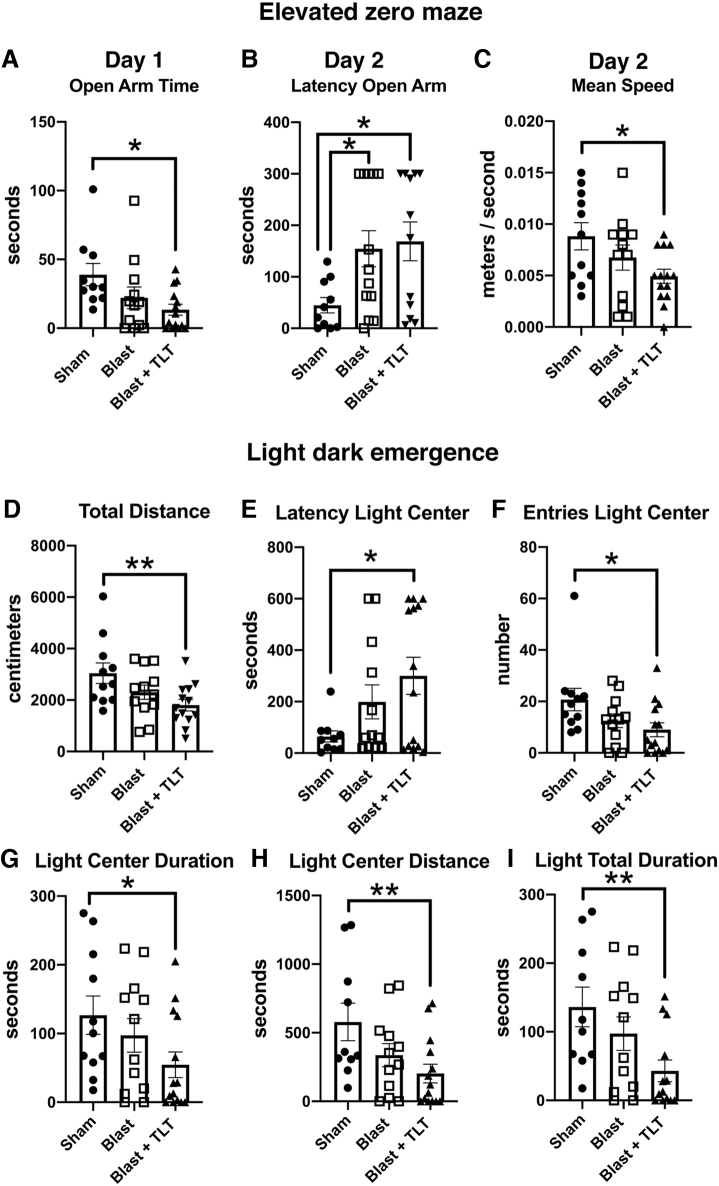
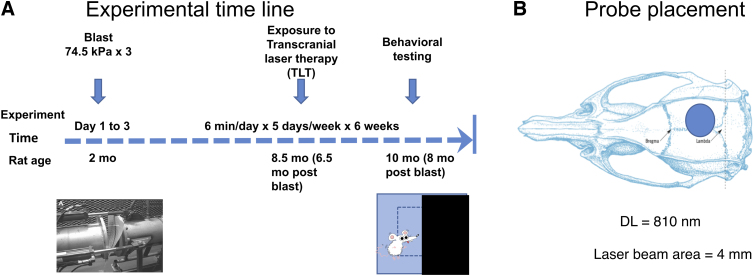
Many military veterans who experienced blast-related traumatic brain injuries (TBIs) in the conflicts in Iraq and Afghanistan suffer from chronic cognitive and mental health problems, including post-traumatic stress disorder (PTSD). Transcranial laser therapy (TLT) uses low-power lasers emitting light in the far- to near-infrared ranges. Beneficial effects of TLT have been reported in neurological and mental-health-related disorders in humans and animal models, including TBI. Rats exposed to repetitive low-level blast develop chronic cognitive and PTSD-related behavioral traits. We tested whether TLT treatment could reverse these traits. Rats received a 74.5-kPa blast or sham exposures delivered one per day for 3 consecutive days. Beginning at 34 weeks after blast exposure, the following groups of rats were treated with active or sham TLT: 1) Sham-exposed rats ( = 12) were treated with sham TLT; 2) blast-exposed rats ( = 13) were treated with sham TLT; and 3) blast-exposed rats ( = 14) were treated with active TLT. Rats received 5 min of TLT five times per week for 6 weeks (wavelength, 808 nm; power of irradiance, 240 mW). At the end of treatment, rats were tested in tasks found previously to be most informative (novel object recognition, novel object localization, contextual/cued fear conditioning, elevated zero maze, and light/dark emergence). TLT did not improve blast-related effects in any of these tests, and blast-exposed rats were worse after TLT in some anxiety-related measures. Based on these findings, TLT does not appear to be a promising treatment for the chronic cognitive and mental health problems that follow blast injury.

摘要

许多在伊拉克和阿富汗冲突中经历过与爆炸相关的创伤性脑损伤(TBI)的退伍军人患有慢性认知和心理健康问题,包括创伤后应激障碍(PTSD)。经颅激光治疗(TLT)使用发射远红外到近红外范围光的低功率激光。TLT在人类和动物模型的神经和心理健康相关疾病(包括TBI)中已报道有有益效果。暴露于重复性低强度爆炸的大鼠会出现慢性认知和与PTSD相关的行为特征。我们测试了TLT治疗是否能逆转这些特征。大鼠每天接受一次74.5千帕的爆炸或假暴露,连续3天。在爆炸暴露后34周开始,以下几组大鼠接受主动或假TLT治疗:1)假暴露大鼠(n = 12)接受假TLT治疗;2)爆炸暴露大鼠(n = 13)接受假TLT治疗;3)爆炸暴露大鼠(n = 14)接受主动TLT治疗。大鼠每周接受5次、每次5分钟的TLT治疗,共6周(波长808纳米;辐照功率240毫瓦)。在治疗结束时,对大鼠进行先前发现最具信息量的任务测试(新物体识别、新物体定位、情境/线索恐惧条件反射、高架零迷宫和明暗箱出现)。在任何这些测试中,TLT都没有改善与爆炸相关的影响,并且在一些与焦虑相关的测量中,爆炸暴露大鼠在接受TLT治疗后情况更糟。基于这些发现,TLT似乎不是治疗爆炸伤后慢性认知和心理健康问题的有前景的治疗方法。
https://cdn.ncbi.nlm.nih.gov/pmc/blobs/6722/8655798/ec21cf1c7f9c/neur.2021.0005_figure7.jpg
https://cdn.ncbi.nlm.nih.gov/pmc/blobs/6722/8655798/4d730b345f6a/neur.2021.0005_figure1.jpg
https://cdn.ncbi.nlm.nih.gov/pmc/blobs/6722/8655798/5572feb54a12/neur.2021.0005_figure2.jpg
https://cdn.ncbi.nlm.nih.gov/pmc/blobs/6722/8655798/e6e0436d933b/neur.2021.0005_figure3.jpg
https://cdn.ncbi.nlm.nih.gov/pmc/blobs/6722/8655798/c2b4c14cc5a5/neur.2021.0005_figure4.jpg
https://cdn.ncbi.nlm.nih.gov/pmc/blobs/6722/8655798/439ebe514670/neur.2021.0005_figure5.jpg
https://cdn.ncbi.nlm.nih.gov/pmc/blobs/6722/8655798/ae94c31c3a8e/neur.2021.0005_figure6.jpg
https://cdn.ncbi.nlm.nih.gov/pmc/blobs/6722/8655798/ec21cf1c7f9c/neur.2021.0005_figure7.jpg
https://cdn.ncbi.nlm.nih.gov/pmc/blobs/6722/8655798/4d730b345f6a/neur.2021.0005_figure1.jpg
https://cdn.ncbi.nlm.nih.gov/pmc/blobs/6722/8655798/5572feb54a12/neur.2021.0005_figure2.jpg
https://cdn.ncbi.nlm.nih.gov/pmc/blobs/6722/8655798/e6e0436d933b/neur.2021.0005_figure3.jpg
https://cdn.ncbi.nlm.nih.gov/pmc/blobs/6722/8655798/c2b4c14cc5a5/neur.2021.0005_figure4.jpg
https://cdn.ncbi.nlm.nih.gov/pmc/blobs/6722/8655798/439ebe514670/neur.2021.0005_figure5.jpg
https://cdn.ncbi.nlm.nih.gov/pmc/blobs/6722/8655798/ae94c31c3a8e/neur.2021.0005_figure6.jpg
https://cdn.ncbi.nlm.nih.gov/pmc/blobs/6722/8655798/ec21cf1c7f9c/neur.2021.0005_figure7.jpg

相似文献

1
Transcranial Laser Therapy Does Not Improve Cognitive and Post-Traumatic Stress Disorder-Related Behavioral Traits in Rats Exposed to Repetitive Low-Level Blast Injury.经颅激光疗法不能改善遭受重复性低强度爆炸伤的大鼠的认知和创伤后应激障碍相关行为特征。
Neurotrauma Rep. 2021 Dec 2;2(1):548-563. doi: 10.1089/neur.2021.0005. eCollection 2021.
2
Progressive Cognitive and Post-Traumatic Stress Disorder-Related Behavioral Traits in Rats Exposed to Repetitive Low-Level Blast.重复性低强度爆炸暴露大鼠的进行性认知和创伤后应激障碍相关行为特征。
J Neurotrauma. 2021 Jul 15;38(14):2030-2045. doi: 10.1089/neu.2020.7398. Epub 2021 Jan 25.
3
(2R,6R)-Hydroxynorketamine Treatment of Rats Exposed to Repetitive Low-Level Blast Injury.(2R,6R)-羟基去甲氯胺酮对重复性低强度爆炸伤大鼠的治疗作用
Neurotrauma Rep. 2023 Mar 30;4(1):197-217. doi: 10.1089/neur.2022.0088. eCollection 2023.
4
Metabotropic Glutamate Receptor 2 Expression Is Chronically Elevated in Male Rats With Post-Traumatic Stress Disorder Related Behavioral Traits Following Repetitive Low-Level Blast Exposure.代谢型谷氨酸受体 2 的表达在重复性低水平爆炸暴露后具有创伤后应激障碍相关行为特征的雄性大鼠中持续升高。
J Neurotrauma. 2024 Mar;41(5-6):714-733. doi: 10.1089/neu.2023.0252. Epub 2023 Dec 19.
5
Blast-induced "PTSD": Evidence from an animal model.爆炸导致的“创伤后应激障碍”:来自动物模型的证据。
Neuropharmacology. 2019 Feb;145(Pt B):220-229. doi: 10.1016/j.neuropharm.2018.09.023. Epub 2018 Sep 15.
6
Chronic post-traumatic stress disorder-related traits in a rat model of low-level blast exposure.低强度爆炸暴露大鼠模型中与慢性创伤后应激障碍相关的特质
Behav Brain Res. 2018 Mar 15;340:117-125. doi: 10.1016/j.bbr.2016.09.061. Epub 2016 Sep 28.
7
PTSD-Related Behavioral Traits in a Rat Model of Blast-Induced mTBI Are Reversed by the mGluR2/3 Receptor Antagonist BCI-838.创伤后应激障碍相关行为特征在爆炸诱导的微创伤性脑损伤大鼠模型中被 mGluR2/3 受体拮抗剂 BCI-838 逆转。
eNeuro. 2018 Jan 30;5(1). doi: 10.1523/ENEURO.0357-17.2018. eCollection 2018 Jan-Feb.
8
Blast exposure induces post-traumatic stress disorder-related traits in a rat model of mild traumatic brain injury.爆炸暴露会在轻度创伤性脑损伤大鼠模型中引起与创伤后应激障碍相关的特征。
J Neurotrauma. 2012 Nov 1;29(16):2564-75. doi: 10.1089/neu.2012.2510. Epub 2012 Aug 27.
9
Exposure to a Predator Scent Induces Chronic Behavioral Changes in Rats Previously Exposed to Low-level Blast: Implications for the Relationship of Blast-Related TBI to PTSD.暴露于捕食者气味会诱导先前暴露于低强度爆炸的大鼠出现慢性行为变化:对爆炸相关创伤性脑损伤与创伤后应激障碍关系的启示。
Front Neurol. 2016 Oct 18;7:176. doi: 10.3389/fneur.2016.00176. eCollection 2016.
10
Controlled Low-Pressure Blast-Wave Exposure Causes Distinct Behavioral and Morphological Responses Modelling Mild Traumatic Brain Injury, Post-Traumatic Stress Disorder, and Comorbid Mild Traumatic Brain Injury-Post-Traumatic Stress Disorder.可控低压爆炸波暴露会引发独特的行为和形态学反应,模拟轻度创伤性脑损伤、创伤后应激障碍以及创伤性脑损伤合并创伤后应激障碍。
J Neurotrauma. 2017 Jan 1;34(1):145-164. doi: 10.1089/neu.2015.4310. Epub 2016 Mar 30.

引用本文的文献

1
(2R,6R)-Hydroxynorketamine Treatment of Rats Exposed to Repetitive Low-Level Blast Injury.(2R,6R)-羟基去甲氯胺酮对重复性低强度爆炸伤大鼠的治疗作用
Neurotrauma Rep. 2023 Mar 30;4(1):197-217. doi: 10.1089/neur.2022.0088. eCollection 2023.

本文引用的文献

1
Transcranial photobiomodulation prevents PTSD-like comorbidities in rats experiencing underwater trauma.经颅光生物调节可预防水下创伤后出现 PTSD 样共病的大鼠发病。
Transl Psychiatry. 2021 May 5;11(1):270. doi: 10.1038/s41398-021-01389-5.
2
Photobiomodulation prevents PTSD-like memory impairments in rats.光生物调节可预防大鼠创伤后应激障碍样记忆损伤。
Mol Psychiatry. 2021 Nov;26(11):6666-6679. doi: 10.1038/s41380-021-01088-z. Epub 2021 Apr 15.
3
Laterality and region-specific tau phosphorylation correlate with PTSD-related behavioral traits in rats exposed to repetitive low-level blast.
重复性低强度爆炸暴露后大鼠的偏侧性和区域特异性 tau 磷酸化与 PTSD 相关行为特征相关。
Acta Neuropathol Commun. 2021 Mar 1;9(1):33. doi: 10.1186/s40478-021-01128-3.
4
Progressive Cognitive and Post-Traumatic Stress Disorder-Related Behavioral Traits in Rats Exposed to Repetitive Low-Level Blast.重复性低强度爆炸暴露大鼠的进行性认知和创伤后应激障碍相关行为特征。
J Neurotrauma. 2021 Jul 15;38(14):2030-2045. doi: 10.1089/neu.2020.7398. Epub 2021 Jan 25.
5
Brain and blood biomarkers of tauopathy and neuronal injury in humans and rats with neurobehavioral syndromes following blast exposure.爆炸暴露后出现神经行为综合征的人类和大鼠的 Tau 病和神经元损伤的脑和血液生物标志物。
Mol Psychiatry. 2021 Oct;26(10):5940-5954. doi: 10.1038/s41380-020-0674-z. Epub 2020 Feb 25.
6
Assessing a Blast-Related Biomarker in an Operational Community: Glial Fibrillary Acidic Protein in Experienced Breachers.评估一个作业社区中的爆炸相关生物标志物:经验丰富的爆破人员中的神经胶质纤维酸性蛋白。
J Neurotrauma. 2020 Apr 15;37(8):1091-1096. doi: 10.1089/neu.2019.6512. Epub 2020 Jan 14.
7
Acute and Chronic Molecular Signatures and Associated Symptoms of Blast Exposure in Military Breachers.军事爆破员中爆炸暴露的急性和慢性分子特征及相关症状。
J Neurotrauma. 2020 May 15;37(10):1221-1232. doi: 10.1089/neu.2019.6742. Epub 2019 Dec 12.
8
Penetration Profiles of Visible and Near-Infrared Lasers and Light-Emitting Diode Light Through the Head Tissues in Animal and Human Species: A Review of Literature.可见光和近红外激光以及发光二极管光在动物和人类头部组织中的穿透情况:文献综述
Photobiomodul Photomed Laser Surg. 2019 Oct;37(10):581-595. doi: 10.1089/photob.2019.4676. Epub 2019 Sep 25.
9
Effects of transcranial photobiomodulation and methylene blue on biochemical and behavioral profiles in mice stress model.经颅光生物调节和亚甲蓝对小鼠应激模型生化和行为特征的影响。
Lasers Med Sci. 2020 Apr;35(3):573-584. doi: 10.1007/s10103-019-02851-z. Epub 2019 Aug 1.
10
Relationship of traumatic brain injury to chronic mental health problems and dementia in military veterans.创伤性脑损伤与退伍军人的慢性心理健康问题和痴呆症的关系。
Neurosci Lett. 2019 Aug 10;707:134294. doi: 10.1016/j.neulet.2019.134294. Epub 2019 May 26.