Department of Biomedical Engineering, University of Iowa, Iowa City, IA, USA.
IIHR-Hydroscience and Engineering, 2406 Seamans Center for the Engineering Art and Science, University of Iowa, Iowa City, IA, 52242, USA.
Sci Rep. 2021 Mar 1;11(1):4916. doi: 10.1038/s41598-021-84547-5.
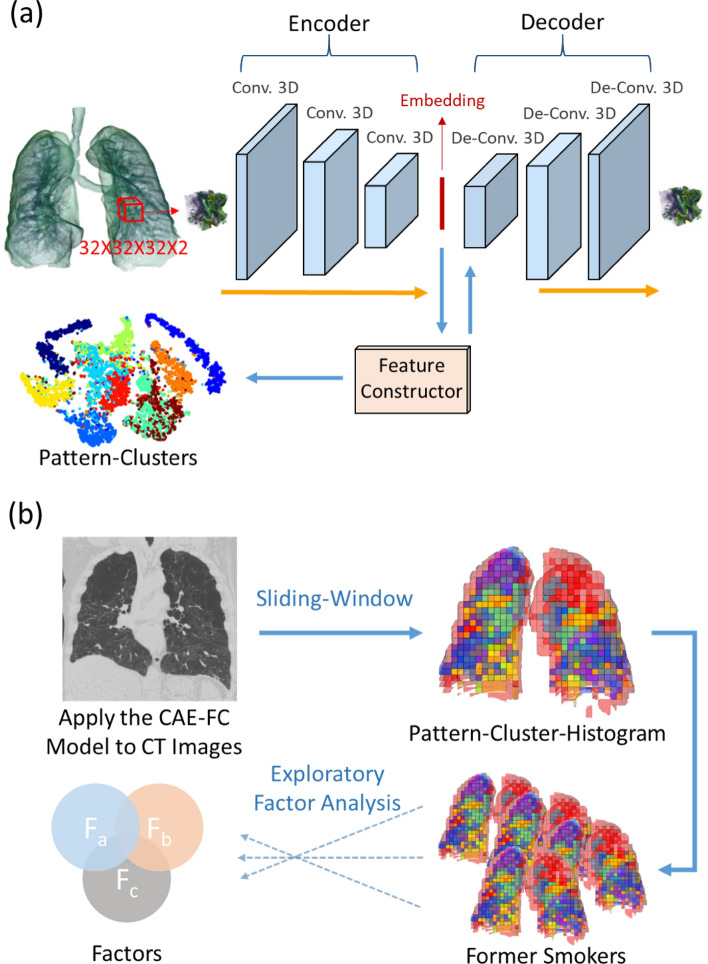
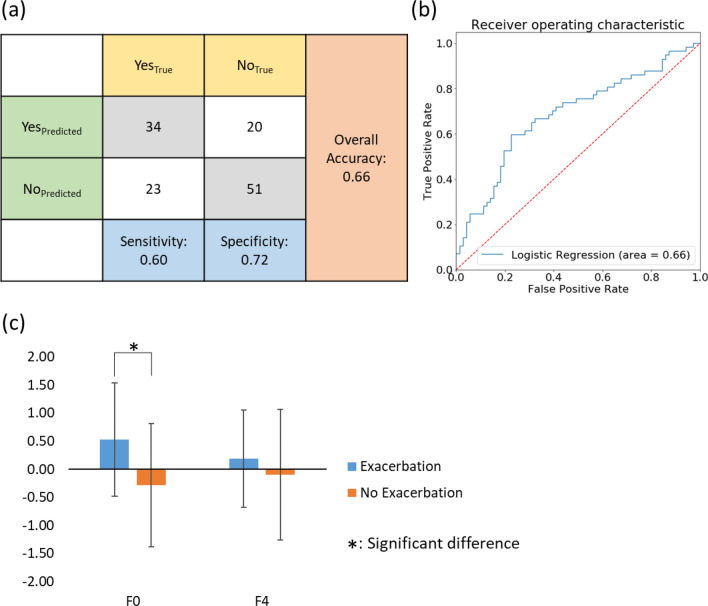
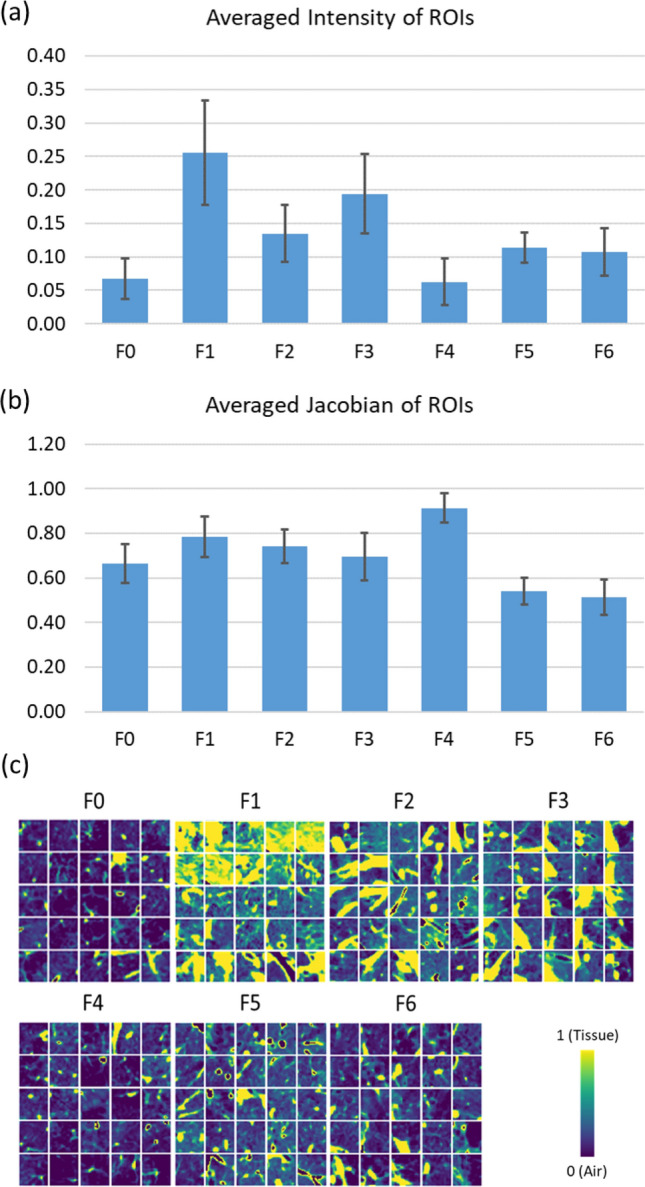
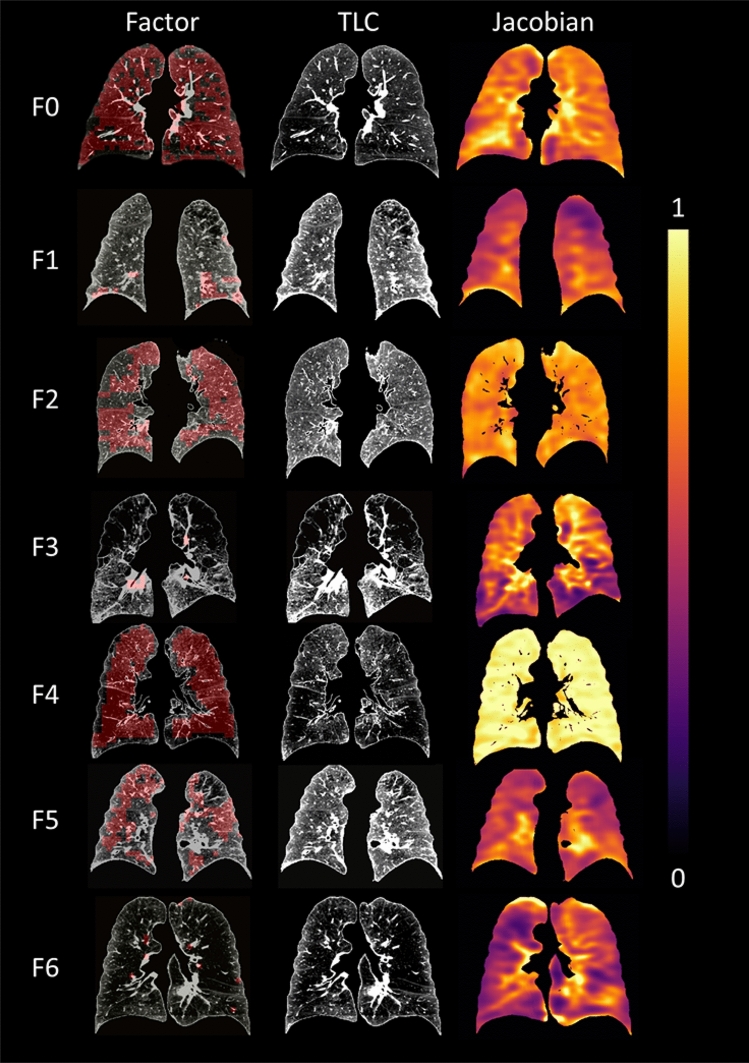
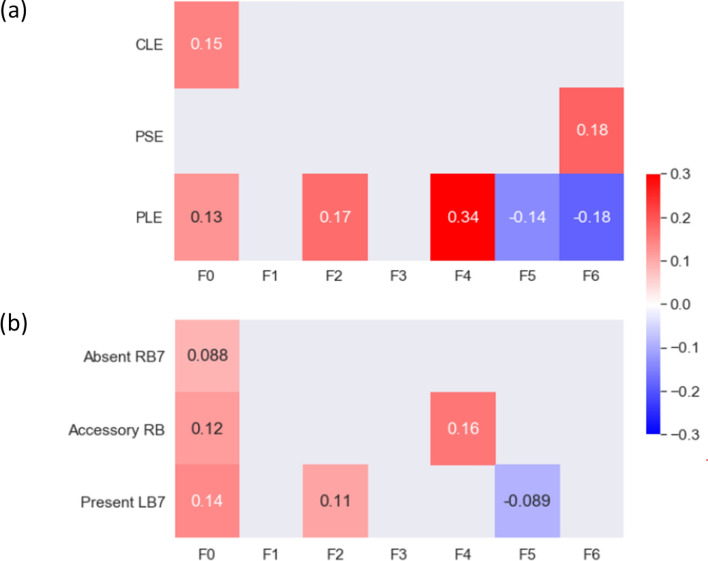
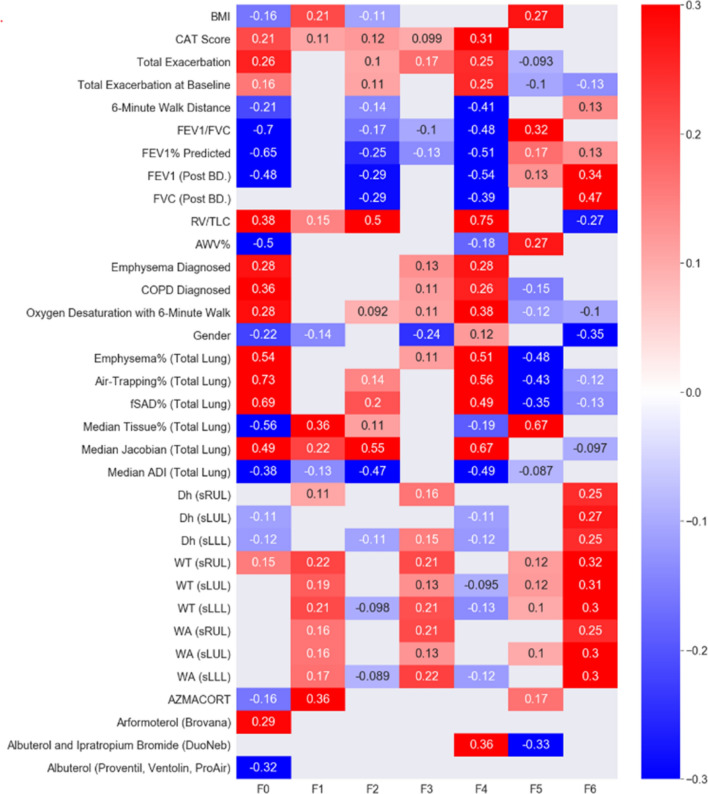
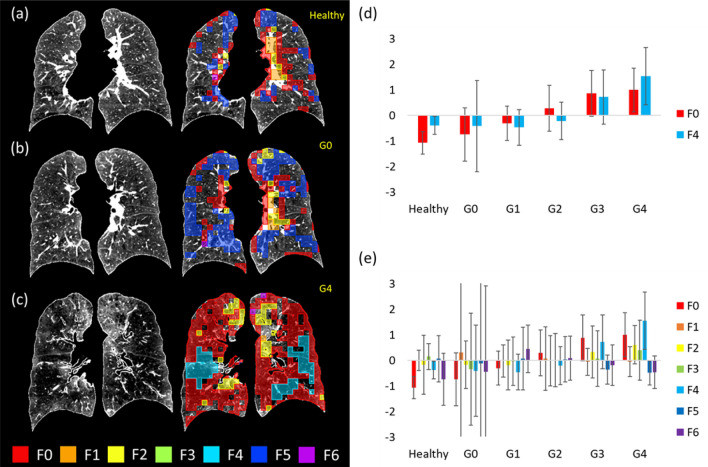
Chronic obstructive pulmonary disease (COPD) is a heterogeneous disease and the traditional variables extracted from computed tomography (CT) images may not be sufficient to describe all the topological features of lung tissues in COPD patients. We employed an unsupervised three-dimensional (3D) convolutional autoencoder (CAE)-feature constructor (FC) deep learning network to learn from CT data and derive tissue pattern-clusters jointly. We then applied exploratory factor analysis (EFA) to discover the unobserved latent traits (factors) among pattern-clusters. CT images at total lung capacity (TLC) and residual volume (RV) of 541 former smokers and 59 healthy non-smokers from the cohort of the SubPopulations and Intermediate Outcome Measures in the COPD Study (SPIROMICS) were analyzed. TLC and RV images were registered to calculate the Jacobian (determinant) values for all the voxels in TLC images. 3D Regions of interest (ROIs) with two data channels of CT intensity and Jacobian value were randomly extracted from training images and were fed to the 3D CAE-FC model. 80 pattern-clusters and 7 factors were identified. Factor scores computed for individual subjects were able to predict spirometry-measured pulmonary functions. Two factors which correlated with various emphysema subtypes, parametric response mapping (PRM) metrics, airway variants, and airway tree to lung volume ratio were discriminants of patients across all severity stages. Our findings suggest the potential of developing factor-based surrogate markers for new COPD phenotypes.
慢性阻塞性肺疾病(COPD)是一种异质性疾病,从计算机断层扫描(CT)图像中提取的传统变量可能不足以描述 COPD 患者肺部组织的所有拓扑特征。我们采用无监督的三维(3D)卷积自动编码器(CAE)-特征构造器(FC)深度学习网络,从 CT 数据中学习并联合提取组织模式聚类。然后,我们应用探索性因子分析(EFA)来发现模式聚类中未观察到的潜在特征(因子)。分析了来自 COPD 研究中的亚人群和中间结局测量(SPIROMICS)队列的 541 名前吸烟者和 59 名健康非吸烟者在全肺容量(TLC)和残气量(RV)时的 CT 图像。对 TLC 和 RV 图像进行配准,以计算 TLC 图像中所有体素的雅可比(行列式)值。从训练图像中随机提取具有 CT 强度和雅可比值两个数据通道的 3D 感兴趣区域(ROI),并将其输入 3D CAE-FC 模型。确定了 80 个模式聚类和 7 个因子。为个体受试者计算的因子得分能够预测肺活量测定法测量的肺功能。与各种肺气肿亚型、参数响应映射(PRM)指标、气道变异以及气道树与肺容积比相关的两个因子是所有严重程度阶段患者的鉴别因素。我们的研究结果表明,开发基于因子的 COPD 新表型替代标志物具有潜力。