Department of Cardiology, Tongren Hospital, Shanghai Jiao Tong University School of Medicine, Shanghai 200336, P.R. China.
Department of Cardiology, The First Affiliated Hospital of Nanjing Medical University, Nanjing, Jiangsu 210029, P.R. China.
Int J Mol Med. 2021 Apr;47(4). doi: 10.3892/ijmm.2021.4896. Epub 2021 Mar 2.
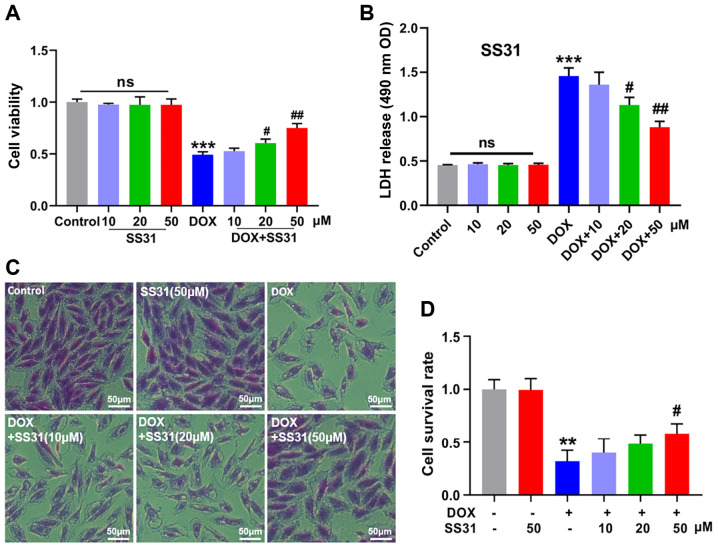
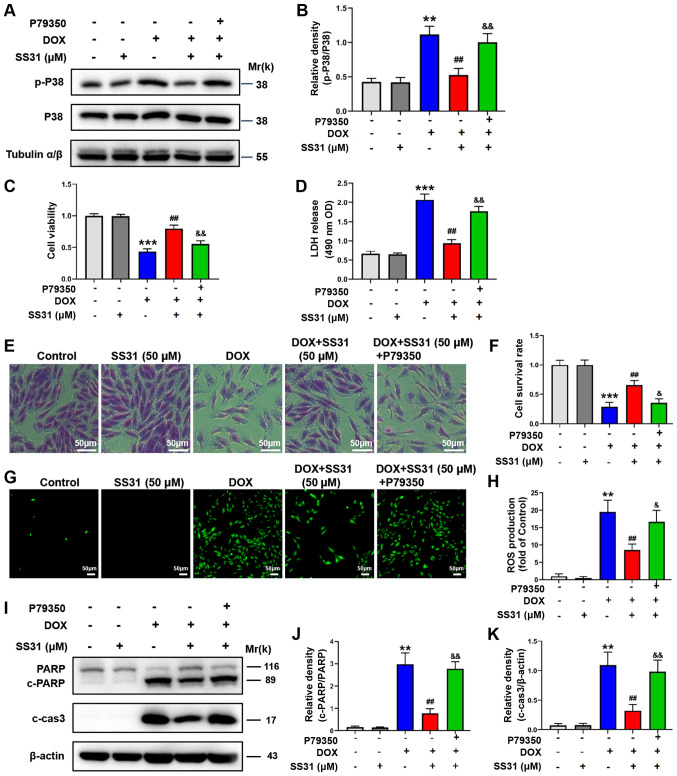
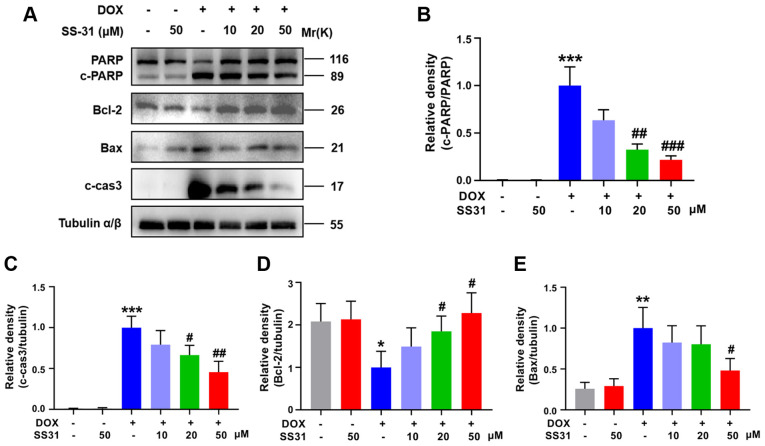
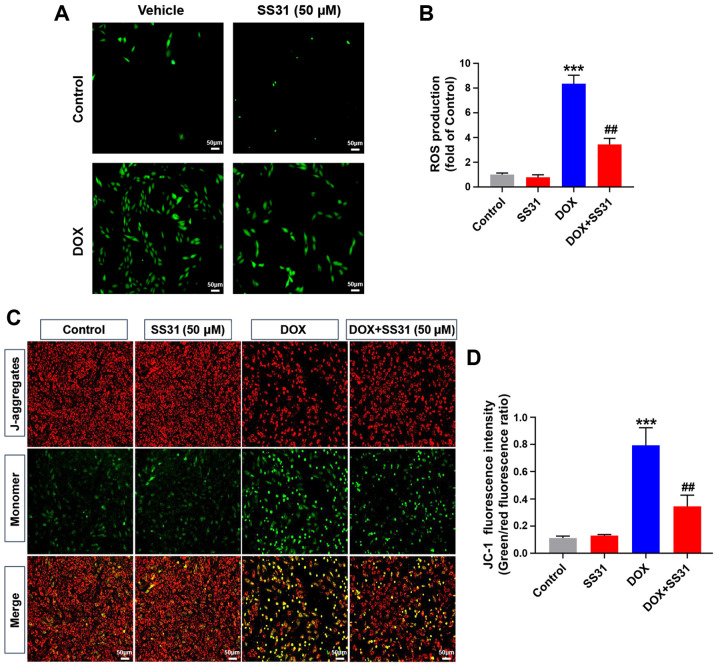
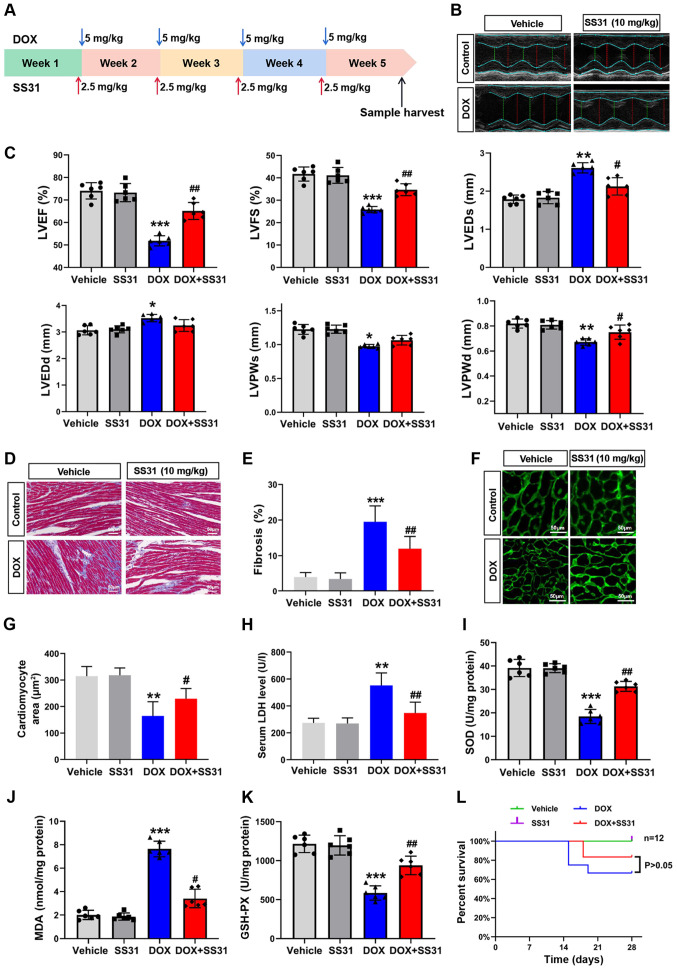
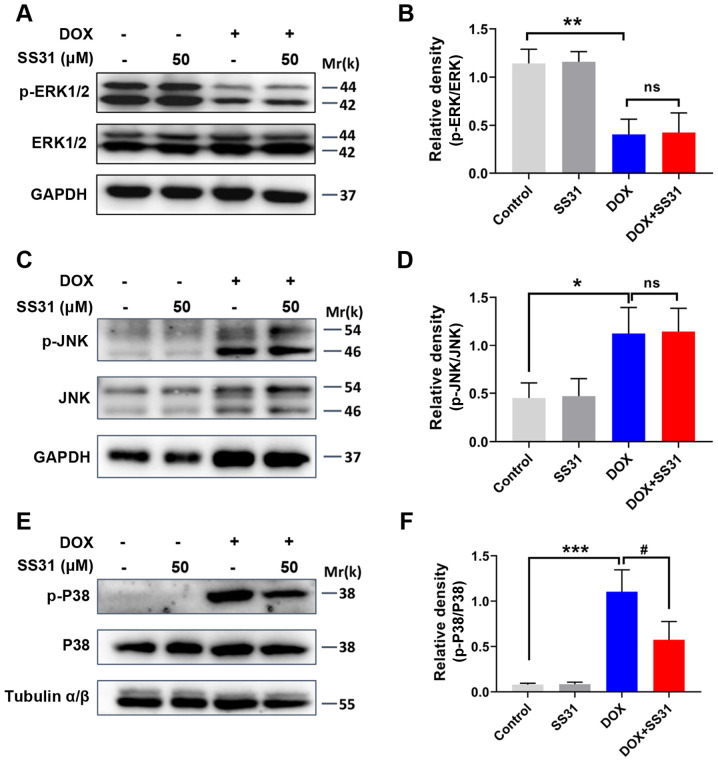
Oxidative stress serves a key role in doxorubicin (DOX)‑induced cardiotoxicity. The peptide Szeto‑Schiller (SS)31 is an efficacious antioxidant with the capacity to reduce mitochondrial reactive oxygen species (ROS) levels and scavenge free radicals. Although SS31 is involved in the pathophysiological process of various cardiovascular diseases, the role of SS31 in DOX‑induced cardiotoxicity remains unclear. To explore the effects of SS31 in DOX‑induced cardiotoxicity, the present study first constructed DOX‑induced cardiotoxicity models, in which H9c2 cells were incubated with 1 µM DOX for 24 h and C57BL/6 mice were administered DOX (20 mg/kg cumulative dose). The results of various assays in these models demonstrated that SS31 exhibited a cardioprotective effect and by attenuating the level of ROS, stabilizing the mitochondrial membrane potential and ameliorating myocardial apoptosis as well as fibrosis following treatment with DOX. Mechanistically, the results of the present study revealed that the p38 MAPK signaling pathway was inhibited by SS31 in DOX‑treated H9c2 cells, which was associated with the cardioprotective function of SS31. In addition, P79350, a selective agonist of p38 MAPK, reversed the protective effects of SS31. Taken together, these results demonstrated the effects of SS31 on ameliorating DOX‑induced cardiotoxicity and indicated its potential as a drug for the treatment of DOX‑induced cardiotoxicity.
氧化应激在阿霉素(DOX)诱导的心脏毒性中起关键作用。肽 Szeto-Schiller(SS)31 是一种有效的抗氧化剂,能够降低线粒体活性氧(ROS)水平并清除自由基。尽管 SS31 参与了各种心血管疾病的病理生理过程,但 SS31 在 DOX 诱导的心脏毒性中的作用尚不清楚。为了探讨 SS31 在 DOX 诱导的心脏毒性中的作用,本研究首先构建了 DOX 诱导的心脏毒性模型,其中 H9c2 细胞用 1µM DOX 孵育 24 小时,C57BL/6 小鼠给予 DOX(20mg/kg 累积剂量)。这些模型中的各种测定结果表明,SS31 表现出心脏保护作用,通过减轻 ROS 水平、稳定线粒体膜电位以及改善 DOX 处理后的心肌细胞凋亡和纤维化来发挥作用。从机制上讲,本研究的结果表明,SS31 抑制了 DOX 处理的 H9c2 细胞中的 p38 MAPK 信号通路,这与 SS31 的心脏保护功能有关。此外,p38 MAPK 的选择性激动剂 P79350 逆转了 SS31 的保护作用。总之,这些结果表明了 SS31 改善 DOX 诱导的心脏毒性的作用,并表明其可能成为治疗 DOX 诱导的心脏毒性的药物。