Division of Medical Genetics, Department of Medicine, Faculty of Medicine Siriraj Hospital, Mahidol University, Bangkok, Thailand.
Siriraj Genomics, Faculty of Medicine Siriraj Hospital, Mahidol University, Bangkok, Thailand.
Breast Cancer Res Treat. 2021 Jul;188(1):237-248. doi: 10.1007/s10549-021-06152-4. Epub 2021 Mar 1.
Germline genetic mutation plays a significant role in breast cancer susceptibility. The strength of such predisposition varies among ethnic groups across the globe, and clinical data from Asian population to develop a strategic approach to who should undergo a genetic test are lacking.
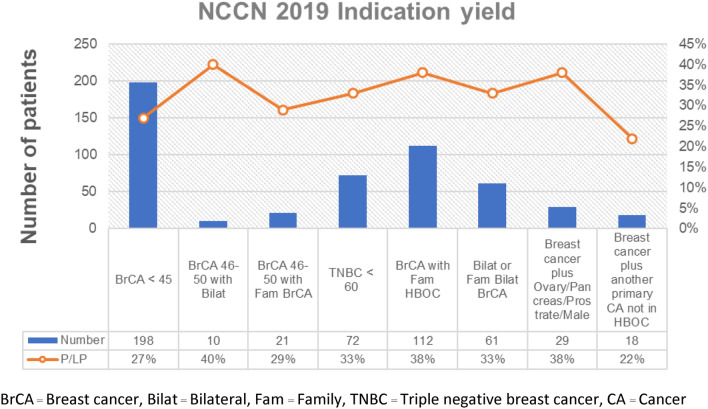
We performed a multigene test with next generation sequencing in Thai patients whose clinical history fulfilled NCCN criteria for breast/ovarian cancer genetic assessment, consists of 306 breast cancer patients, 62 ovarian cancer patients, 14 pancreatic cancer patients and 7 prostate cancer patients. Genetic test result and clinical history were then checked with each NCCN criteria to determined detection rate for each indication.
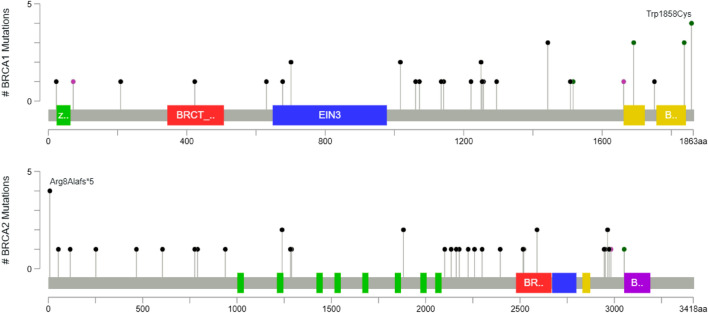
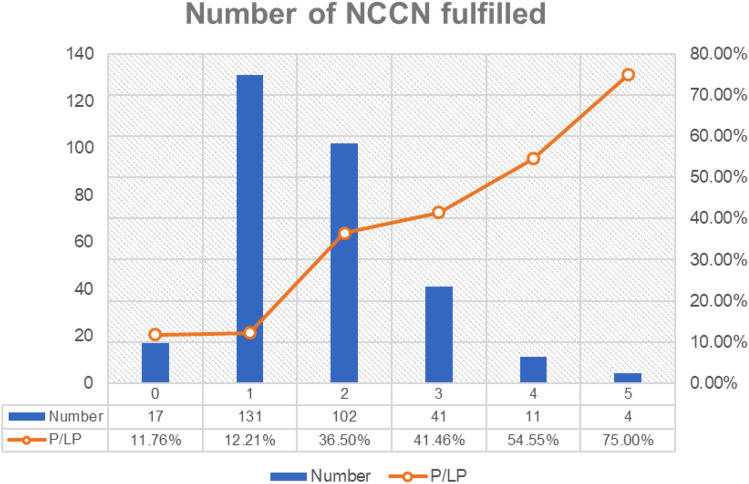
There were 83 pathogenic/likely pathogenic (P/LP) variants identified in 104 patients, 44 of these P/LP variants were novel. We reported a high rate of germline P/LP variants in breast cancer (24%), ovarian cancer (37%), pancreatic cancer (14%), and prostate cancer (29%). Germline P/LP variants in BRCA1 and BRCA2 accounted for 80% of P/LP variants found in breast cancer and 57% of P/LP variants found in ovarian cancer. The detection rate of patients who fulfilled NCCN 2019 guideline for genetic/familial high-risk assessment of breast and ovarian cancers was 22-40%.
Overall, the data from this study strongly support the consideration of multigene panel test as a diagnostic tool for patients with inherited cancer susceptibility in Thailand and Asian population. Implementation of the NCCN guideline is applicable, some modification may be needed to be more suitable for Asian population.
种系遗传突变在乳腺癌易感性中起着重要作用。这种易感性在全球不同种族群体中的强弱程度有所不同,而亚洲人群中缺乏用于制定策略以确定谁应进行基因检测的临床数据。
我们对符合 NCCN 乳腺癌/卵巢癌遗传评估标准的泰国患者进行了下一代测序的多基因检测,该检测包括 306 名乳腺癌患者、62 名卵巢癌患者、14 名胰腺癌患者和 7 名前列腺癌患者。然后将基因检测结果和临床病史与每个 NCCN 标准进行核对,以确定每个适应症的检出率。
在 104 名患者中发现了 83 种致病性/可能致病性(P/LP)变体,其中 44 种为新变体。我们报告了乳腺癌(24%)、卵巢癌(37%)、胰腺癌(14%)和前列腺癌(29%)中种系 P/LP 变体的高发生率。BRCA1 和 BRCA2 中的种系 P/LP 变体占乳腺癌中发现的 P/LP 变体的 80%,占卵巢癌中发现的 P/LP 变体的 57%。符合 NCCN 2019 年乳腺癌和卵巢癌遗传/家族高风险评估指南的患者的检出率为 22-40%。
总体而言,这项研究的数据强烈支持将多基因检测作为泰国和亚洲人群遗传性癌症易感性患者的诊断工具。NCCN 指南的实施是适用的,可能需要进行一些修改,以使其更适合亚洲人群。