Department of Clinical and Developmental Neuropsychology, Faculty of Behavioural and Social Sciences, University of Groningen, Grote Kruisstraat 2/1, 9712 TS, Groningen, The Netherlands.
Department of Psychiatry and Psychotherapy, University Medical Center Rostock, Gehlsheimer Str. 20, 18147, Rostock, Germany.
J Neural Transm (Vienna). 2021 Jul;128(7):1045-1063. doi: 10.1007/s00702-021-02318-y. Epub 2021 Mar 2.
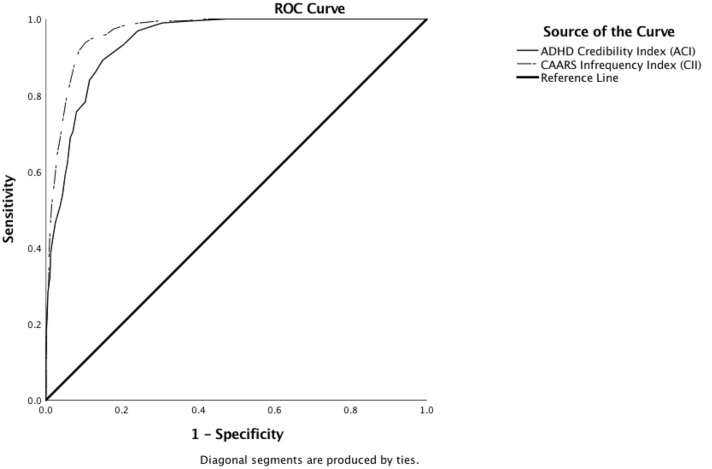
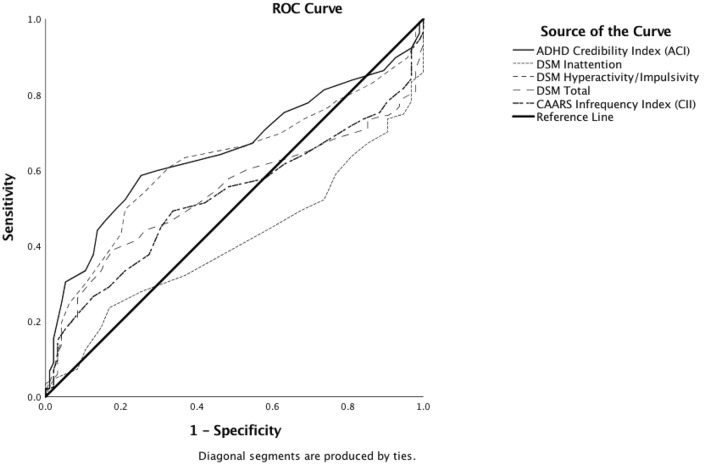
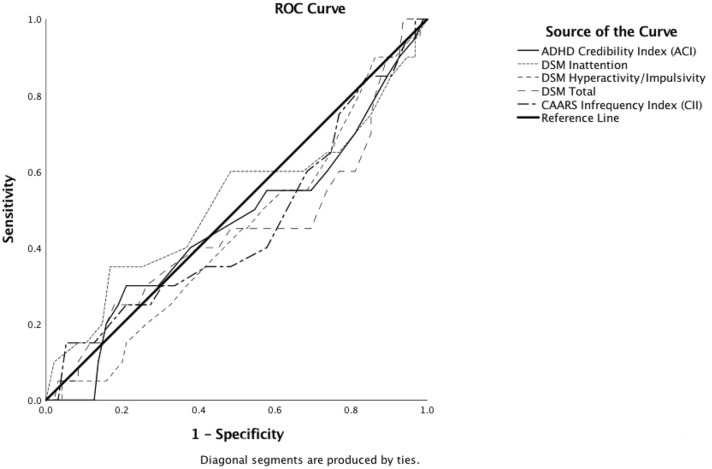
As attention-deficit/hyperactivity disorder (ADHD) is a feasible target for individuals aiming to procure stimulant medication or accommodations, there is a high clinical need for accurate assessment of adult ADHD. Proven falsifiability of commonly used diagnostic instruments is therefore of concern. The present study aimed to develop a new, ADHD-specific infrequency index to aid the detection of non-credible self-report. Disorder-specific adaptations of four detection strategies were embedded into the Conners' Adult ADHD Rating Scales (CAARS) and tested for infrequency among credible neurotypical controls (n = 1001) and credible adults with ADHD (n = 100). The new index' ability to detect instructed simulators (n = 242) and non-credible adults with ADHD (n = 22) was subsequently examined using ROC analyses. Applying a conservative cut-off score, the new index identified 30% of participants instructed to simulate ADHD while retaining a specificity of 98%. Items assessing supposed symptoms of ADHD proved most useful in distinguishing genuine patients with ADHD from simulators, whereas inquiries into unusual symptom combinations produced a small effect. The CAARS Infrequency Index (CII) outperformed the new infrequency index in terms of sensitivity (46%), but not overall classification accuracy as determined in ROC analyses. Neither the new infrequency index nor the CII detected non-credible adults diagnosed with ADHD with adequate accuracy. In contrast, both infrequency indices showed high classification accuracy when used to detect symptom over-report. Findings support the new indices' utility as an adjunct measure in uncovering feigned ADHD, while underscoring the need to differentiate general over-reporting from specific forms of feigning.
由于注意力缺陷/多动障碍(ADHD)是个人寻求兴奋剂药物或适应措施的可行目标,因此对成人 ADHD 的准确评估存在很高的临床需求。因此,常用诊断工具的已证实可证伪性令人关注。本研究旨在开发一种新的 ADHD 特异性不频繁指数,以帮助检测不可信的自我报告。将四种检测策略的特定于疾病的适应性嵌入 Conners' 成人 ADHD 评定量表(CAARS)中,并在可信的神经典型对照组(n=1001)和可信的 ADHD 成人(n=100)中测试其不频繁性。随后使用 ROC 分析检查新指数检测指令性模拟者(n=242)和不可信的 ADHD 成人(n=22)的能力。使用保守的截止分数,新指数识别出 30%接受指示模拟 ADHD 的参与者,同时保持 98%的特异性。评估 ADHD 所谓症状的项目在区分真正的 ADHD 患者与模拟者方面最有用,而对不寻常症状组合的询问产生的效果较小。CAARS 不频繁指数(CII)在敏感性方面(46%)优于新的不频繁指数,但在 ROC 分析确定的总体分类准确性方面并非如此。新的不频繁指数和 CII 都无法以足够的准确性检测出被诊断患有 ADHD 的不可信成年人。相比之下,当用于检测症状过度报告时,两个不频繁指数都显示出较高的分类准确性。研究结果支持新指数作为揭示伪装 ADHD 的辅助措施的效用,同时强调需要区分一般的过度报告和特定形式的伪装。