Department of Civil and Environmental Engineering, Politecnico di Milano, Piazza L. da Vinci 32, 20133 Milano, Italy.
Department of Civil Engineering, Faculty of Engineering, Ferdowsi University of Mashhad, Mashhad 9177948944, Iran.
Sensors (Basel). 2021 Feb 26;21(5):1646. doi: 10.3390/s21051646.
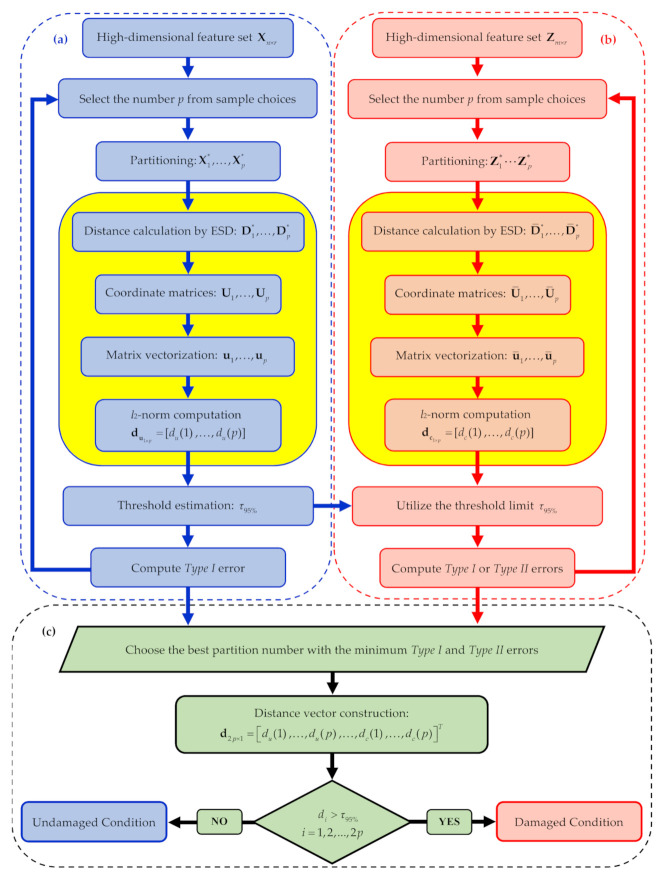
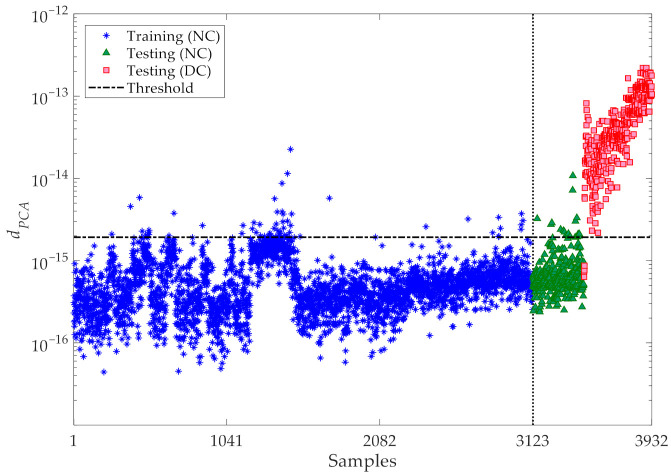
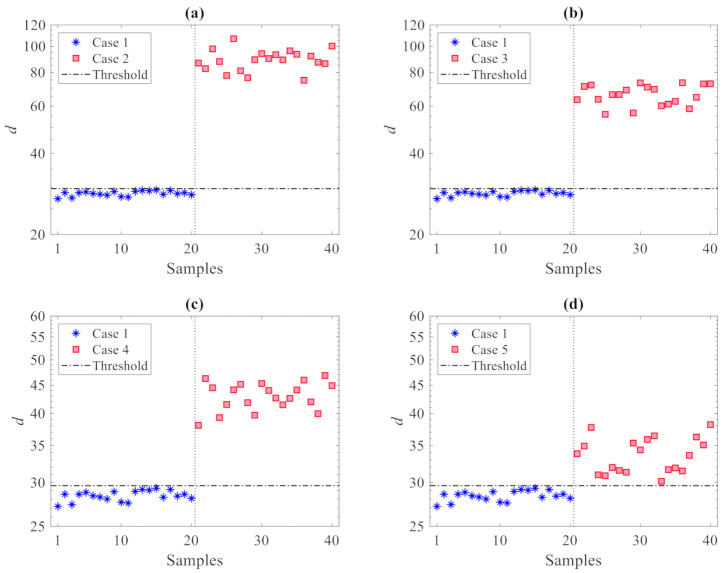
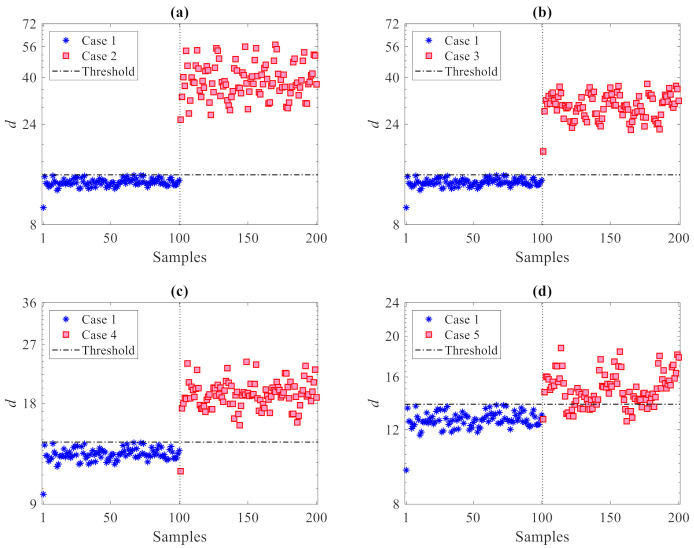
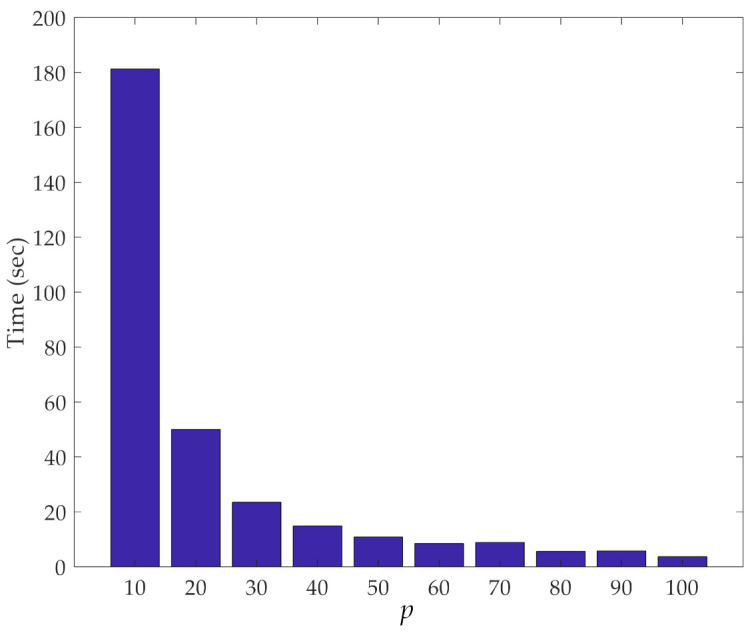
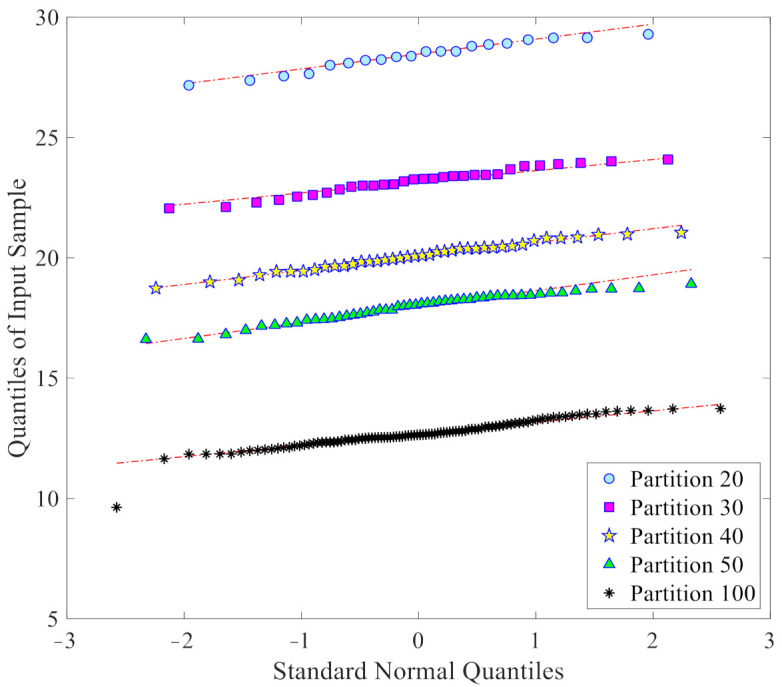
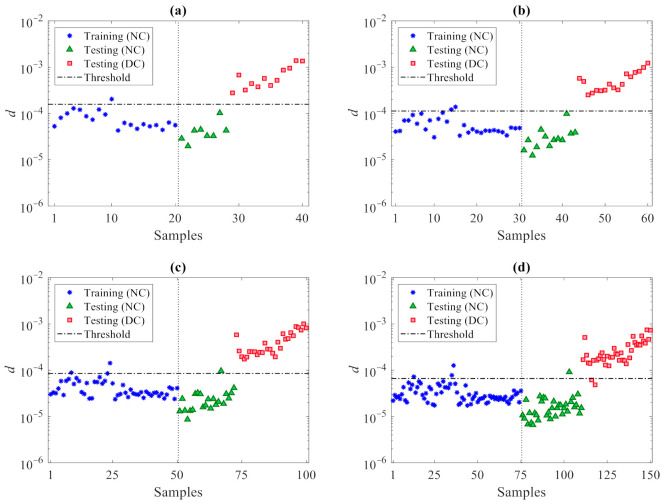
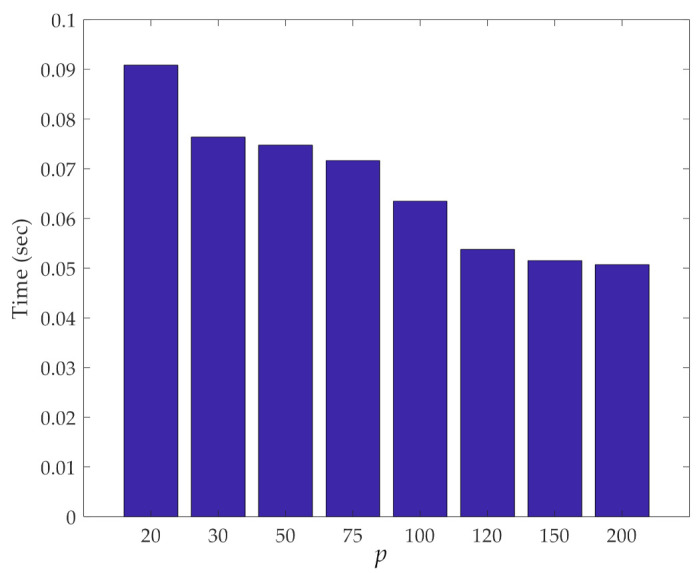
A major challenge in structural health monitoring (SHM) is the efficient handling of big data, namely of high-dimensional datasets, when damage detection under environmental variability is being assessed. To address this issue, a novel data-driven approach to early damage detection is proposed here. The approach is based on an efficient partitioning of the dataset, gathering the sensor recordings, and on classical multidimensional scaling (CMDS). The partitioning procedure aims at moving towards a low-dimensional feature space; the CMDS algorithm is instead exploited to set the coordinates in the mentioned low-dimensional space, and define damage indices through norms of the said coordinates. The proposed approach is shown to efficiently and robustly address the challenges linked to high-dimensional datasets and environmental variability. Results related to two large-scale test cases are reported: the ASCE structure, and the Z24 bridge. A high sensitivity to damage and a limited (if any) number of false alarms and false detections are reported, testifying the efficacy of the proposed data-driven approach.
在结构健康监测 (SHM) 中,一个主要的挑战是高效处理大数据,即高维数据集,特别是在评估环境变化下的损伤检测时。为了解决这个问题,本文提出了一种新的数据驱动方法来进行早期损伤检测。该方法基于数据集的有效划分,收集传感器记录,并基于经典多维尺度 (CMDS)。分区过程旨在向低维特征空间移动;CMDS 算法则用于在所述低维空间中设置坐标,并通过所述坐标的范数定义损伤指标。所提出的方法被证明能够有效地、稳健地应对与高维数据集和环境变化相关的挑战。报告了与两个大规模测试案例相关的结果:ASCE 结构和 Z24 桥。结果表明,该方法对损伤具有高度敏感性,并且只有有限数量(如果有的话)的误报和漏报,证明了所提出的数据驱动方法的有效性。