Departamento de Fisiología, Facultad de Medicina, Universidad Nacional Autónoma de México (UNAM), Mexico City, Mexico.
Departamento de Neurobiología del desarrollo y neurofisiología, Instituto de Neurobiología, Universidad Nacional Autónoma de México (UNAM), Querétaro, Mexico.
BMC Neurosci. 2021 Mar 2;22(1):14. doi: 10.1186/s12868-021-00620-9.
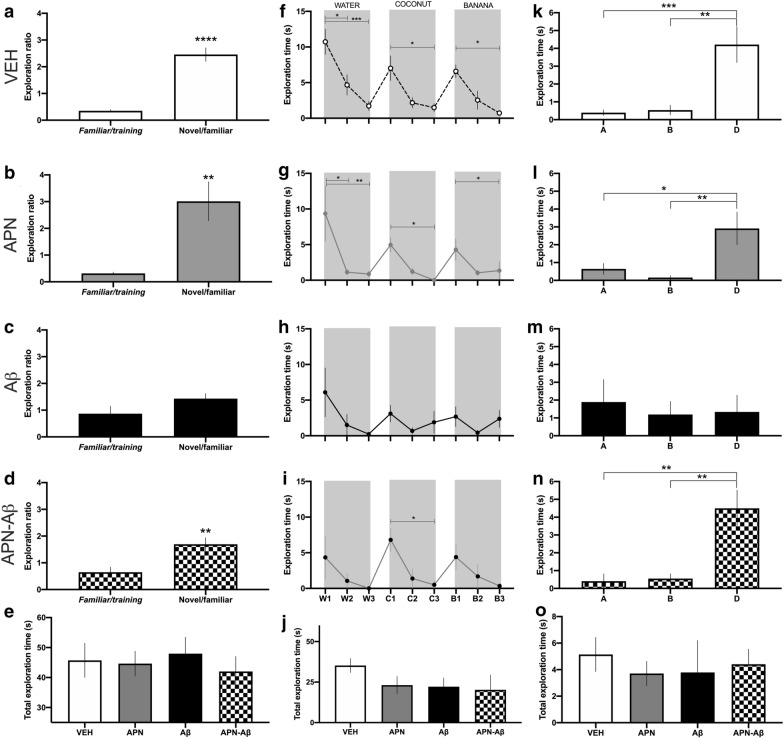
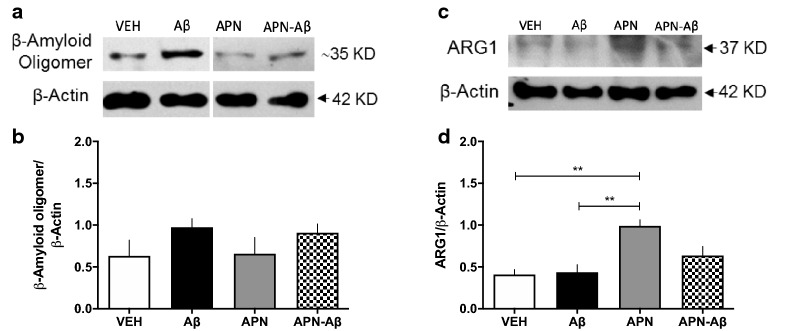
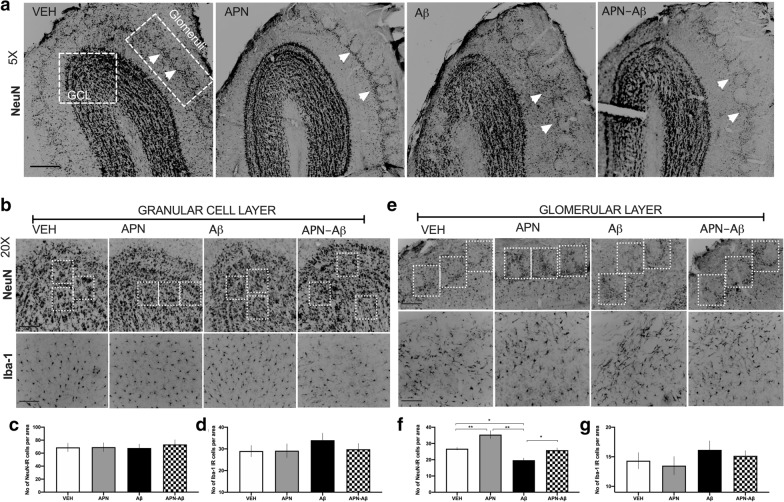
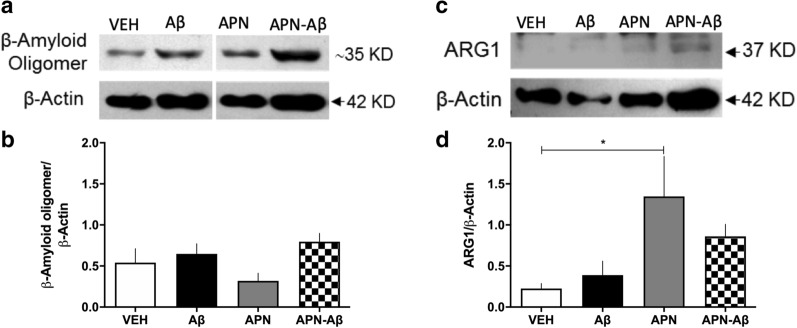
Alzheimer's disease (AD) is characterized by cognitive impairment that eventually develops into dementia. Amyloid-beta (Aβ) accumulation is a widely described hallmark in AD, and has been reported to cause olfactory dysfunction, a condition considered an early marker of the disease associated with injuries in the olfactory bulb (OB), the hippocampus (HIPP) and other odor-related cortexes. Adiponectin (APN) is an adipokine with neuroprotective effects. Studies have demonstrated that APN administration decreases Aβ neurotoxicity and Tau hyperphosphorylation in the HIPP, reducing cognitive impairment. However, there are no studies regarding the neuroprotective effects of APN in the olfactory dysfunction observed in the Aβ rat model. The aim of the present study is to determine whether the intracerebroventricular (i.c.v) administration of APN prevents the early olfactory dysfunction in an i.c.v Amyloid-beta (Aβ) rat model. Hence, we evaluated olfactory function by using a battery of olfactory tests aimed to assess olfactory memory, discrimination and detection in the Aβ rat model treated with APN. In addition, we determined the number of cells expressing the neuronal nuclei (NeuN), as well as the number of microglial cells by using the ionized calcium-binding adapter molecule 1 (Iba-1) marker in the OB and, CA1, CA3, hilus and dentate gyrus (DG) in the HIPP. Finally, we determined Arginase-1 expression in both nuclei through Western blot.
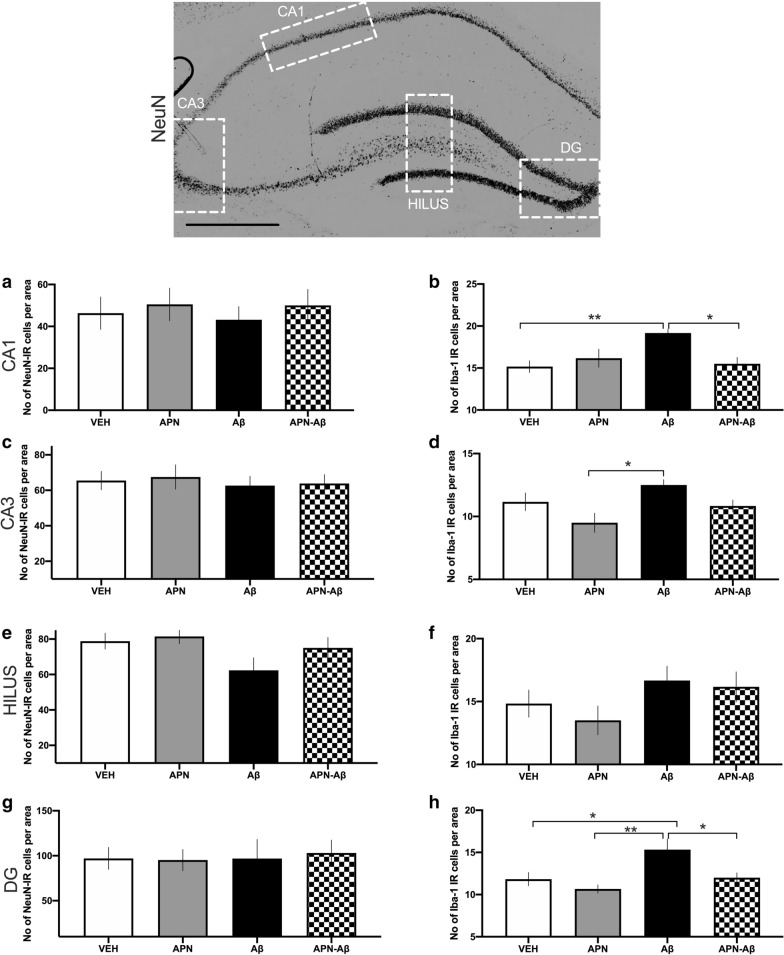
We observed that the i.c.v injection of Aβ decreased olfactory function, which was prevented by the i.c.v administration of APN. In accordance with the olfactory impairment observed in i.c.v Aβ-treated rats, we observed a decrease in NeuN expressing cells in the glomerular layer of the OB, which was also prevented with the i.c.v APN. Furthermore, we observed an increase of Iba-1 cells in CA1, and DG in the HIPP of the Aβ rats, which was prevented by the APN treatment.
The present study describes the olfactory impairment of Aβ treated rats and evidences the protective role that APN plays in the brain, by preventing the olfactory impairment induced by Aβ. These results may lead to APN-based pharmacological therapies aimed to ameliorate AD neurotoxic effects.
阿尔茨海默病(AD)的特征是认知障碍,最终发展为痴呆。淀粉样蛋白-β(Aβ)的积累是 AD 中广泛描述的标志,并且已经报道其导致嗅觉功能障碍,这种情况被认为是与嗅球(OB)、海马(HIPP)和其他与气味相关的皮质损伤相关的疾病的早期标志物。脂联素(APN)是一种具有神经保护作用的脂肪因子。研究表明,APN 给药可减少 HIPP 中的 Aβ神经毒性和 Tau 过度磷酸化,从而减轻认知障碍。然而,目前尚无关于 APN 在 Aβ 大鼠模型中观察到的嗅觉功能障碍中的神经保护作用的研究。本研究旨在确定脑室内(i.c.v)给予 APN 是否可防止 i.c.v 淀粉样蛋白-β(Aβ)大鼠模型中的早期嗅觉功能障碍。因此,我们通过使用一系列旨在评估 Aβ 大鼠模型嗅觉记忆、辨别和检测的嗅觉测试来评估嗅觉功能,并用 APN 治疗。此外,我们通过使用离子钙结合接头分子 1(Iba-1)标志物确定 OB 和 HIPP 的 CA1、CA3、齿状回(DG)中的神经元核(NeuN)表达细胞以及小胶质细胞的数量。最后,我们通过 Western blot 确定两个核中精氨酸酶-1的表达。
我们观察到 i.c.v 注射 Aβ 降低了嗅觉功能,而 i.c.v 给予 APN 可预防这种情况。与 i.c.v Aβ 处理大鼠观察到的嗅觉损伤一致,我们观察到 OB 肾小球层中表达 NeuN 的细胞减少,而 i.c.v APN 也可预防这种情况。此外,我们观察到 HIPP 的 CA1 和 DG 中的 Iba-1 细胞增加,而 Aβ 大鼠的 APN 治疗可预防这种情况。
本研究描述了 Aβ 处理大鼠的嗅觉损伤,并证明了 APN 在大脑中发挥的保护作用,可预防 Aβ 引起的嗅觉损伤。这些结果可能导致基于 APN 的药物治疗,旨在改善 AD 的神经毒性作用。