Centre for Online Health, Centre for Health Services Research, The University of Queensland, Woolloongabba, Queensland, Australia.
Centre for Online Health, Centre for Health Services Research, The University of Queensland, Woolloongabba, Queensland, Australia
BMJ Open. 2021 Mar 2;11(3):e040232. doi: 10.1136/bmjopen-2020-040232.
Chronic diseases are associated with increased unplanned acute hospital use. Remote patient monitoring (RPM) can detect disease exacerbations and facilitate proactive management, possibly reducing expensive acute hospital usage. Current evidence examining RPM and acute care use mainly involves heart failure and omits automated invasive monitoring. This study aimed to determine if RPM reduces acute hospital use.
A systematic literature review of PubMed, Embase and CINAHL electronic databases was undertaken in July 2019 and updated in October 2020 for studies published from January 2015 to October 2020 reporting RPM and effect on hospitalisations, length of stay or emergency department presentations. All populations and disease conditions were included. Two independent reviewers screened articles. Quality analysis was performed using the Joanna Briggs Institute checklist. Findings were stratified by outcome variable. Subgroup analysis was undertaken on disease condition and RPM technology.
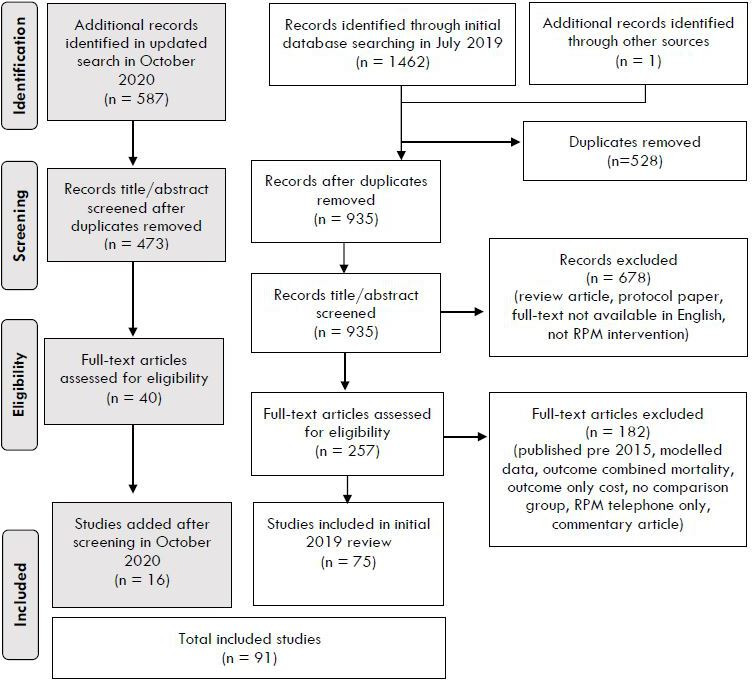
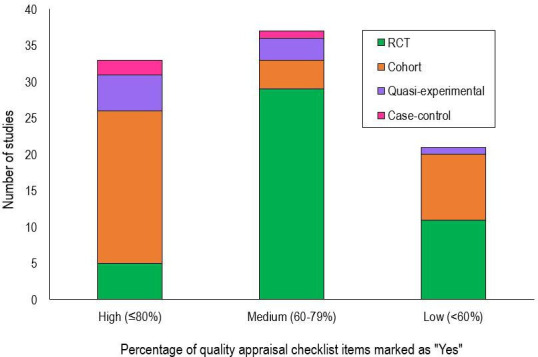
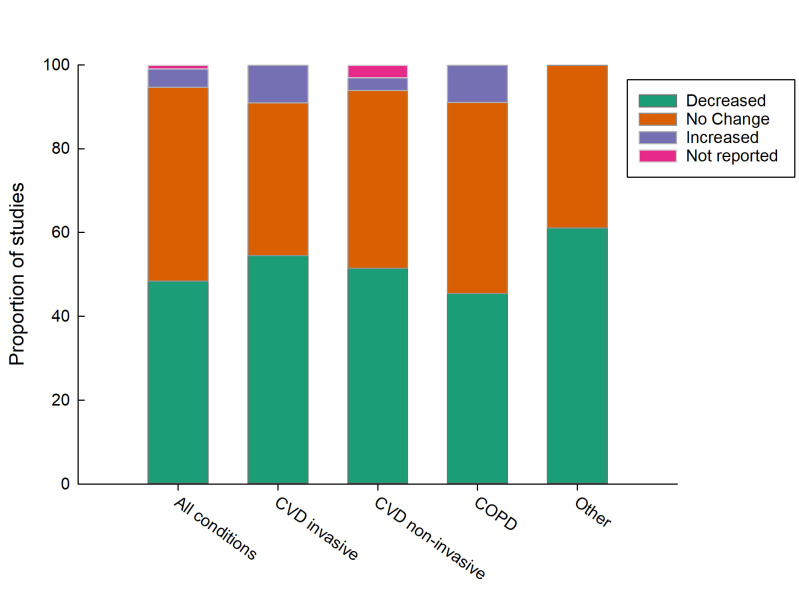
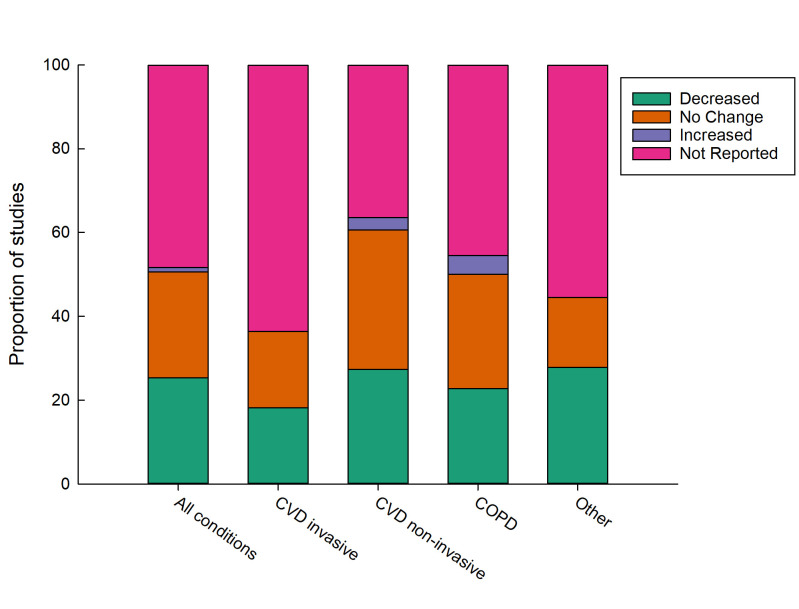
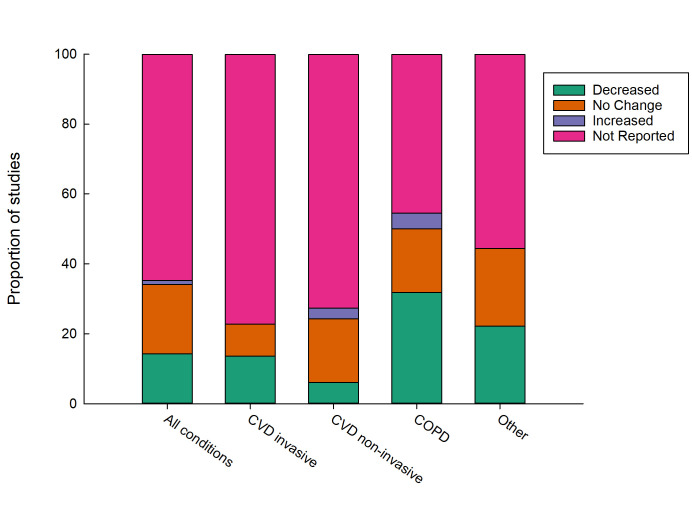
From 2050 identified records, 91 studies were included. Studies were medium-to-high quality. RPM for all disease conditions was reported to reduce admissions, length of stay and emergency department presentations in 49% (n=44/90), 49% (n=23/47) and 41% (n=13/32) of studies reporting each measure, respectively. Remaining studies largely reported no change. Four studies reported RPM increased acute care use. RPM of chronic obstructive pulmonary disease (COPD) was more effective at reducing emergency presentation than RPM of other disease conditions. Similarly, invasive monitoring of cardiovascular disease was more effective at reducing hospital admissions versus other disease conditions and non-invasive monitoring.
RPM can reduce acute care use for patients with cardiovascular disease and COPD. However, effectiveness varies within and between populations. RPM's effect on other conditions is inconclusive due to limited studies. Further analysis is required to understand underlying mechanisms causing variation in RPM interventions. These findings should be considered alongside other benefits of RPM, including increased quality of life for patients.
CRD42020142523.
慢性病与非计划性急性住院使用增加有关。远程患者监测(RPM)可以检测疾病恶化情况,并促进主动管理,从而可能减少昂贵的急性住院使用。目前,检查 RPM 和急性护理使用的证据主要涉及心力衰竭,且忽略了自动化有创监测。本研究旨在确定 RPM 是否可以减少急性住院使用。
2019 年 7 月,我们对 PubMed、Embase 和 CINAHL 电子数据库进行了系统的文献综述,并于 2020 年 10 月更新,以纳入 2015 年 1 月至 2020 年 10 月期间发表的报告 RPM 及其对住院、住院时间或急诊科就诊影响的研究。所有人群和疾病状况均包括在内。两名独立审查员筛选了文章。使用 Joanna Briggs 研究所清单进行质量分析。研究结果按结果变量进行分层。对疾病状况和 RPM 技术进行了亚组分析。
从 2050 篇确定的记录中,纳入了 91 项研究。这些研究的质量为中高度。所有疾病状况的 RPM 被报道可分别减少 49%(n=44/90)、49%(n=23/47)和 41%(n=13/32)的住院、住院时间和急诊科就诊。其余研究报告的变化不大。四项研究报告 RPM 增加了急性护理的使用。与其他疾病状况相比,慢性阻塞性肺疾病(COPD)的 RPM 更能有效减少急诊就诊。同样,心血管疾病的有创监测比其他疾病状况和非侵入性监测更能有效减少住院。
RPM 可以减少心血管疾病和 COPD 患者的急性护理使用。然而,有效性在人群内和人群之间有所不同。由于研究有限,因此 RPM 对其他疾病的效果尚无定论。需要进一步分析以了解 RPM 干预措施差异的潜在机制。这些发现应与 RPM 的其他益处一起考虑,包括患者生活质量的提高。
PROSPERO 注册号:CRD42020142523。