Department of Biochemistry, Stanford University School of Medicine, Stanford, CA 94305.
Department of Biochemistry, Stanford University School of Medicine, Stanford, CA 94305
Proc Natl Acad Sci U S A. 2021 Mar 9;118(10). doi: 10.1073/pnas.2005894118.
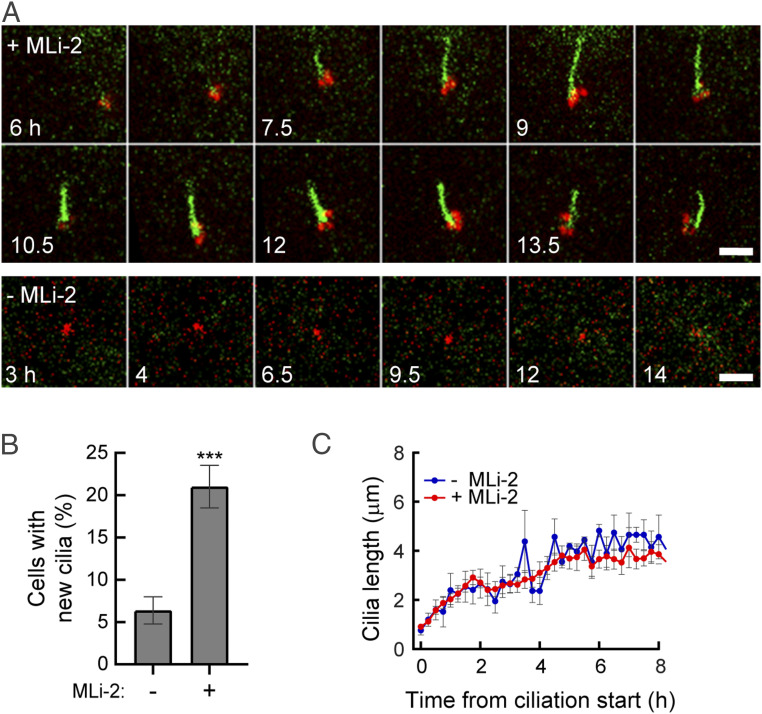
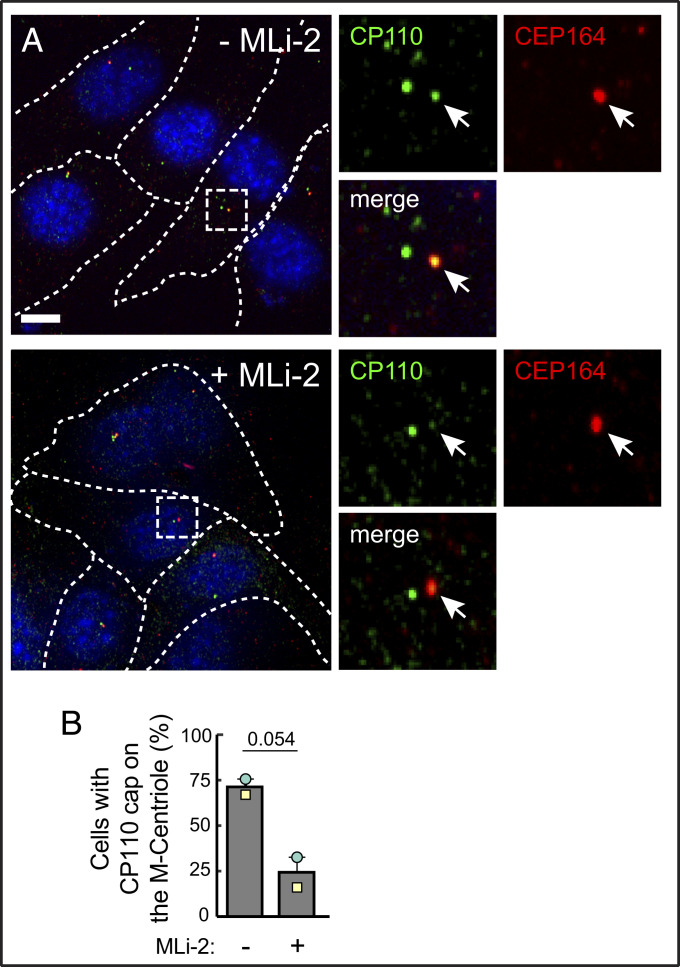
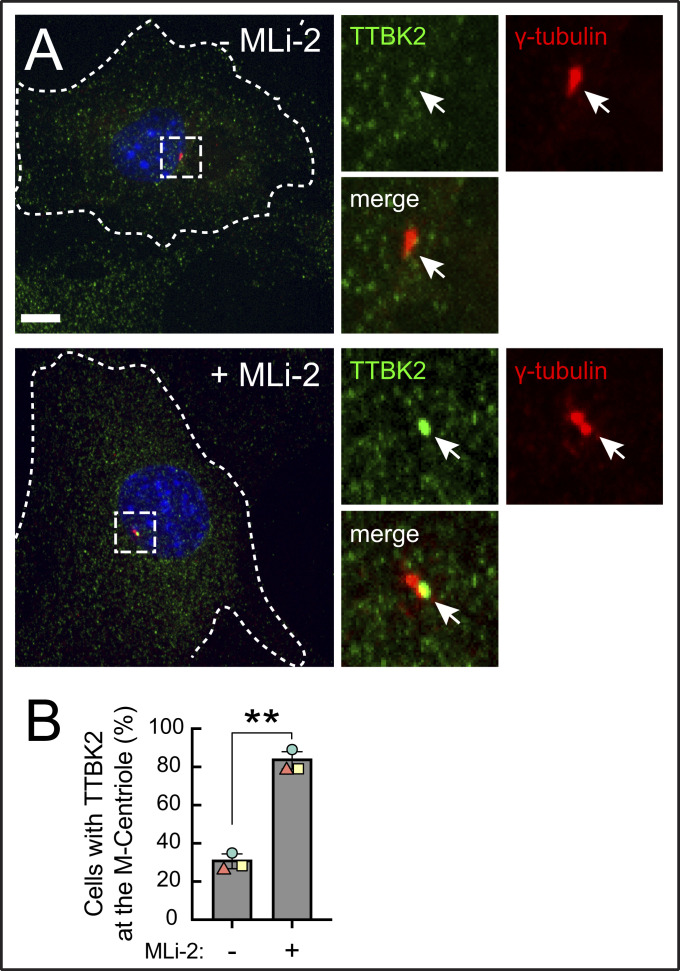
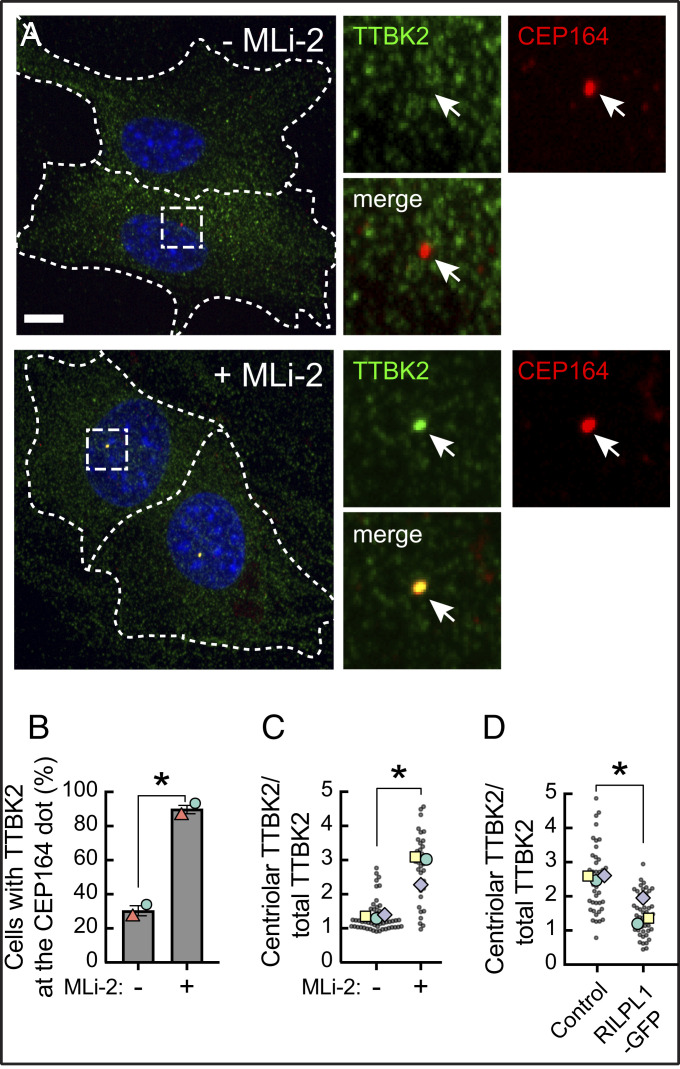
Mutations that activate LRRK2 protein kinase cause Parkinson's disease. We showed previously that Rab10 phosphorylation by LRRK2 enhances its binding to RILPL1, and together, these proteins block cilia formation in a variety of cell types, including patient derived iPS cells. We have used live-cell fluorescence microscopy to identify, more precisely, the effect of LRRK2 kinase activity on both the formation of cilia triggered by serum starvation and the loss of cilia seen upon serum readdition. LRRK2 activity decreases the overall probability of ciliation without changing the rates of cilia formation in R1441C LRRK2 MEF cells. Cilia loss in these cells is accompanied by ciliary decapitation, and kinase activity does not change the timing or frequency of decapitation or the rate of cilia loss but increases the percent of cilia that are lost upon serum addition. LRRK2 activity, or overexpression of RILPL1 protein, blocks release of CP110 from the mother centriole, a step normally required for early ciliogenesis; LRRK2 blockade of CP110 uncapping requires Rab10 and RILPL1 proteins and is due to failure to recruit TTBK2, a kinase needed for CP110 release. In contrast, deciliation probability does not change in cells lacking Rab10 or RILPL1 and relies on a distinct LRRK2 pathway. These experiments provide critical detail to our understanding of the cellular consequences of pathogenic LRRK2 mutation and indicate that LRRK2 blocks ciliogenesis upstream of TTBK2 and enhances the deciliation process in response to serum addition.
LRRK2 蛋白激酶的突变会导致帕金森病。我们之前曾表明,LRRK2 对 Rab10 的磷酸化增强了其与 RILPL1 的结合,这两种蛋白共同阻止了多种细胞类型中的纤毛形成,包括患者来源的 iPS 细胞。我们使用活细胞荧光显微镜更精确地确定了 LRRK2 激酶活性对血清饥饿触发的纤毛形成和血清再添加时观察到的纤毛丧失的影响。LRRK2 活性降低了整体纤毛形成的概率,而不会改变 R1441C LRRK2 MEF 细胞中纤毛形成的速率。这些细胞中的纤毛丧失伴随着纤毛断头,激酶活性不会改变断头的时间或频率或纤毛丧失的速率,但会增加血清添加时丢失的纤毛的百分比。LRRK2 活性或 RILPL1 蛋白的过表达会阻止 CP110 从母中心粒释放,这是早期纤毛发生所必需的步骤;LRRK2 阻断 CP110 去帽需要 Rab10 和 RILPL1 蛋白,并且由于未能招募 TTBK2,这是 CP110 释放所必需的激酶。相比之下,在缺乏 Rab10 或 RILPL1 的细胞中,纤毛丧失的概率不会改变,并且依赖于独特的 LRRK2 途径。这些实验为我们理解致病性 LRRK2 突变的细胞后果提供了关键细节,并表明 LRRK2 在 TTBK2 之前阻止纤毛发生,并增强了对血清添加的纤毛丧失过程。