MRC Human Genetics Unit, MRC Institute of Genetics & Molecular Medicine, University of Edinburgh, Western General Hospital, Edinburgh EH4 2XU, UK.
Centre of Brain Science, Laboratory for Cell Function and Dynamics, RIKEN, 2-1 Hirosawa, Wako, Saitama 351-0198, Japan.
Dev Cell. 2018 Nov 19;47(4):509-523.e5. doi: 10.1016/j.devcel.2018.10.027.
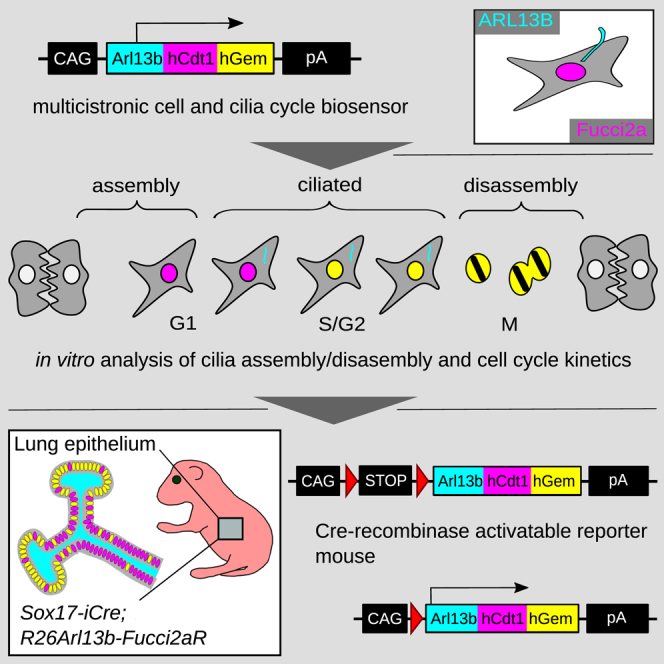
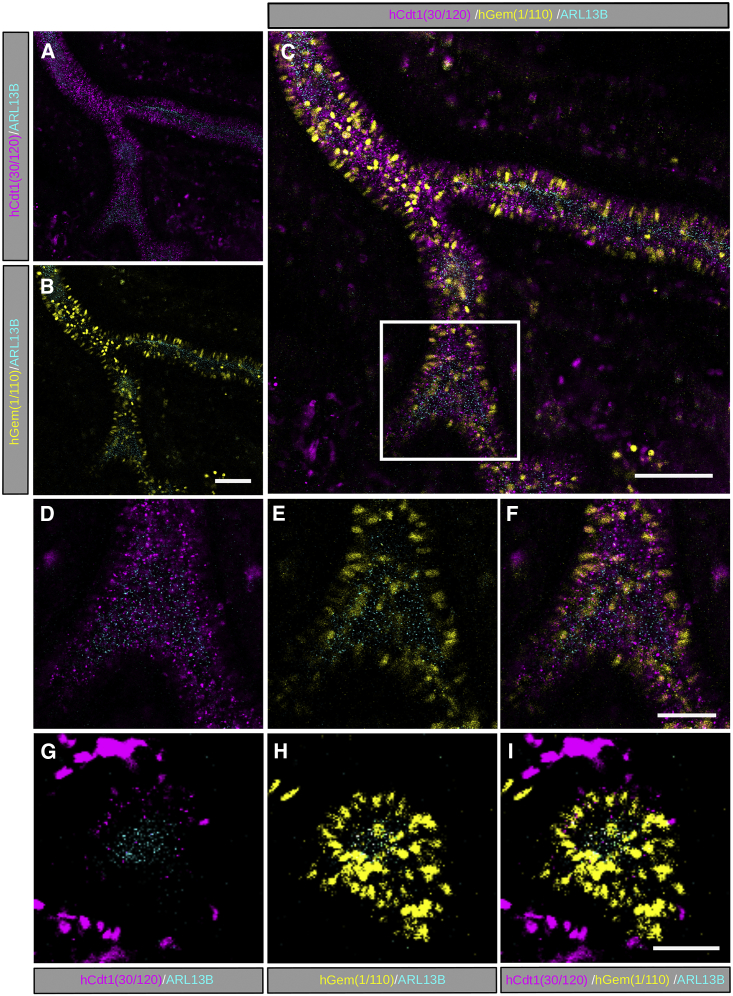
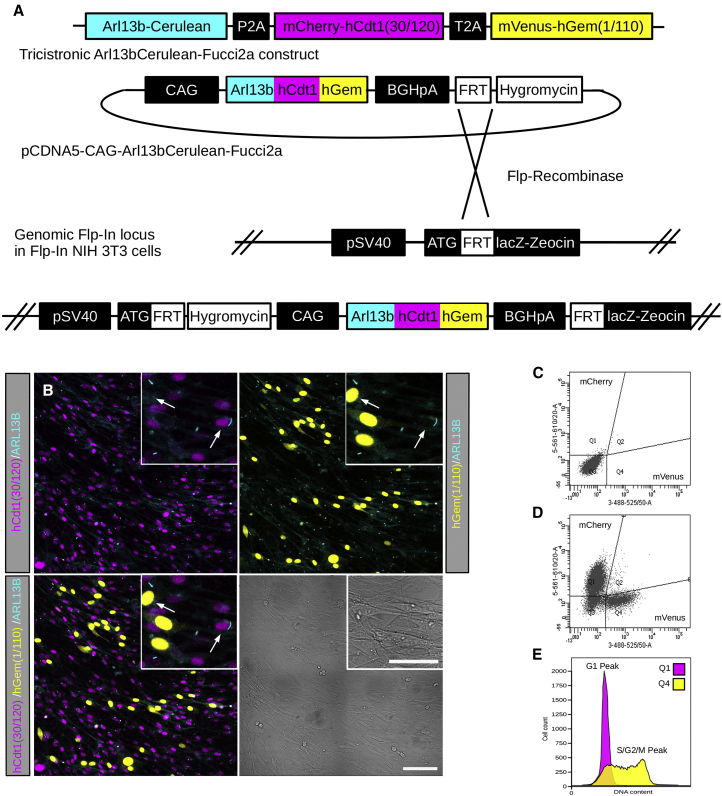
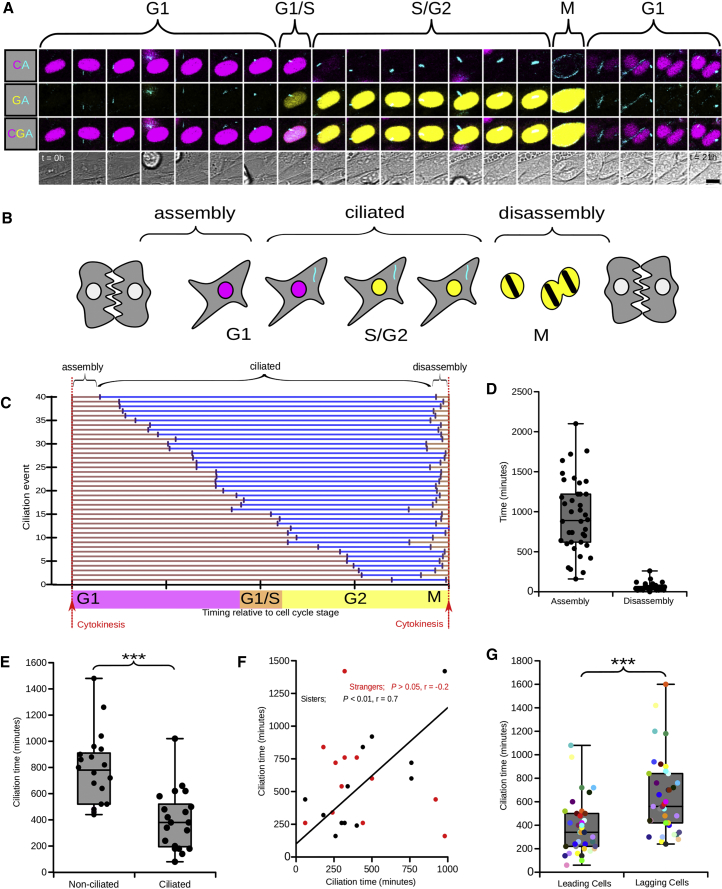
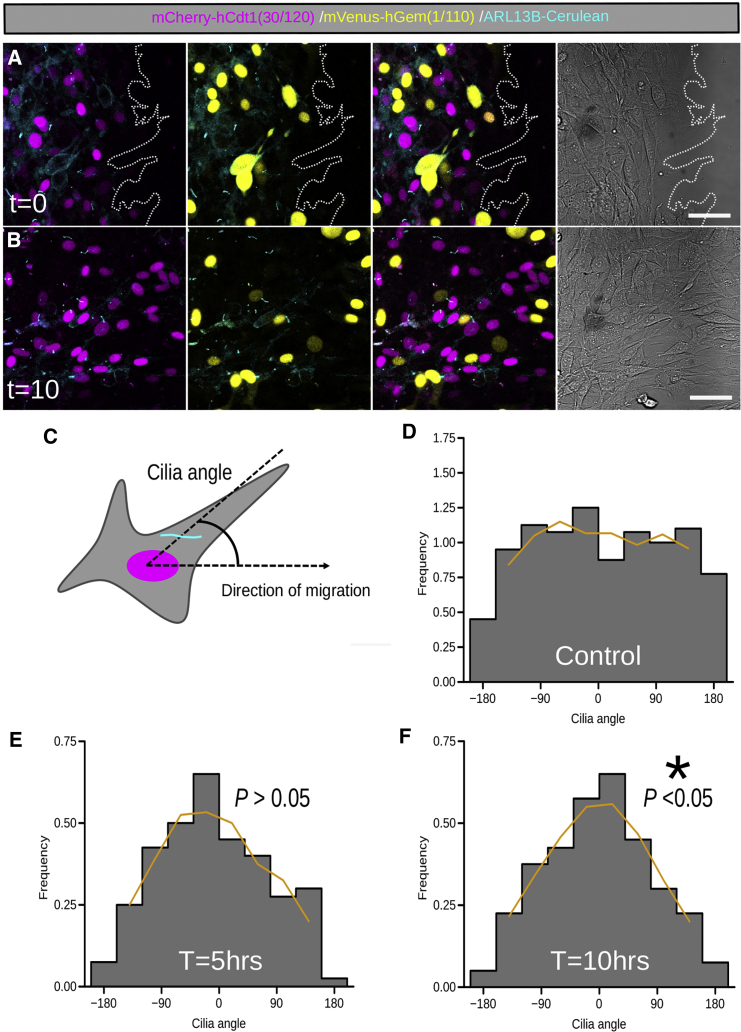
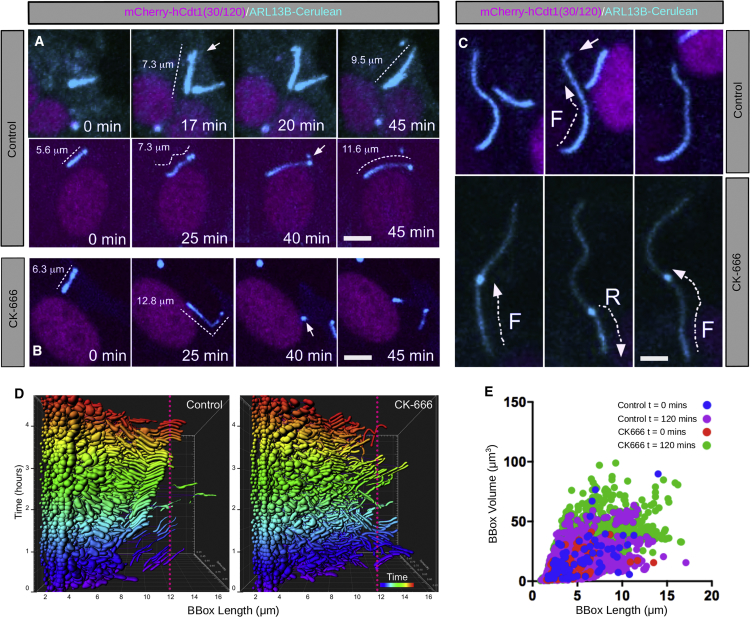
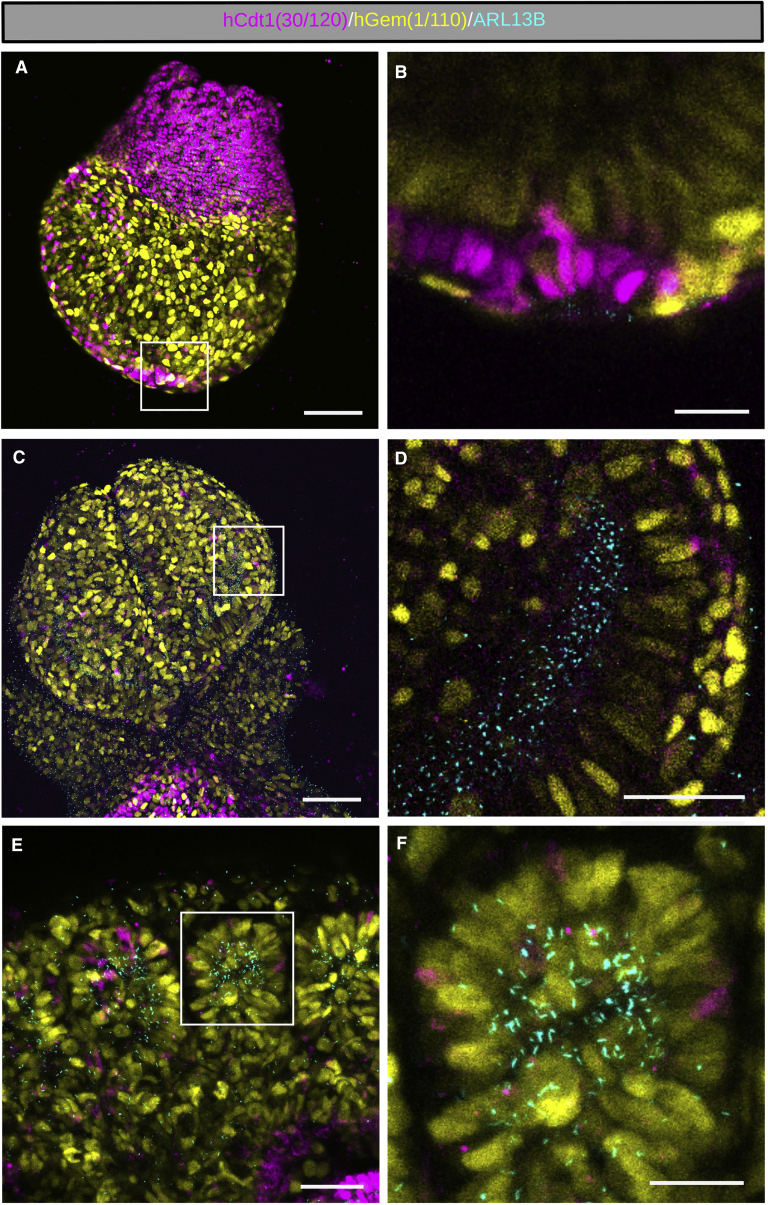
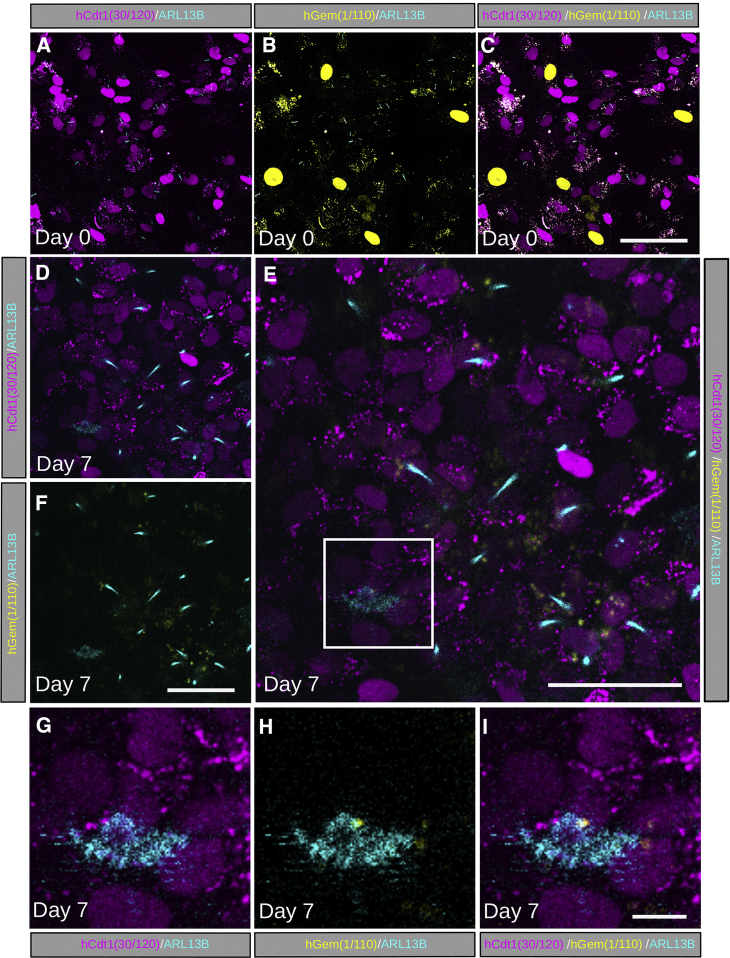
The cilia and cell cycles are inextricably linked. Centrioles in the basal body of cilia nucleate the ciliary axoneme and sequester pericentriolar matrix (PCM) at the centrosome to organize the mitotic spindle. Cilia themselves respond to growth signals, prompting cilia resorption and cell cycle re-entry. We describe a fluorescent cilia and cell cycle biosensor allowing live imaging of cell cycle progression and cilia assembly and disassembly kinetics in cells and inducible mice. We define assembly and disassembly in relation to cell cycle stage with single-cell resolution and explore the intercellular heterogeneity in cilia kinetics. In all cells and tissues analyzed, we observed cilia that persist through the G1/S transition and into S/G2/M-phase. We conclude that persistence of cilia after the G1/S transition is a general property. This resource will shed light at an individual cell level on the interplay between the cilia and cell cycles in development, regeneration, and disease.
纤毛和细胞周期是紧密相连的。纤毛的基体中的中心粒核生出纤毛轴丝,并将中心粒周围基质(PCM)隔离在中心体处以组织有丝分裂纺锤体。纤毛本身对生长信号作出反应,促使纤毛吸收和细胞周期重新进入。我们描述了一种荧光纤毛和细胞周期生物传感器,允许在细胞和诱导型小鼠中实时成像细胞周期进程和纤毛组装和拆卸动力学。我们以单细胞分辨率定义了与细胞周期阶段的组装和拆卸,并探索了纤毛动力学的细胞间异质性。在分析的所有细胞和组织中,我们观察到了在 G1/S 转变和 S/G2/M 期持续存在的纤毛。我们得出结论,G1/S 转变后纤毛的持续存在是一种普遍现象。该资源将在个体细胞水平上揭示纤毛和细胞周期在发育、再生和疾病中的相互作用。