Alrasheedy Alian A, Abdulsalim Suhaj, Farooqui Maryam, Alsahali Saud, Godman Brian
Department of Pharmacy Practice, College of Pharmacy, Qassim University, Buraidah, Qassim, Saudi Arabia.
Department of Pharmacy Practice, Unaizah College of Pharmacy, Qassim University, Unaizah, Qassim, Saudi Arabia.
Risk Manag Healthc Policy. 2021 Feb 22;14:729-741. doi: 10.2147/RMHP.S292354. eCollection 2021.
Individuals' knowledge, attitude and practice towards preventive and precautionary measures of COVID-19 are essential to control the spread of the disease. Consequently, the aims of the study were to evaluate knowledge, attitude and practice of pharmacy students towards the pandemic and to assess its psychological impact on them to provide future guidance.
A cross-sectional, questionnaire-based study was conducted via a web-based survey in May 2020. All pharmacy students enrolled at Unaizah College of Pharmacy, Qassim University, were invited to take part in the study.
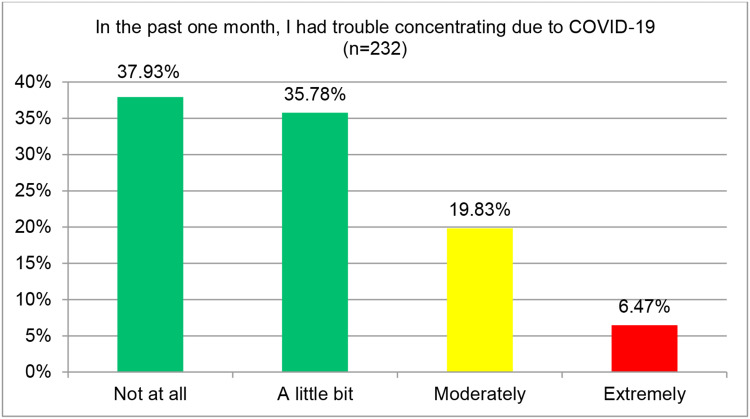
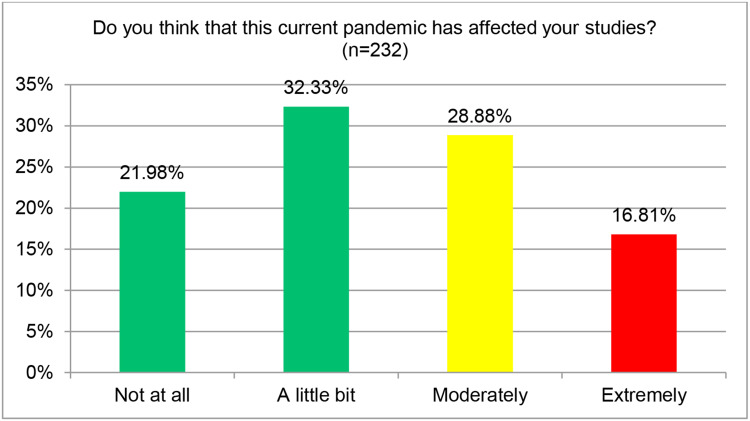
A total of 232 out of 460 students took part in the study, giving a response rate of 50.43%. The mean total knowledge score was 9.87 ± 2.04 (maximum attainable score, 12). The majority of the participants (n=163; 70.3%) believed COVID-19 is a health threat to their community in the early months of the pandemic. Moreover, the majority (93%) also believed that the lockdown at the beginning of the pandemic was necessary to contain the pandemic. Encouragingly, 86.6% reported that they did not go to any crowded places during the pandemic with more female students avoiding crowded places compared to male students (91.6% versus 78.7%, respectively, P = 0.005). The majority (91%) also reported that they were following the strategies recommended by the authorities to prevent the spread of the virus. Encouragingly, 54.3% reported that the pandemic either had no effect or just a limited effect on their studies. However, 38.5% reported that they always felt or frequently felt nervous or anxious during the pandemic.
The study showed that pharmacy students had good knowledge as well as positive attitudes and good practices towards COVID-19 and the preventive measures. However, during the early months, the pandemic did have a negative psychological impact on a number of students. Consequently, proactive psychological and social support services to the students should be considered during the current and future pandemics. In addition, it is important to consider and proactively address key issues that could cause stress and anxiety among students when shifting to distance learning and assessments.
个人对新冠疫情预防和防范措施的知识、态度及实践对于控制疾病传播至关重要。因此,本研究旨在评估药学专业学生对该疫情的知识、态度及实践,并评估疫情对他们的心理影响,以为未来提供指导。
2020年5月通过基于网络的调查开展了一项横断面问卷调查研究。邀请了卡西姆大学乌奈宰药学院所有注册的药学专业学生参与研究。
460名学生中共有232名参与了研究,回复率为50.43%。知识总均分是9.87±2.04(最高可得分数为12分)。大多数参与者(n = 163;70.3%)认为在疫情最初几个月新冠疫情对其社区构成健康威胁。此外,大多数人(93%)也认为疫情初期实施封锁对于控制疫情是必要的。令人鼓舞的是,86.6%的人报告称在疫情期间他们没有去过任何拥挤场所,与男学生相比,更多女学生避免前往拥挤场所(分别为91.6%和78.7%,P = 0.005)。大多数人(91%)还报告称他们遵循了当局推荐的预防病毒传播的策略。令人鼓舞的是,54.3%的人报告称疫情对他们的学业没有影响或仅有有限影响。然而,38.5%的人报告称在疫情期间他们总是感到或经常感到紧张或焦虑。
研究表明,药学专业学生对新冠疫情及其预防措施有良好的知识、积极的态度和良好的实践。然而,在最初几个月,疫情确实对一些学生产生了负面心理影响。因此,在当前及未来疫情期间应考虑为学生提供积极的心理和社会支持服务。此外,在转向远程学习和评估时,考虑并积极解决可能导致学生压力和焦虑的关键问题也很重要。