IDISNA and Program in Solid Tumors, Center for Applied Medical Research (CIMA), University of Navarra, Pamplona, Spain.
CIBERONC, ISCIII, Madrid, Spain.
J Immunother Cancer. 2021 Mar;9(3). doi: 10.1136/jitc-2020-001496.
The use of immune-checkpoint inhibitors has drastically improved the management of patients with non-small cell lung cancer (NSCLC), but innate and acquired resistances are hurdles needed to be solved. Immunomodulatory drugs that can reinvigorate the immune cytotoxic activity, in combination with antiprogrammed cell death 1 (PD-1) antibody, are a great promise to overcome resistance. We evaluated the impact of the SRC family kinases (SFKs) on NSCLC prognosis, and the immunomodulatory effect of the SFK inhibitor dasatinib, in combination with anti-PD-1, in clinically relevant mouse models of NSCLC.
A cohort of patients from University Clinic of Navarra (n=116) was used to study immune infiltrates by multiplex immunofluorescence (mIF) and YES1 protein expression in tumor samples. Publicly available resources (TCGA, Km Plotter, and CIBERSORT) were used to study patient's survival based on expression of SFKs and tumor infiltrates. Syngeneic NSCLC mouse models 393P and UNSCC680AJ were used for in vivo drug testing.
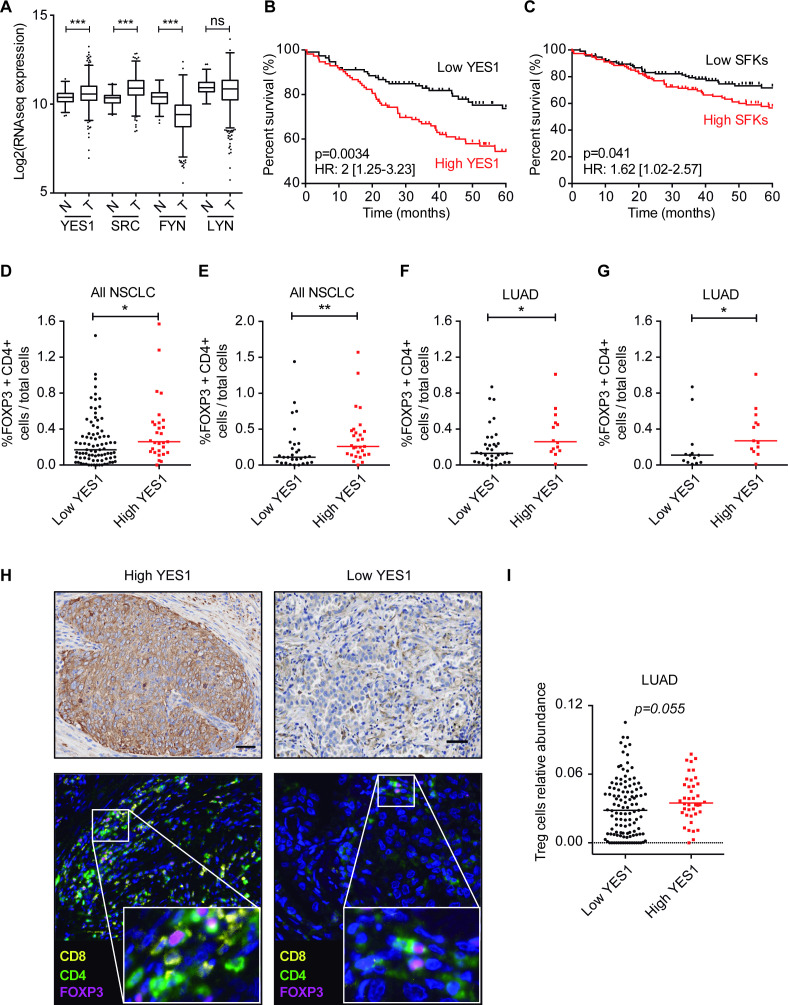
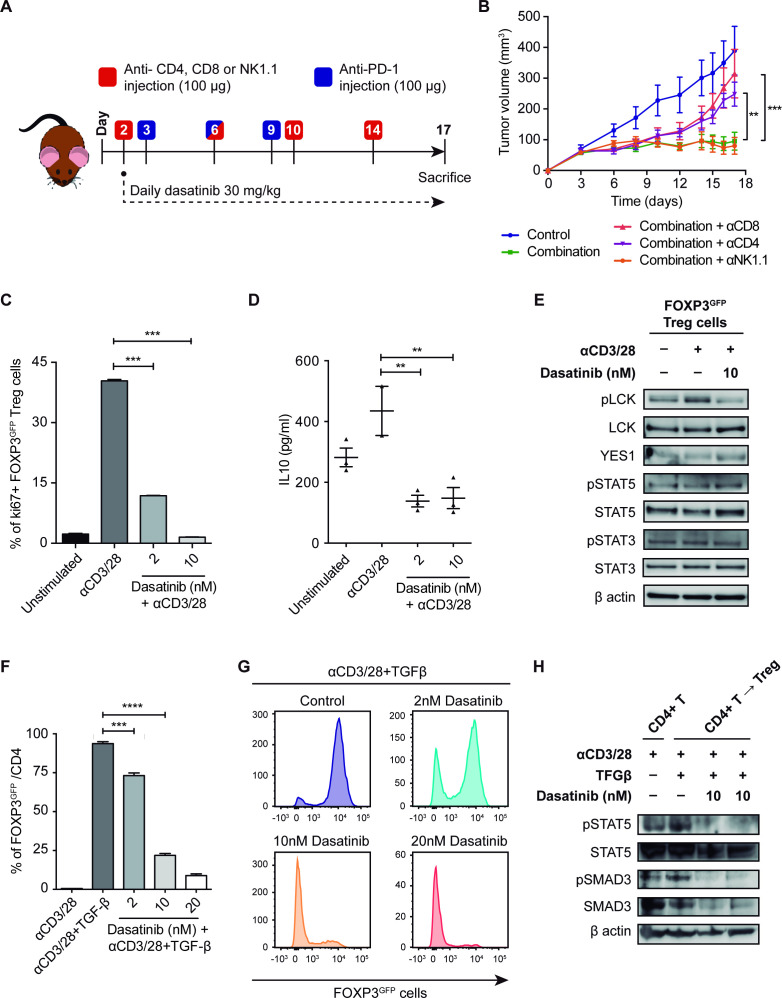
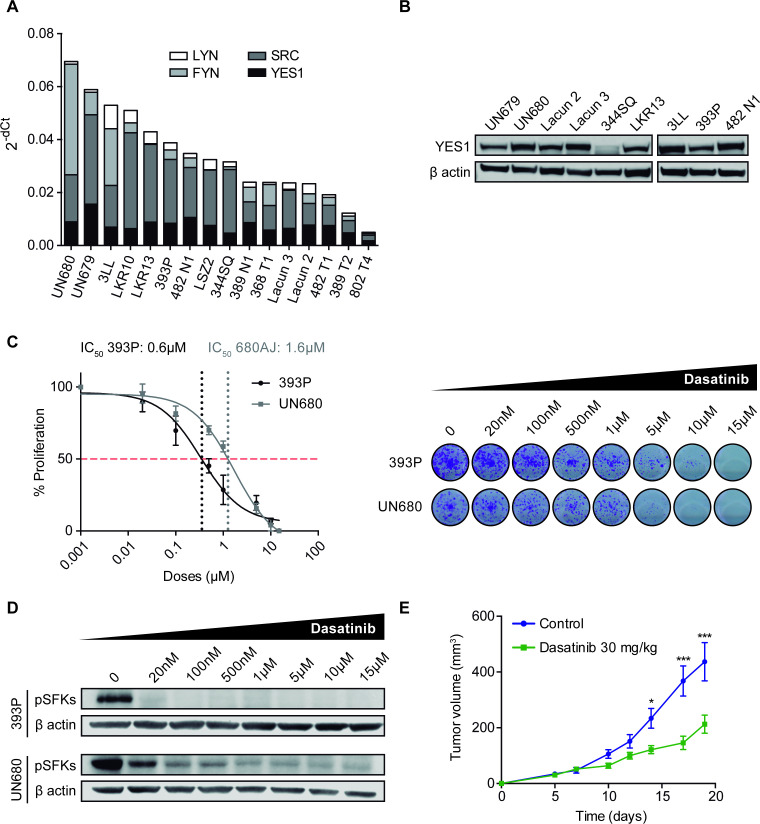
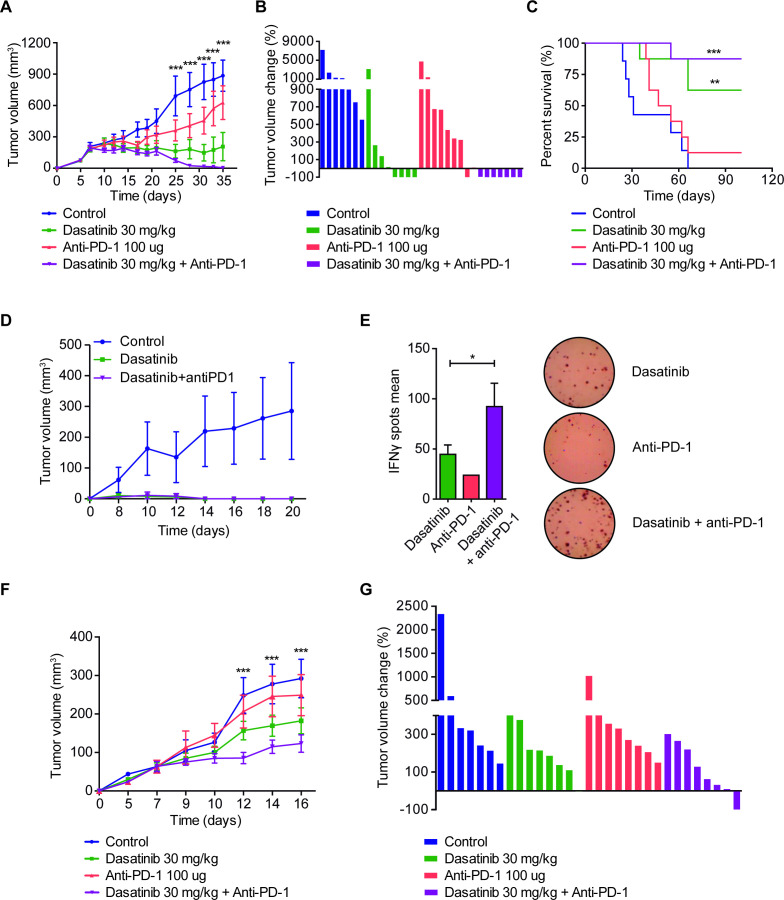
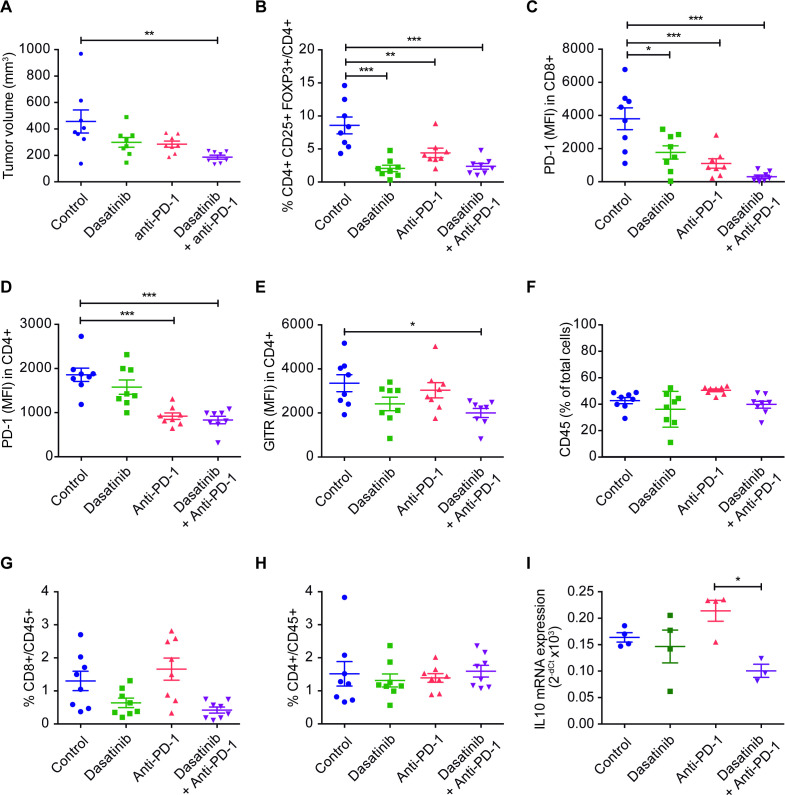
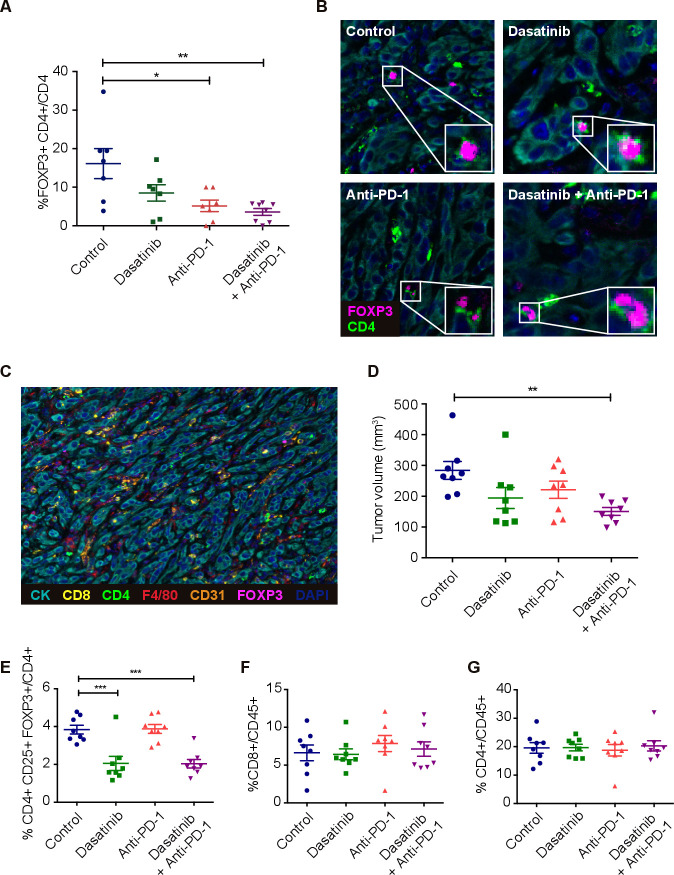
Among the SFK members, YES1 expression showed the highest association with poor prognosis. Patients with high YES1 tumor levels also showed high infiltration of CD4+/FOXP3+ cells (regulatory T cells (Tregs)), suggesting an immunosuppressive phenotype. After testing for YES1 expression in a panel of murine cell lines, 393P and UNSCC680AJ were selected for in vivo studies. In the 393P model, dasatinib+anti-PD-1 treatment resulted in synergistic activity, with 87% tumor regressions and development of immunological memory that impeded tumor growth when mice were rechallenged. In vivo depletion experiments further showed that CD8+ and CD4+ cells are necessary for the therapeutic effect of the combination. The antitumor activity was accompanied by a very significant decrease in the number of Tregs, which was validated by mIF in tumor sections. In the UNSCC680AJ model, the antitumor effects of dasatinib+anti-PD-1 were milder but similar to the 393P model. In in vitro assays, we demonstrated that dasatinib blocks proliferation and transforming growth factor beta-driven conversion of effector CD4+ cells into Tregs through targeting of phospholymphocyte-specific protein tyrosine kinase and downstream effectors pSTAT5 and pSMAD3.
YES1 protein expression is associated with increased numbers of Tregs in patients with NSCLC. Dasatinib synergizes with anti-PD-1 to impair tumor growth in NSCLC experimental models. This study provides the preclinical rationale for the combined use of dasatinib and PD-1/programmed death-ligand 1 blockade to improve outcomes of patients with NSCLC.
免疫检查点抑制剂的使用极大地改善了非小细胞肺癌(NSCLC)患者的治疗效果,但先天和获得性耐药性是需要解决的难题。能够重新激活免疫细胞毒性活性的免疫调节剂药物,与抗程序性死亡 1(PD-1)抗体联合使用,是克服耐药性的一大希望。我们评估了 SRC 家族激酶(SFK)对 NSCLC 预后的影响,以及 SFK 抑制剂 dasatinib 与抗 PD-1 联合使用在临床上相关的 NSCLC 小鼠模型中的免疫调节作用。
我们使用纳瓦拉大学临床诊所的患者队列(n=116)通过多重免疫荧光(mIF)和 YES1 蛋白在肿瘤样本中的表达来研究免疫浸润。我们使用公开的资源(TCGA、Km Plotter 和 CIBERSORT)根据 SFK 和肿瘤浸润物的表达来研究患者的生存情况。使用同源 NSCLC 小鼠模型 393P 和 UNSCC680AJ 进行体内药物测试。
在 SFK 成员中,YES1 表达与预后不良的相关性最高。YES1 肿瘤水平较高的患者也表现出高水平的 CD4+/FOXP3+细胞(调节性 T 细胞(Tregs))浸润,表明存在免疫抑制表型。在对一组鼠细胞系进行 YES1 表达检测后,选择 393P 和 UNSCC680AJ 进行体内研究。在 393P 模型中,达沙替尼+抗 PD-1 治疗具有协同作用,87%的肿瘤消退,并产生免疫记忆,当小鼠再次受到挑战时,肿瘤生长受阻。体内耗竭实验进一步表明,CD8+和 CD4+细胞是该组合治疗效果所必需的。该抗肿瘤活性伴随着 Tregs 数量的显著下降,这在肿瘤切片的 mIF 中得到了验证。在 UNSCC680AJ 模型中,达沙替尼+抗 PD-1 的抗肿瘤作用较温和,但与 393P 模型相似。在体外实验中,我们证明达沙替尼通过靶向淋巴细胞特异性蛋白酪氨酸激酶及其下游效应物 pSTAT5 和 pSMAD3 来阻断增殖和转化生长因子β驱动的效应 CD4+细胞向 Tregs 的转化,从而抑制 Tregs 的增殖。
YES1 蛋白表达与 NSCLC 患者中 Tregs 数量的增加有关。达沙替尼与抗 PD-1 协同作用,可抑制 NSCLC 实验模型中的肿瘤生长。这项研究为达沙替尼联合 PD-1/程序性死亡配体 1 阻断剂改善 NSCLC 患者的预后提供了临床前依据。