Mi Xinning, Cao Yiyun, Li Yue, Li Yitong, Hong Jingshu, He Jindan, Liang Yaoxian, Yang Ning, Liu Taotao, Han Dengyang, Kuang Chongshen, Han Yongzheng, Zhou Yang, Liu Yajie, Shi Chengmei, Guo Xiangyang, Li Zhengqian
Department of Anesthesiology, Peking University Third Hospital, Beijing, China.
Department of Anesthesiology, The Sixth People's Hospital, Shanghai Jiao Tong University, Shanghai, China.
Front Aging Neurosci. 2021 Feb 15;13:624387. doi: 10.3389/fnagi.2021.624387. eCollection 2021.
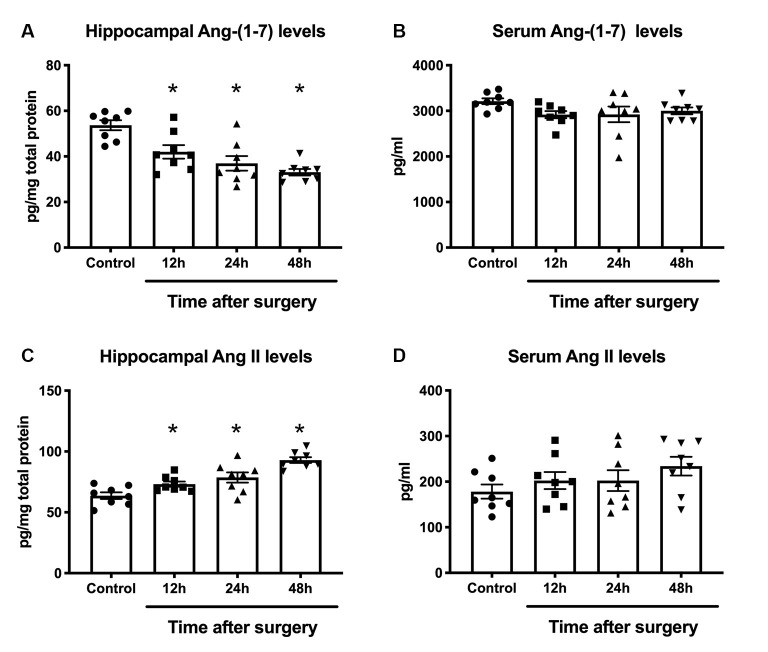
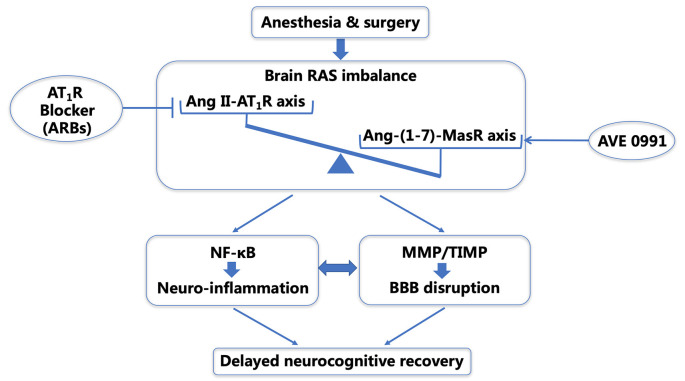
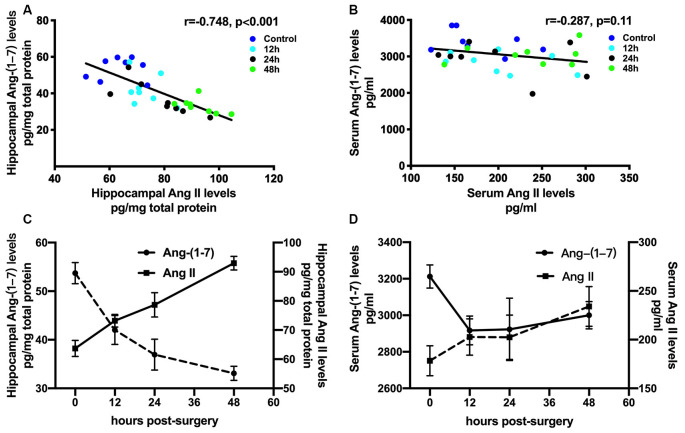
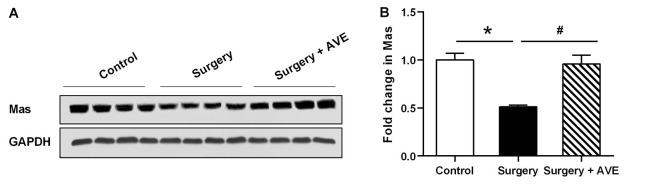
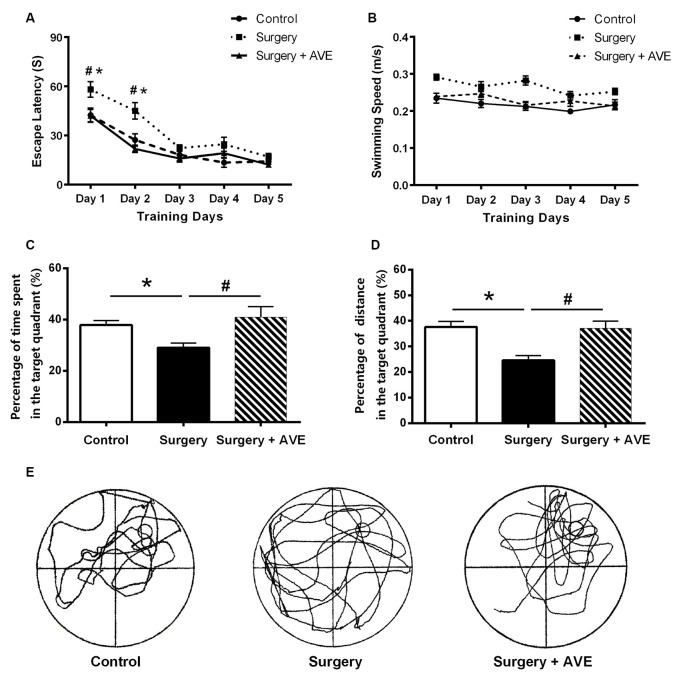
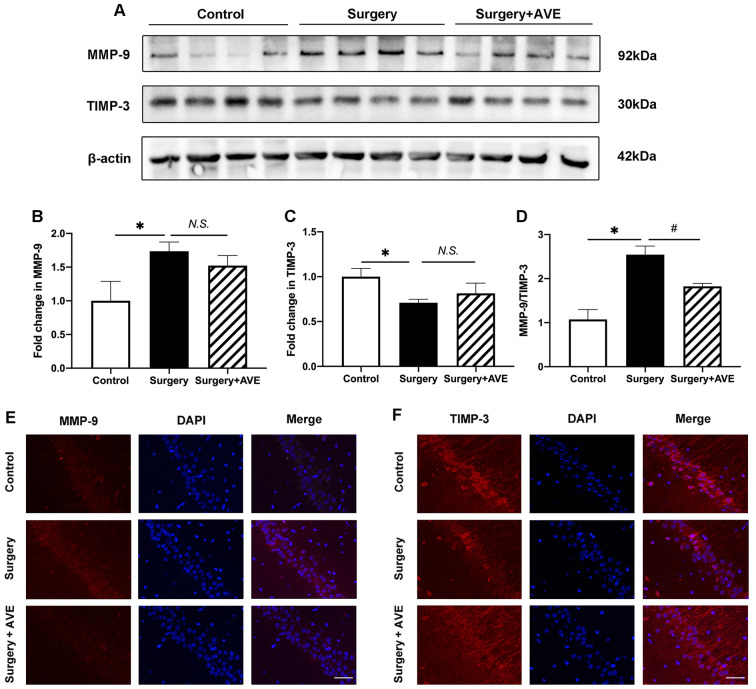
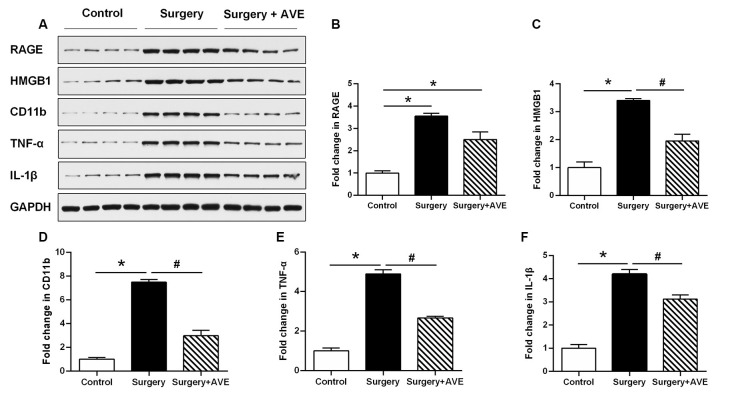
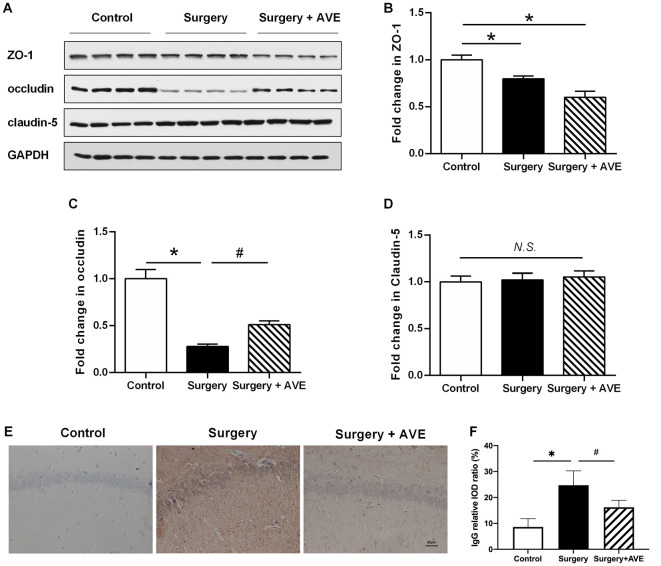
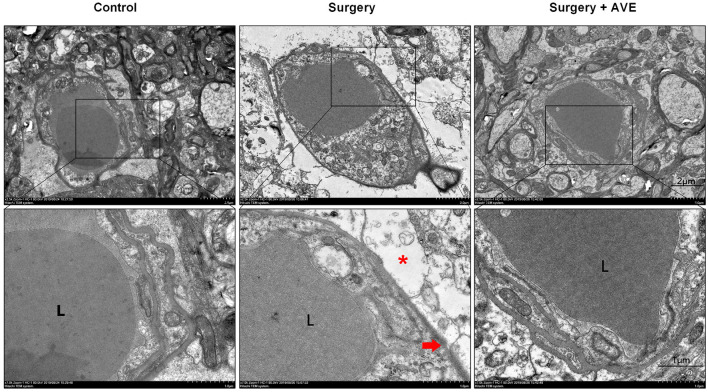
Delayed neurocognitive recovery (dNCR) after surgery is a common postoperative complication in older adult patients. Our previous studies have demonstrated that cognitive impairment after surgery involves an increase in the brain renin-angiotensin system (RAS) activity, including overactivation of the angiotensin 2/angiotensin receptor-1 (Ang II/AT1) axis, which provokes the disruption of the hippocampal blood-brain barrier (BBB). Nevertheless, the potential role of the counter-regulatory RAS axis, the Ang-(1-7)/Mas pathway, in dNCR remains unknown. Using an aged rat model of dNCR, we dynamically investigated the activity of both axes of the RAS following laparotomy. AVE 0991, a nonpeptide analog of Ang-(1-7), was administered intranasally immediately after laparotomy. We found that the elevation of Ang II, induced by surgery was accompanied by a decrease of Ang-(1-7) in the hippocampus, but not in the circulation. Surgery also significantly downregulated hippocampal Mas receptor expression at 24 h postsurgery. Mas activation with intranasal AVE 0991 treatment significantly improved hippocampus-dependent learning and memory deficits induced by surgery. Furthermore, it attenuated hippocampal neuroinflammation, as shown by the decreased level of the microglial activation marker cluster of differentiation 11b (CD11b) and the decreased production of several inflammatory molecules. Along with these beneficial effects, the AVE 0991 treatment also alleviated the imbalance between matrix metalloproteinase-9 (MMP-9) and tissue inhibitor of matrix metalloproteinase-3 (TIMP-3), modulated the expression of occludin, and alleviated the IgG extravasation, thereby restoring the integrity of the BBB. In conclusion, these data indicate that activation of Mas by AVE 0991 attenuates dNCR after surgery by reducing neuroinflammation and restoring BBB integrity. Our findings suggest that the Ang-(1-7)/Mas pathway may be a novel therapeutic target for treating dNCR after surgery in older adult patients.
术后延迟性神经认知恢复(dNCR)是老年患者常见的术后并发症。我们之前的研究表明,术后认知障碍涉及脑肾素-血管紧张素系统(RAS)活性增加,包括血管紧张素2/血管紧张素受体-1(Ang II/AT1)轴的过度激活,这会引发海马血脑屏障(BBB)的破坏。然而,反调节RAS轴,即Ang-(1-7)/Mas途径,在dNCR中的潜在作用仍不清楚。我们使用dNCR的老年大鼠模型,动态研究了剖腹术后RAS两个轴的活性。在剖腹术后立即经鼻给予AVE 0991,一种Ang-(1-7)的非肽类似物。我们发现,手术诱导的Ang II升高伴随着海马中Ang-(1-7)的减少,但循环中未出现这种情况。手术还在术后24小时显著下调了海马Mas受体的表达。经鼻给予AVE 0991激活Mas可显著改善手术诱导的海马依赖性学习和记忆缺陷。此外,它减轻了海马神经炎症,表现为小胶质细胞激活标志物分化簇11b(CD11b)水平降低以及几种炎症分子的产生减少。伴随着这些有益作用,AVE 0991治疗还缓解了基质金属蛋白酶-9(MMP-9)和基质金属蛋白酶组织抑制剂-3(TIMP-3)之间的失衡,调节了闭合蛋白的表达,并减轻了IgG外渗,从而恢复了血脑屏障的完整性。总之,这些数据表明,AVE 0991激活Mas可通过减少神经炎症和恢复血脑屏障完整性来减轻术后dNCR。我们的研究结果表明,Ang-(1-7)/Mas途径可能是治疗老年患者术后dNCR的一个新的治疗靶点。