Cano Leydy, Soto-Ospina Alejandro, Araque Pedronel, Caro-Gomez Maria Antonieta, Parra-Marin Maria Victoria, Bedoya Gabriel, Duque Constanza
Universidad de Antioquia, Medellín, Colombia.
Universidad EIA, Envigado, Colombia.
Front Pharmacol. 2021 Feb 9;11:587590. doi: 10.3389/fphar.2020.587590. eCollection 2020.
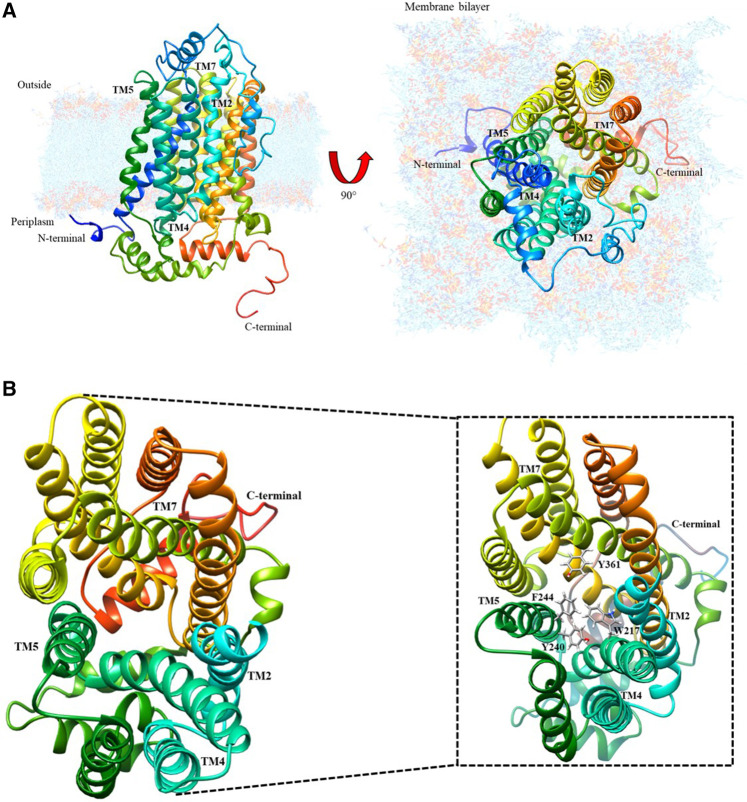
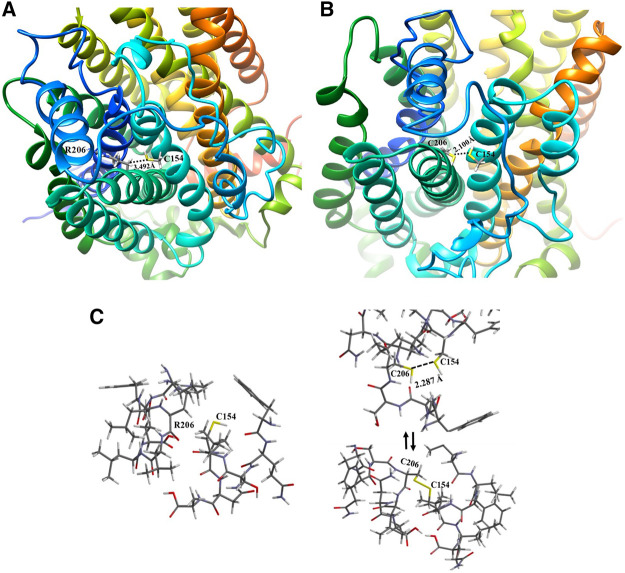
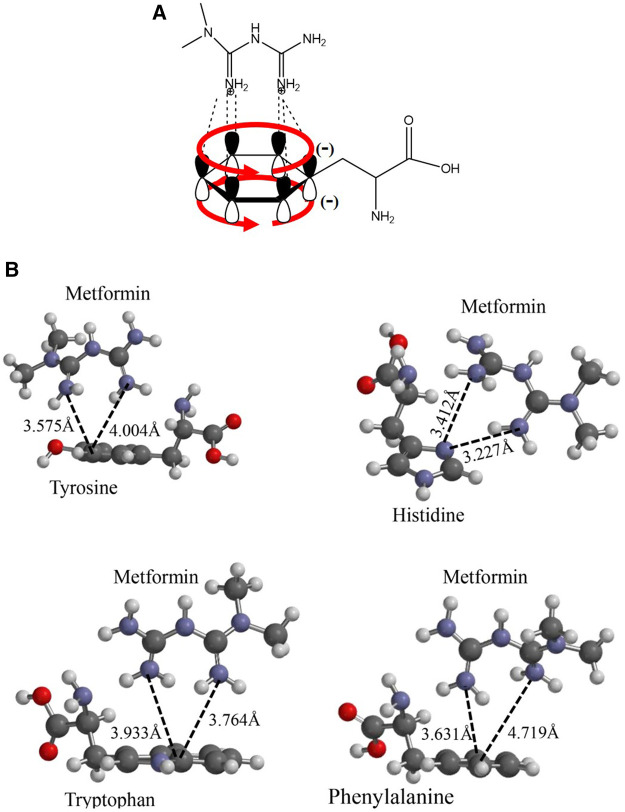
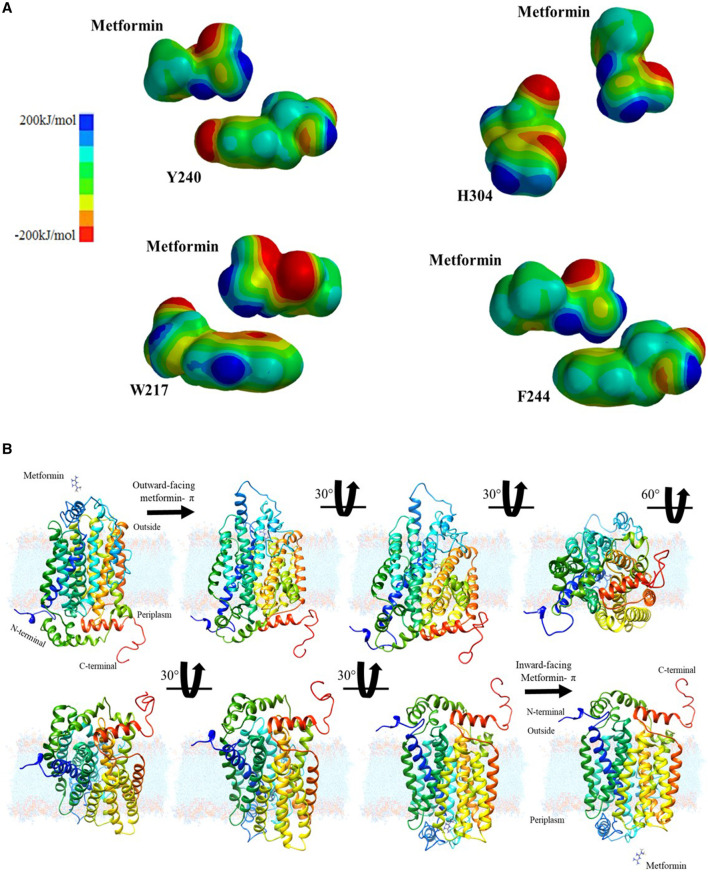
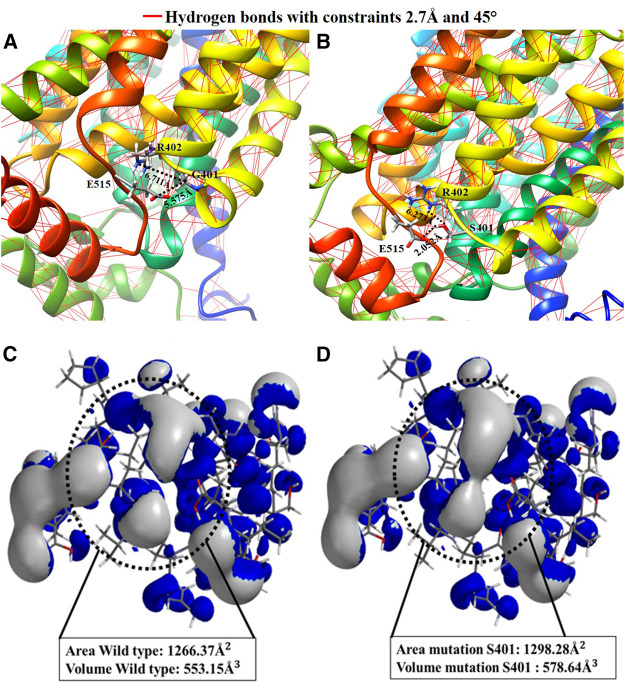
Metformin used as a first-line drug to treat Type 2 Diabetes Mellitus is transported via organic cation channels to soft tissues. Mutations in the SLC22A1 gene, such as Gly401Ser, Ser189Leu, and Arg206Cys, may affect the drug's therapeutic effect on these patients. This study aims at proposing a potential structural model for drug interactions with the hOCT1 transporter, as well as the impact of these mutations at both topological and electronic structure levels on the channel's surface, from a chemical point of view with, in addition to exploring the frequency distribution. To chemically understand metformin diffusion, we used an open model from the protein model database, with ID PM0080367, viewed through UCSF Chimera. The effect of the mutations was assessed using computational hybrid Quantum Mechanics/Molecular Mechanics, based on the Austin Model 1 semi-empirical method using Spartan 18' software. The results demonstrate coupling energy for metformin with amino acids F, W, H and Y, because of the interaction between the metformin dication and the electron cloud of π orbitals. The mutations analyzed showed changes in the chemical polarity and topology of the structure. The proposed diffusion model is a possible approach to the interaction mechanism between metformin and its transporter, as well as the impacts of variants, suggesting structural changes in the action of the drug. Metformin efficacy considerably varies from one patient to another; this may be largely attributed to the presence of mutations on the SLC22A1 gene. This study aims at proposing a potential structural model for metformin-hOCT1 (SLC22A1) transporter interaction, as well as the identification of the effect of mutations G401S (rs34130495), S189L (rs34104736), and R206C (616C > T) of the SLC22A1 gene at the topological and electronic structure levels on the channel surfaces, from a chemical viewpoint. Our results demonstrated that the coupling energies for metformin with aromatic amino acids F, W, H and Y, because of the interaction between the metformin dication and the electron cloud of π orbitals. Changes in the chemical environment's polarity and the structure's topology were reported in the mutations assessed. The diffusion model proposed is a potential approach for the mechanism of interaction of metformin with its transporter and the effects of variants on the efficacy of the drug in the treatment of type 2 diabetes. The assessment of the frequency of these mutations in a sample of Colombian type 2 diabetes patients suggests that different SLC22A1 gene variants might be involved in reduced OCT1 activity in the Colombian population since none of these mutations were detected.
二甲双胍作为治疗2型糖尿病的一线药物,通过有机阳离子通道转运至软组织。SLC22A1基因的突变,如Gly401Ser、Ser189Leu和Arg206Cys,可能会影响该药物对这些患者的治疗效果。本研究旨在从化学角度提出药物与hOCT1转运体相互作用的潜在结构模型,以及这些突变在拓扑和电子结构水平对通道表面的影响,此外还将探索频率分布。为了从化学角度理解二甲双胍的扩散,我们使用了蛋白质模型数据库中的一个开放模型(ID:PM0080367),通过UCSF Chimera查看。基于Spartan 18软件的Austin模型1半经验方法,使用计算混合量子力学/分子力学评估突变的影响。结果表明,由于二甲双胍二价阳离子与π轨道电子云之间的相互作用,二甲双胍与氨基酸F、W、H和Y存在耦合能。所分析的突变显示出结构的化学极性和拓扑结构发生了变化。所提出的扩散模型是研究二甲双胍与其转运体之间相互作用机制以及变体影响的一种可能方法,表明药物作用存在结构变化。二甲双胍的疗效在不同患者之间差异很大;这可能很大程度上归因于SLC22A1基因上存在突变。本研究旨在从化学角度提出二甲双胍-hOCT1(SLC22A1)转运体相互作用的潜在结构模型,以及鉴定SLC22A1基因的G401S(rs34130495)、S189L(rs34104736)和R206C(616C>T)突变在拓扑和电子结构水平对通道表面的影响。我们的结果表明,由于二甲双胍二价阳离子与π轨道电子云之间的相互作用,二甲双胍与芳香族氨基酸F、W、H和Y存在耦合能。在所评估的突变中报告了化学环境极性和结构拓扑的变化。所提出的扩散模型是研究二甲双胍与其转运体相互作用机制以及变体对2型糖尿病治疗中药物疗效影响的一种潜在方法。对哥伦比亚2型糖尿病患者样本中这些突变频率的评估表明,不同的SLC22A1基因变体可能与哥伦比亚人群中OCT1活性降低有关,因为未检测到这些突变中的任何一种。