Carcereny Enric, Fernández-Nistal Alonso, López Araceli, Montoto Carmen, Naves Andrea, Segú-Vergés Cristina, Coma Mireia, Jorba Guillem, Oliva Baldomero, Mas Jose Manuel
Catalan Institute of Oncology B-ARGO Group, Hospital Germans Trias i Pujol, Badalona, Spain.
Takeda Farmacéutica España, Madrid, Spain.
Oncotarget. 2021 Feb 16;12(4):316-332. doi: 10.18632/oncotarget.27875.
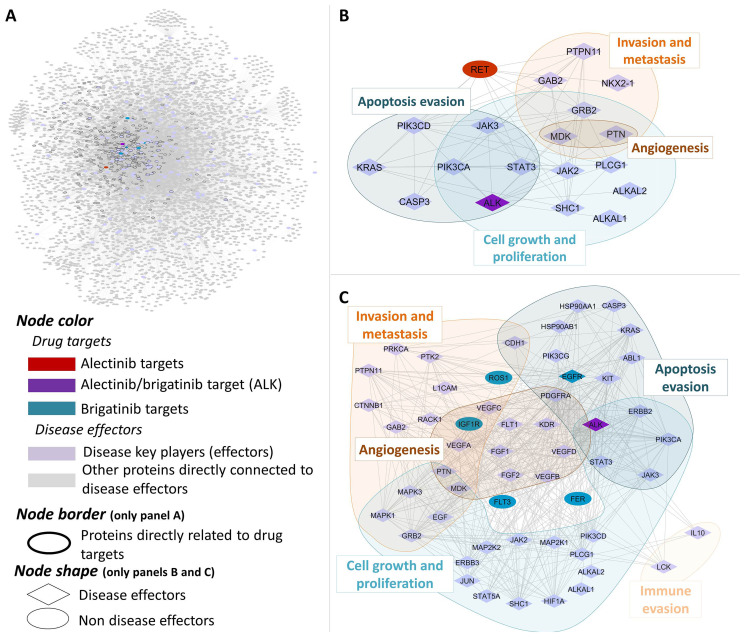
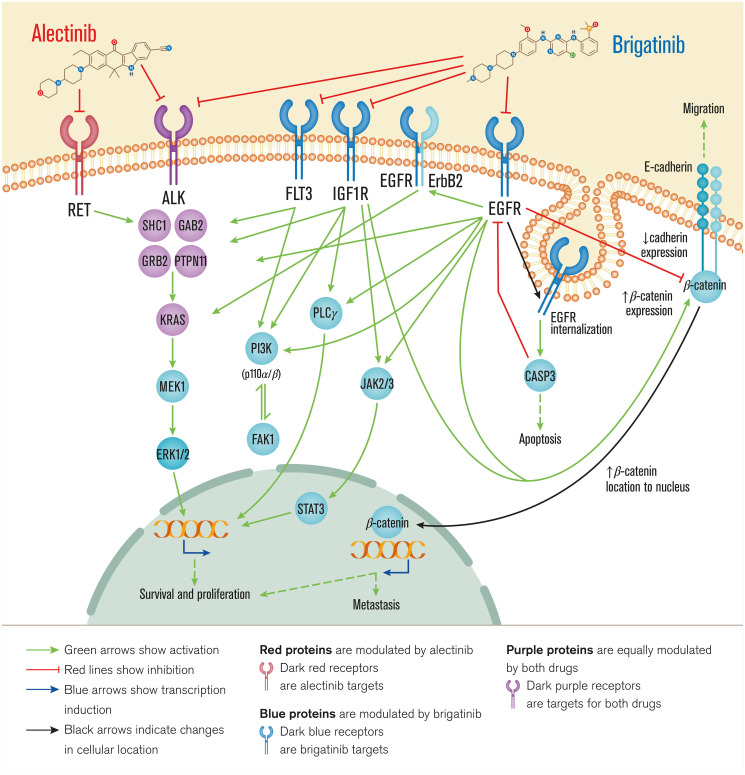
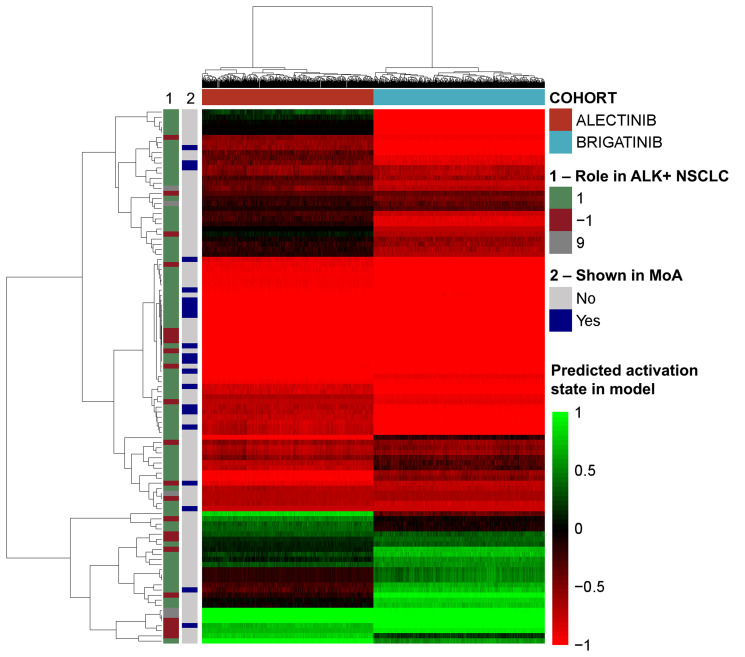
Around 3-7% of patients with non-small cell lung cancer (NSCLC), which represent 85% of diagnosed lung cancers, have a rearrangement in the ALK gene that produces an abnormal activity of the ALK protein cell signaling pathway. The developed ALK tyrosine kinase inhibitors (TKIs), such as crizotinib, ceritinib, alectinib, brigatinib and lorlatinb present good performance treating ALK+ NSCLC, although all patients invariably develop resistance due to ALK secondary mutations or bypass mechanisms. In the present study, we compare the potential differences between brigatinib and alectinib's mechanisms of action as first-line treatment for ALK+ NSCLC in a systems biology-based setting. Therapeutic performance mapping system (TPMS) technology was used to characterize the mechanisms of action of brigatinib and alectinib and the impact of potential resistances and drug interferences with concomitant treatments. The analyses indicate that brigatinib and alectinib affect cell growth, apoptosis and immune evasion through ALK inhibition. However, brigatinib seems to achieve a more diverse downstream effect due to a broader cancer-related kinase target spectrum. Brigatinib also shows a robust effect over invasiveness and central nervous system metastasis-related mechanisms, whereas alectinib seems to have a greater impact on the immune evasion mechanism. Based on this head to head study, we conclude that brigatinib shows a predicted efficacy similar to alectinib and could be a good candidate in a first-line setting against ALK+ NSCLC. Future investigation involving clinical studies will be needed to confirm these findings. These systems biology-based models could be applied for exploring other unanswered questions.
在占确诊肺癌85%的非小细胞肺癌(NSCLC)患者中,约3%-7%的患者存在ALK基因重排,这会导致ALK蛋白细胞信号通路产生异常活性。已研发的ALK酪氨酸激酶抑制剂(TKIs),如克唑替尼、色瑞替尼、阿来替尼、布加替尼和劳拉替尼,在治疗ALK阳性NSCLC方面表现良好,尽管所有患者最终都会因ALK继发性突变或旁路机制而产生耐药性。在本研究中,我们在基于系统生物学的背景下,比较了布加替尼和阿来替尼作为ALK阳性NSCLC一线治疗药物的作用机制之间的潜在差异。使用治疗性能映射系统(TPMS)技术来表征布加替尼和阿来替尼的作用机制,以及潜在耐药性和药物与联合治疗之间的相互干扰的影响。分析表明,布加替尼和阿来替尼通过抑制ALK来影响细胞生长、凋亡和免疫逃逸。然而,由于更广泛的癌症相关激酶靶点谱,布加替尼似乎能产生更多样化的下游效应。布加替尼对侵袭性和中枢神经系统转移相关机制也显示出强大的作用,而阿来替尼似乎对免疫逃逸机制有更大的影响。基于这项直接比较研究,我们得出结论,布加替尼显示出与阿来替尼相似的预测疗效,可能是一线治疗ALK阳性NSCLC的良好候选药物。未来需要进行涉及临床研究的进一步调查来证实这些发现。这些基于系统生物学的模型可用于探索其他未解决的问题。