Kuang Peng-Peng, Li Ning, Liu Zui, Sun Tian-Yu, Wang Shu-Quan, Hu Jia, Ou Wei, Wang Si-Yu
Department of Thoracic Surgery, Sun Yat-sen University Cancer Center, State Key Laboratory of Oncology in South China, Collaborative Innovation Center for Cancer Medicine, Guangzhou, China.
Otorhinolaryngology Hospital, The First Affiliated Hospital, Sun Yat-sen University, Guangzhou, China.
Front Oncol. 2021 Feb 15;10:595650. doi: 10.3389/fonc.2020.595650. eCollection 2020.
Although adjuvant chemotherapy is established for patients with non-small-cell lung cancer (NSCLC), the long-term survival remains to be improved. Postsurgical circulating tumor DNA (ctDNA) analysis of resectable NSCLC may identify patients at high risk of recurrence after adjuvant chemotherapy and facilitate personalized therapy.
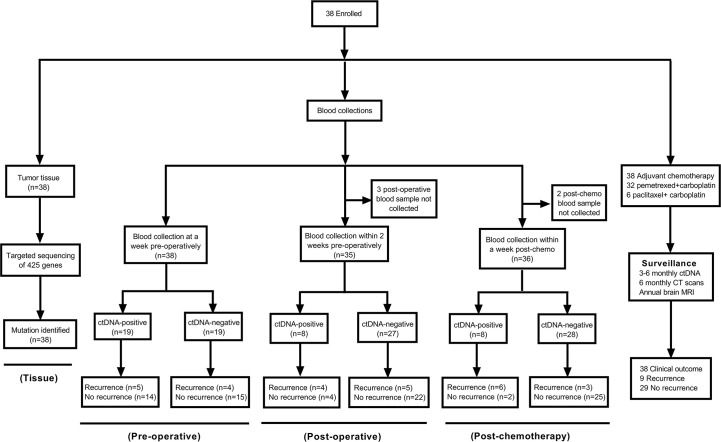
This analysis included 38 patients who underwent curative-intent resection and received adjuvant chemotherapy for NSCLC. ctDNA analyses of tumor tissue, and pre- and post-operative plasma samples were performed with next-generation sequencing targeting 425 cancer-relevant genes. We define a ctDNA positive event as at least one shared mutation identified simultaneously in the plasma and tumor specimens. The primary endpoint was recurrence-free survival (RFS).
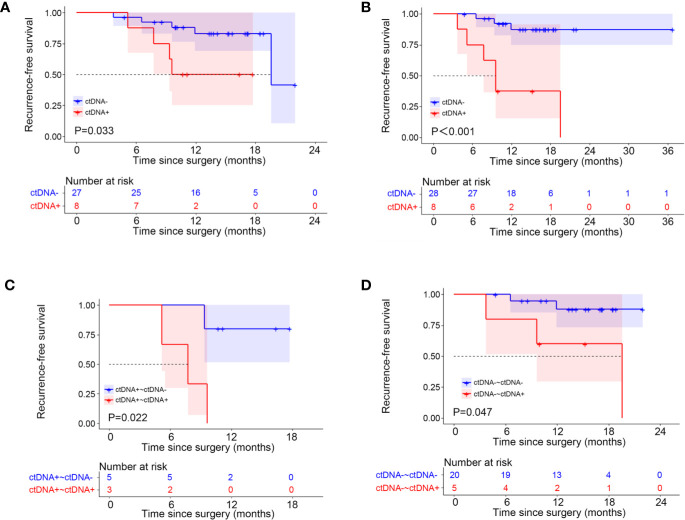
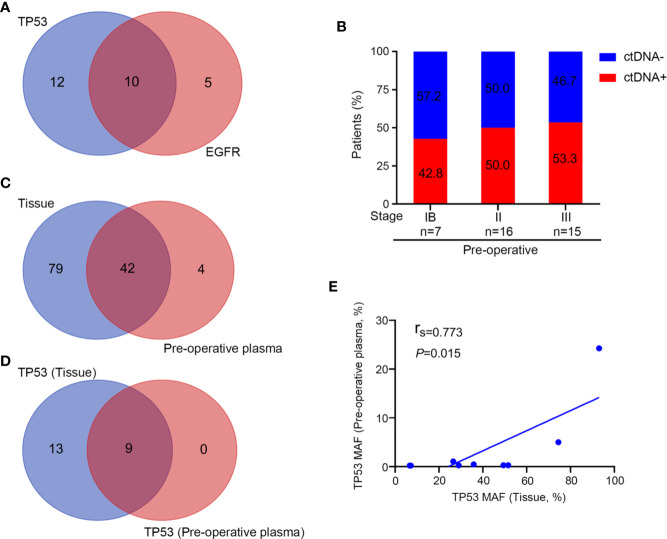
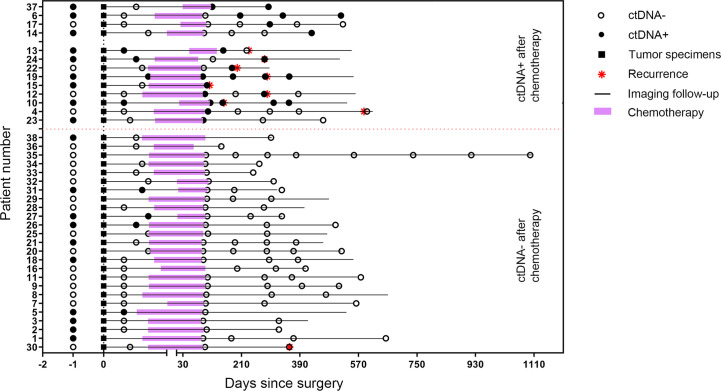
At least one somatic mutation was identified in the tumor tissue of all 38 patients. Tumor tissue-specific mutated ctDNA was detected in the preoperative plasma samples of 19 (50%) patients. ctDNA in preoperative plasma was in good accordance with that in tissue. ctDNA was detectable in the first post-operative pre-chemotherapy samples of 8 of 35 (22.9%) patients and was associated with inferior RFS (HR, 3.69; P = 0.033). ctDNA was detected in the first post-chemotherapy samples of 8 of 36 (22.2%) patients and was also associated with inferior RFS (HR, 8.76; P < 0.001).
Postoperative and post-chemotherapy ctDNA is a promising prognostic marker for resected NSCLC. ctDNA analyses may define a subgroup that remains at high risk of relapse despite standard adjuvant chemotherapy, and may help to inform intensified therapeutic strategies.
尽管辅助化疗已应用于非小细胞肺癌(NSCLC)患者,但长期生存率仍有待提高。可切除NSCLC患者术后循环肿瘤DNA(ctDNA)分析可能有助于识别辅助化疗后复发风险高的患者,并促进个性化治疗。
本分析纳入了38例行根治性切除并接受NSCLC辅助化疗的患者。采用靶向425个癌症相关基因的二代测序技术对肿瘤组织以及术前和术后血浆样本进行ctDNA分析。我们将ctDNA阳性事件定义为在血浆和肿瘤标本中同时鉴定出至少一个共同突变。主要终点为无复发生存期(RFS)。
38例患者的肿瘤组织中均至少鉴定出一种体细胞突变。19例(50%)患者的术前血浆样本中检测到肿瘤组织特异性突变的ctDNA。术前血浆中的ctDNA与组织中的ctDNA高度一致。35例患者中的8例(22.9%)术后首次化疗前样本中可检测到ctDNA,且与较差的RFS相关(HR,3.69;P = 0.033)。36例患者中的8例(22.2%)化疗后首次样本中检测到ctDNA,也与较差的RFS相关(HR,8.76;P < 0.001)。
术后及化疗后ctDNA是可切除NSCLC有前景的预后标志物。ctDNA分析可能确定一个尽管接受了标准辅助化疗但仍处于高复发风险的亚组,并可能有助于指导强化治疗策略。