Osuka Akinori, Miyao Daiki, Kuge Yuji, Nakajima Shinji, Kuroki Yuichi, Ueyama Masashi
Department of Trauma, Critical Care Medicine and Burn Center, Japan Community Healthcare Organization Chukyo Hospital, Nagoya, Japan.
Trauma Case Rep. 2021 Feb 10;32:100411. doi: 10.1016/j.tcr.2021.100411. eCollection 2021 Apr.
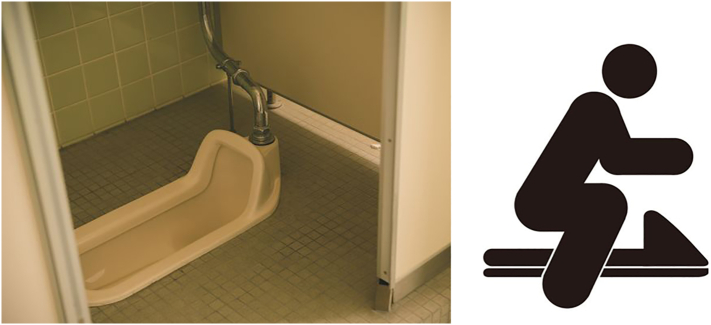
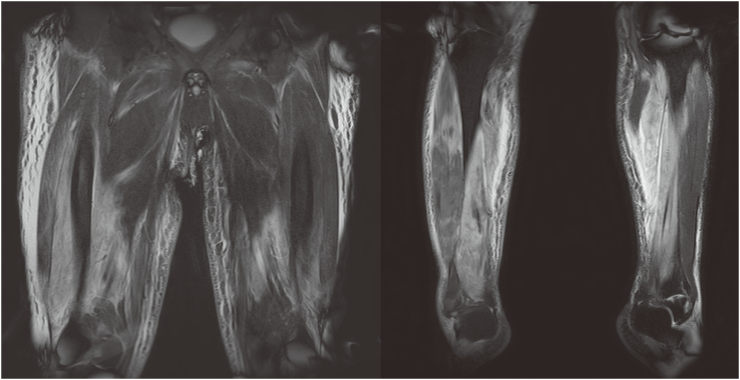
We report a case of crush syndrome that developed while the patient was squatting to use a Japanese-style toilet. The patient was a 61-year-old male with an obese body. He was sitting on the toilet and couldn't stand up, and after a few hours, the landlord found him and called the emergency services. On presentation, the patient was hyperkalemic and in shock, and his serum creatine kinase levels rose to a maximum of 287,600 U/L. He was diagnosed with postural crush syndrome in both lower extremities due to squatting position in a Japanese-style toilet. Subjective symptoms, physical examination, and blood tests were monitored and the patient was observed. As a result, the patient could be treated conservatively without fasciotomy. Dialysis was not necessary because the fluid infusion maintained adequate urine output and corrected the hyperkalemia. Magnetic resonance imaging of both lower extremities showed multiple high-signal areas in the muscles of the bilateral thighs and lower legs. This case suggested that if the wound is closed, the peripheral pulse is palpable, and the patient's symptoms have improved, a fasciotomy should not be performed. People who are too heavy to squat may need to be careful when using this kind of toilet.
我们报告一例挤压综合征病例,该病例发生在患者蹲坐使用日式马桶时。患者为一名61岁肥胖男性。他坐在马桶上无法起身,数小时后房东发现了他并呼叫了急救服务。就诊时,患者血钾过高且处于休克状态,其血清肌酸激酶水平最高升至287,600 U/L。他被诊断为因蹲坐在日式马桶上导致双下肢体位性挤压综合征。对患者的主观症状、体格检查和血液检查进行了监测并对患者进行了观察。结果,患者可通过保守治疗而无需进行筋膜切开术。由于液体输注维持了充足的尿量并纠正了高钾血症,因此无需进行透析。双下肢磁共振成像显示双侧大腿和小腿肌肉中有多个高信号区域。该病例表明,如果伤口闭合、可触及外周脉搏且患者症状已改善,则不应进行筋膜切开术。体重过重而无法蹲下的人在使用这种马桶时可能需要小心。