Kosterin O E, Bogdanova V S, Mglinets A V
Institute of Cytology and Genetics of Siberian Branch of the Russian Academy of Sciences, Novosibirsk, Russia Novosibirsk State University, Novosibirsk, Russia.
Institute of Cytology and Genetics of Siberian Branch of the Russian Academy of Sciences, Novosibirsk, Russia.
Vavilovskii Zhurnal Genet Selektsii. 2020 Feb;24(1):60-68. doi: 10.18699/VJ20.596.
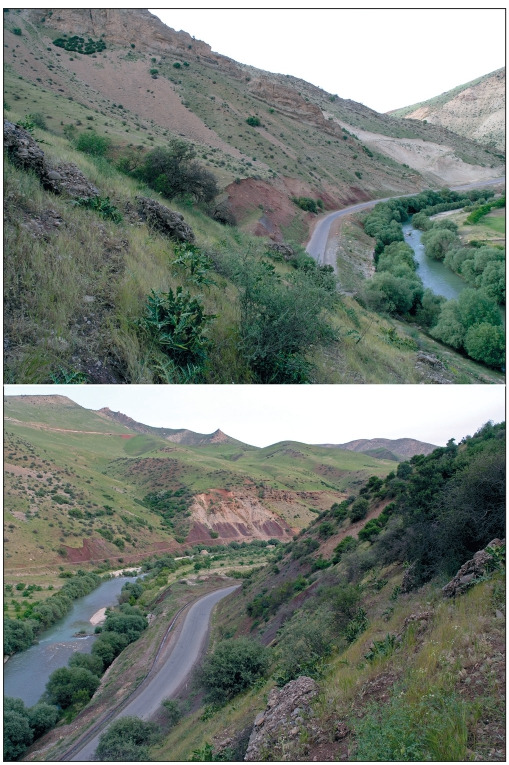
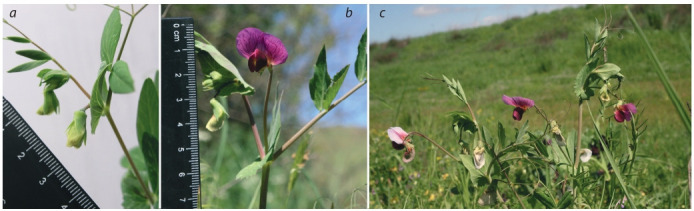
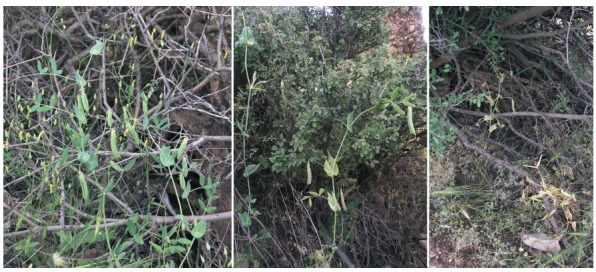
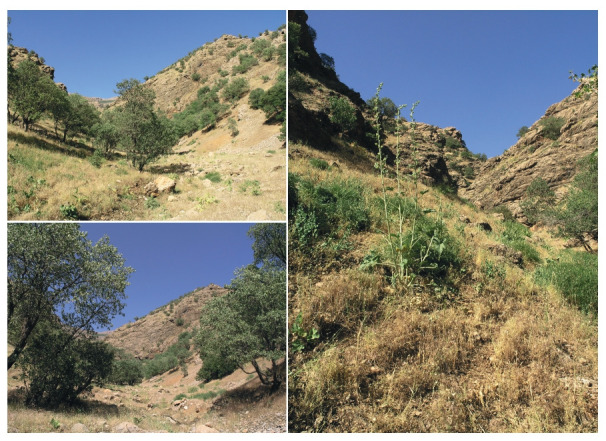
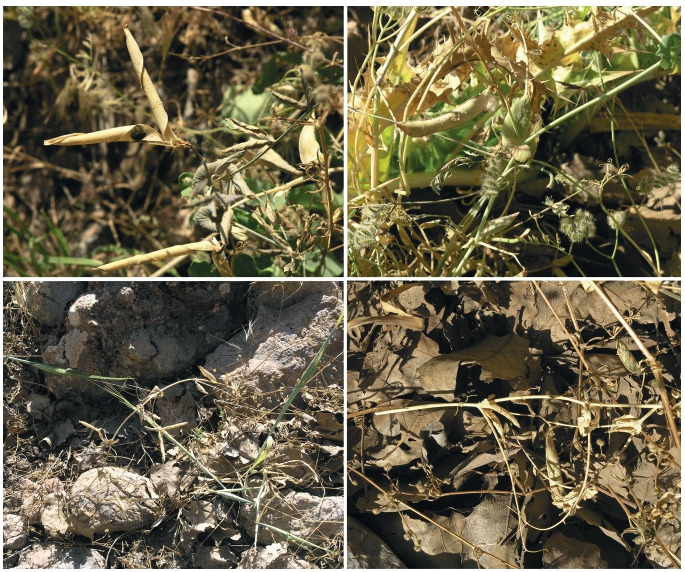
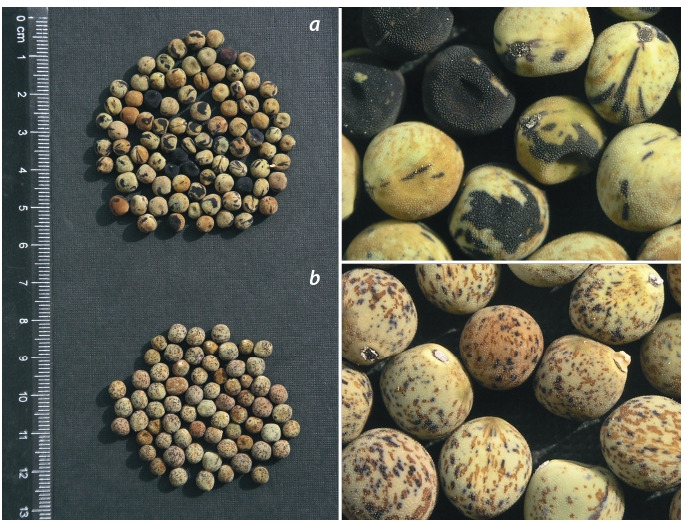
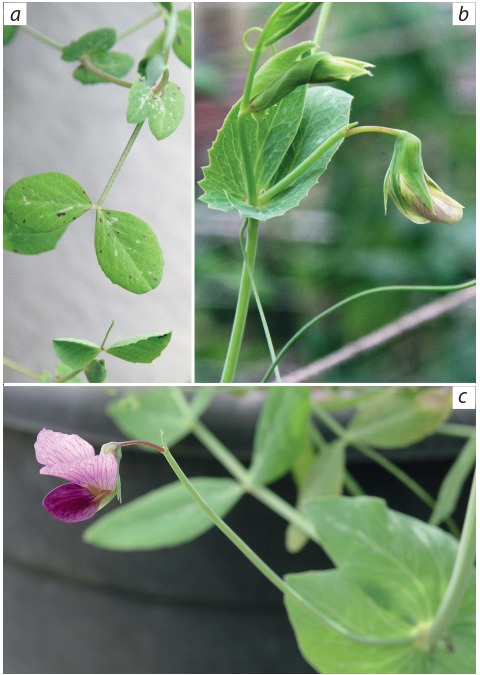
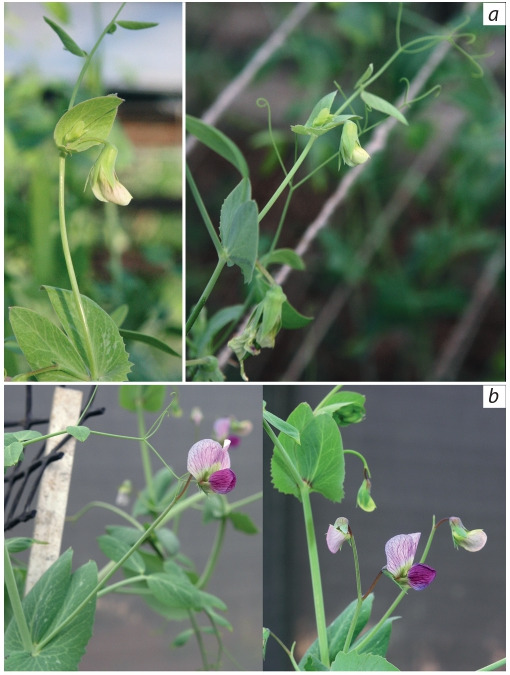
Characteristics of wild peas and their habitats at the periphery of the range are interesting with respect to their potential importance for pre-breeding programs aimed at selection for different environmental conditions. However, wild pea diversity in peripheral regions is insufficiently represented in the existing germplasm collections. In such regions, wild pea populations are rare, small in size and suffer from climatic change and land exploitation, hence their focused search is strongly desirable. A two-week-long expedition to Iran in May 2017 revealed two small populations of the wild pea (Pisum sativum subsp. elatius) in the Zagros Mts, in Aligudarz and Khorramabad Districts of Lorestan Province, Iran, at elevations of 1841 and 1971 m a.s.l., respectively. Their habitats are briefly described. Two pea accessions derived from them, CE9 and CE10, were characterised for some visible and molecular characters. These peas appeared to belong to the evolutionary lineage B, recognised by us earlier in P. sativum as opposed to the so-called lineage AC. They contain a unique non-conservative substitution in subtype 5 of histone H1 and turned to be most related to some wild pea accessions originating from southern and south-eastern Turkey and Golan Heights. Scarce information available on wild pea occurrence in Iran suggests their existence in the south-western principal slope of Zagros Mts and southern principal slopes of Elborz and Kopet Dagh Mts. It was found that wild peas representing the evolutionary lineage B produce poorly open and poorly coloured flowers (as reported by us earlier) only in the greenhouse conditions but normally pigmented and open flowers in the wild and mesh houses at open air in Israel. Some issues of pea taxonomy are discussed.
野生豌豆及其分布范围边缘栖息地的特征,对于旨在选育适应不同环境条件的预育种计划具有潜在重要性,因而备受关注。然而,现有种质资源库中,边缘地区的野生豌豆多样性并未得到充分体现。在这些地区,野生豌豆种群稀少、规模较小,且受到气候变化和土地开发的影响,因此,对其进行重点搜寻十分必要。2017年5月,一支为期两周的考察队前往伊朗,在伊朗洛雷斯坦省阿里古达兹和霍拉马巴德地区的扎格罗斯山脉,分别于海拔1841米和1971米处发现了两小群野生豌豆(豌豆亚种Pisum sativum subsp. elatius)。文中简要描述了它们的栖息地。从这些豌豆中获取的两个种质CE9和CE10,对一些可见特征和分子特征进行了表征。这些豌豆似乎属于进化谱系B,这是我们之前在豌豆中识别出的,与所谓的谱系AC相对。它们在组蛋白H1的亚型5中存在独特的非保守替换,并且与一些源自土耳其南部和东南部以及戈兰高地的野生豌豆种质最为相关。关于伊朗野生豌豆出现情况的可用信息稀少,这表明它们存在于扎格罗斯山脉西南主坡以及厄尔布尔士山脉和科佩特山脉南部主坡。研究发现,代表进化谱系B的野生豌豆仅在温室条件下花朵开放不良且颜色不佳(正如我们之前报道的那样),但在以色列的野外和露天网室中花朵色素正常且开放。文中还讨论了豌豆分类学的一些问题。