Texas A&M University -Commerce, PO Box 3011, Commerce, TX, 75429, USA.
Hollins University, Roanoke, USA.
Cogn Res Princ Implic. 2021 Mar 3;6(1):14. doi: 10.1186/s41235-021-00276-3.
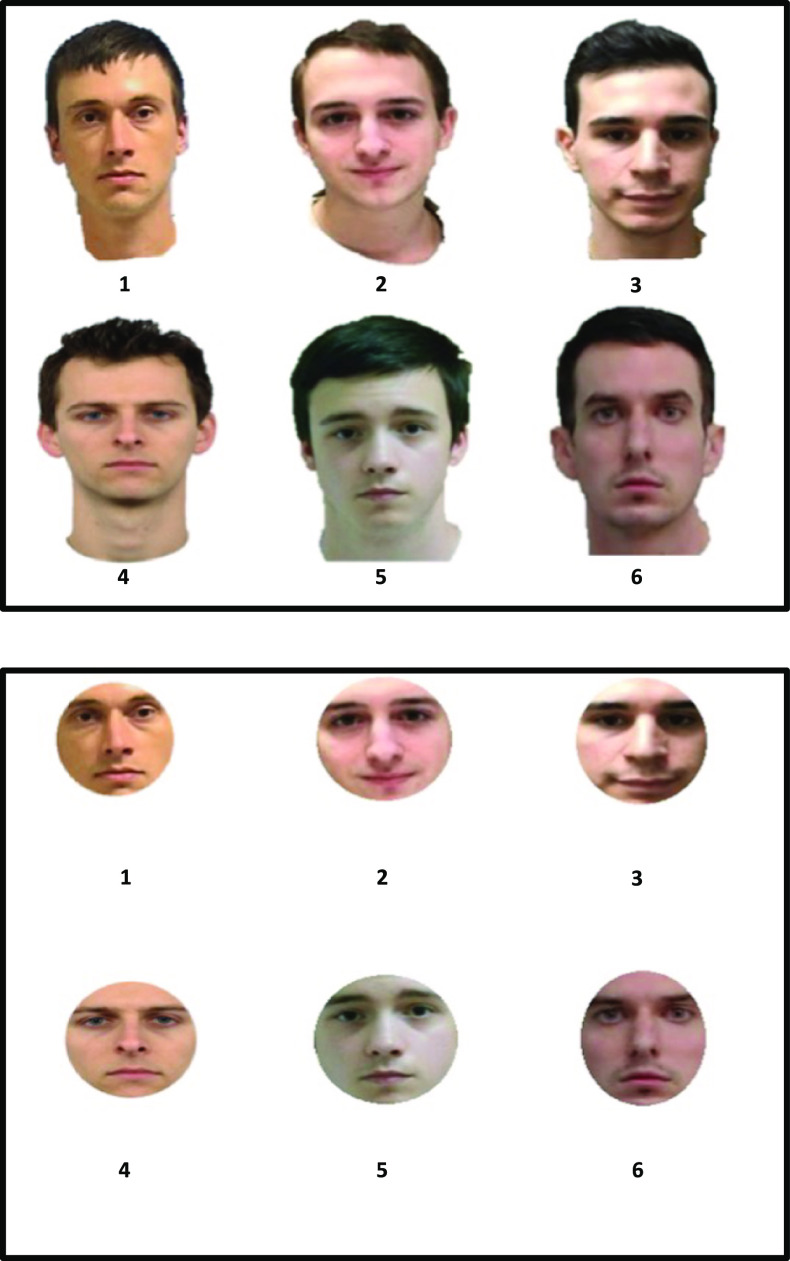
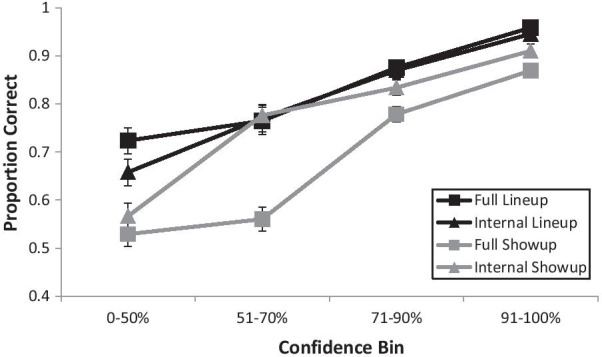
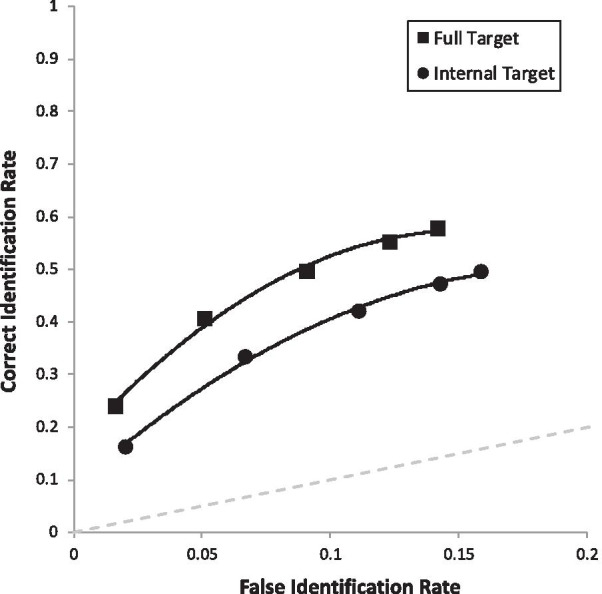
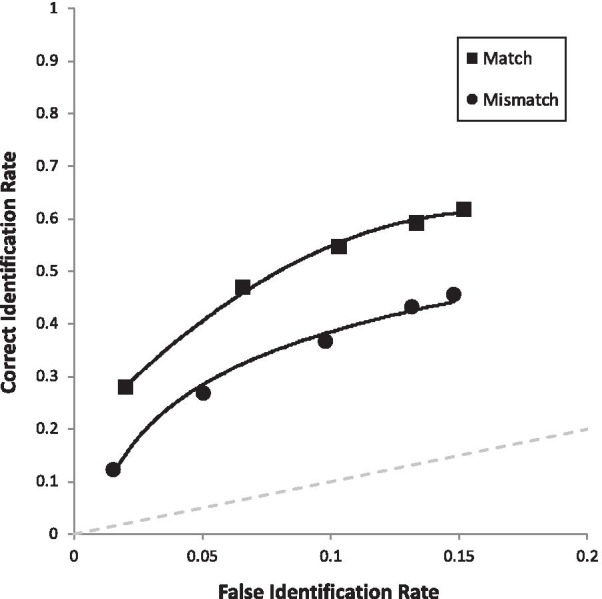
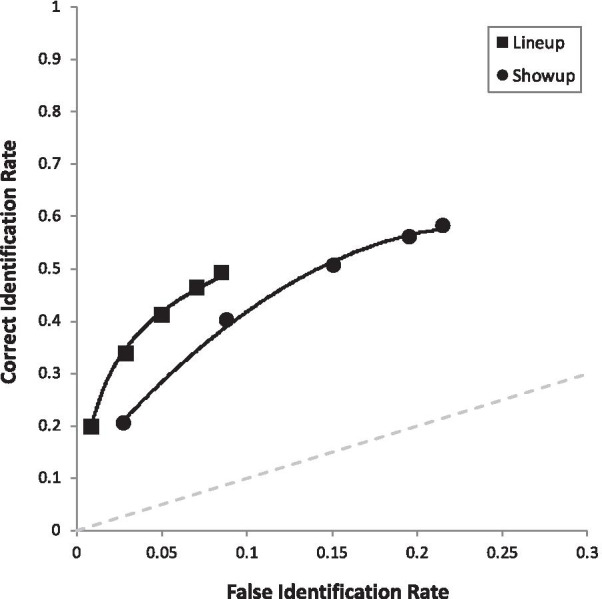
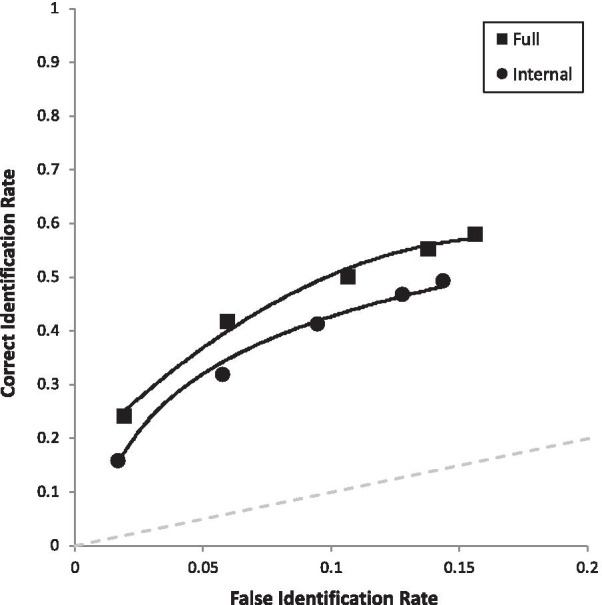
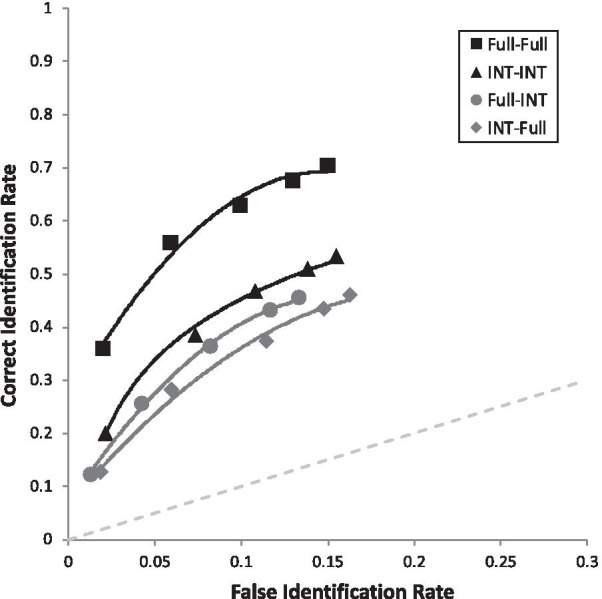
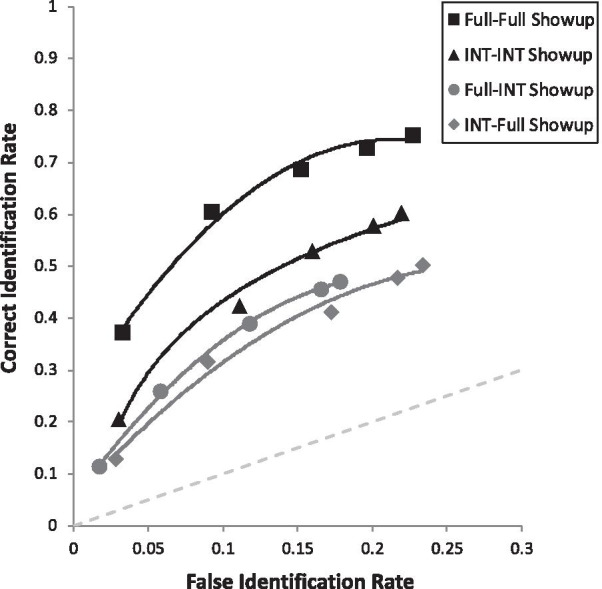
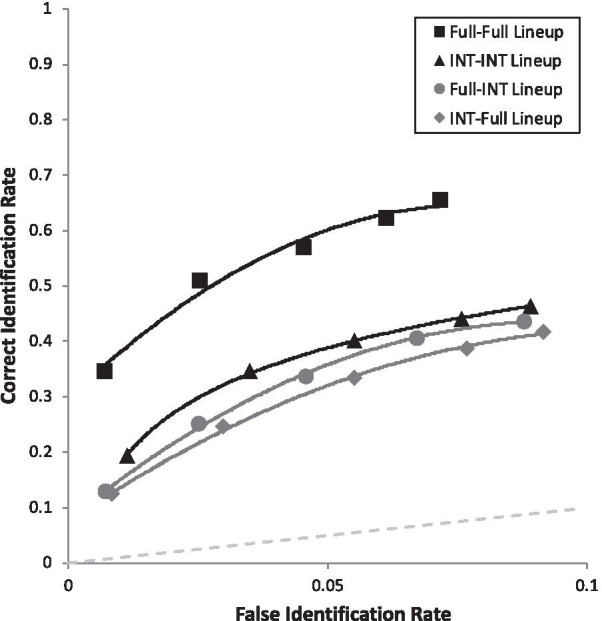
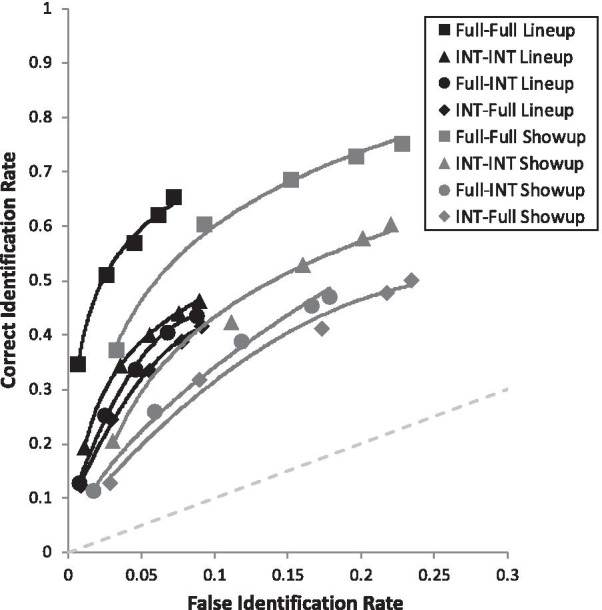
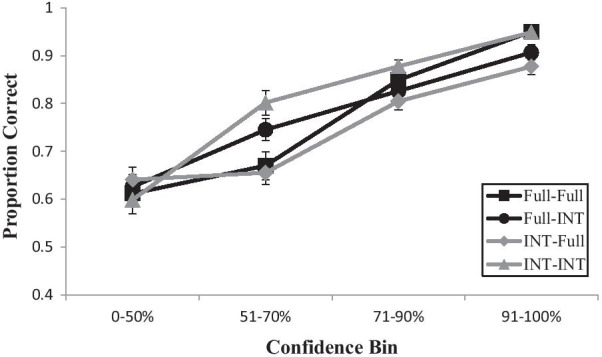
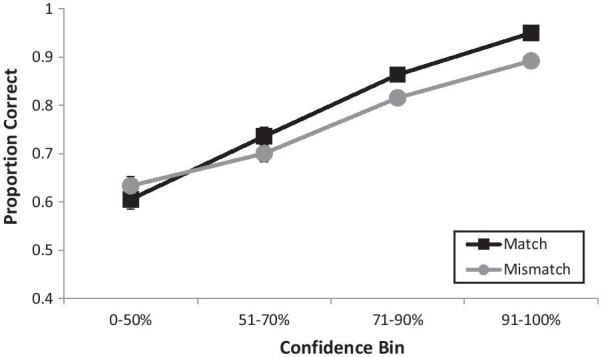
The diagnostic feature-detection theory (DFT) of eyewitness identification is based on facial information that is diagnostic versus non-diagnostic of suspect guilt. It primarily has been tested by discounting non-diagnostic information at retrieval, typically by surrounding a single suspect showup with good fillers to create a lineup. We tested additional DFT predictions by manipulating the presence of facial information (i.e., the exterior region of the face) at both encoding and retrieval with a large between-subjects factorial design (N = 19,414). In support of DFT and in replication of the literature, lineups yielded higher discriminability than showups. In support of encoding specificity, conditions that matched information between encoding and retrieval were generally superior to mismatch conditions. More importantly, we supported several DFT and encoding specificity predictions not previously tested, including that (a) adding non-diagnostic information will reduce discriminability for showups more so than lineups, and (b) removing diagnostic information will lower discriminability for both showups and lineups. These results have implications for police deciding whether to conduct a showup or a lineup, and when dealing with partially disguised perpetrators (e.g., wearing a hoodie).
目击证人识别的诊断特征检测理论(DFT)基于对嫌疑人有罪与否具有诊断性与非诊断性的面部信息。该理论主要通过在检索时排除非诊断信息来进行检验,通常的做法是在单一嫌疑人指认场景周围设置良好的填充人员来组成辨认组。我们通过在编码和检索阶段对面部信息(即面部的外部区域)的存在进行操控,利用大型被试间因子设计(N=19414)来检验 DFT 的其他预测。结果支持了 DFT 和文献中的复制,辨认组比指认组具有更高的辨别力。支持编码特异性,在编码和检索阶段匹配信息的条件通常优于不匹配的条件。更重要的是,我们支持了几个以前未经过检验的 DFT 和编码特异性预测,包括:(a)添加非诊断信息会比辨认组更降低指认组的辨别力,以及(b)去除诊断信息会降低指认组和辨认组的辨别力。这些结果对警方决定是否进行指认或辨认组有影响,并且在处理部分伪装的犯罪者(例如,戴兜帽)时也有影响。