Department of Endocrinology, Changhai Hospital, Second Military Medical University, Shanghai, People's Republic of China.
South China Center of Craniofacial Stem Cell Research, Guanghua School and Hospital of Stomatology, Sun Yat-sen University, Guangzhou, People's Republic of China.
Stem Cells Transl Med. 2021 Jul;10(7):956-967. doi: 10.1002/sctm.20-0303. Epub 2021 Mar 4.
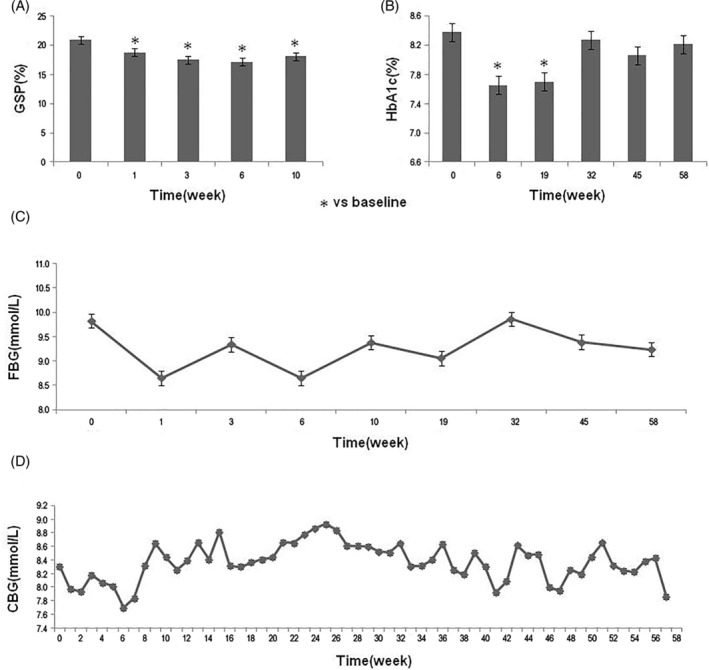
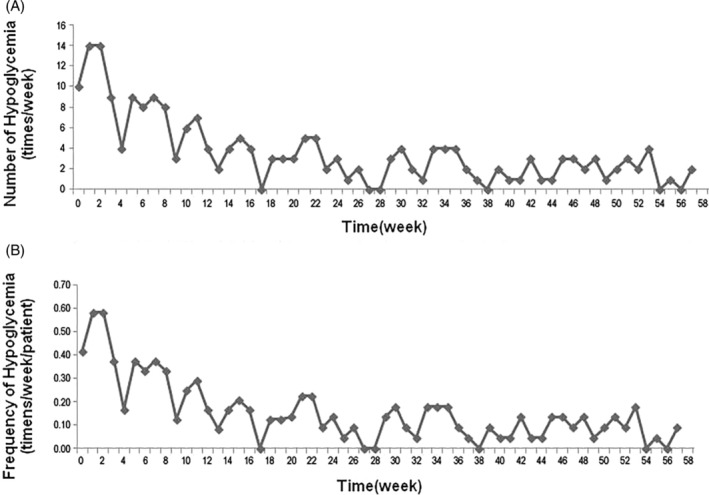
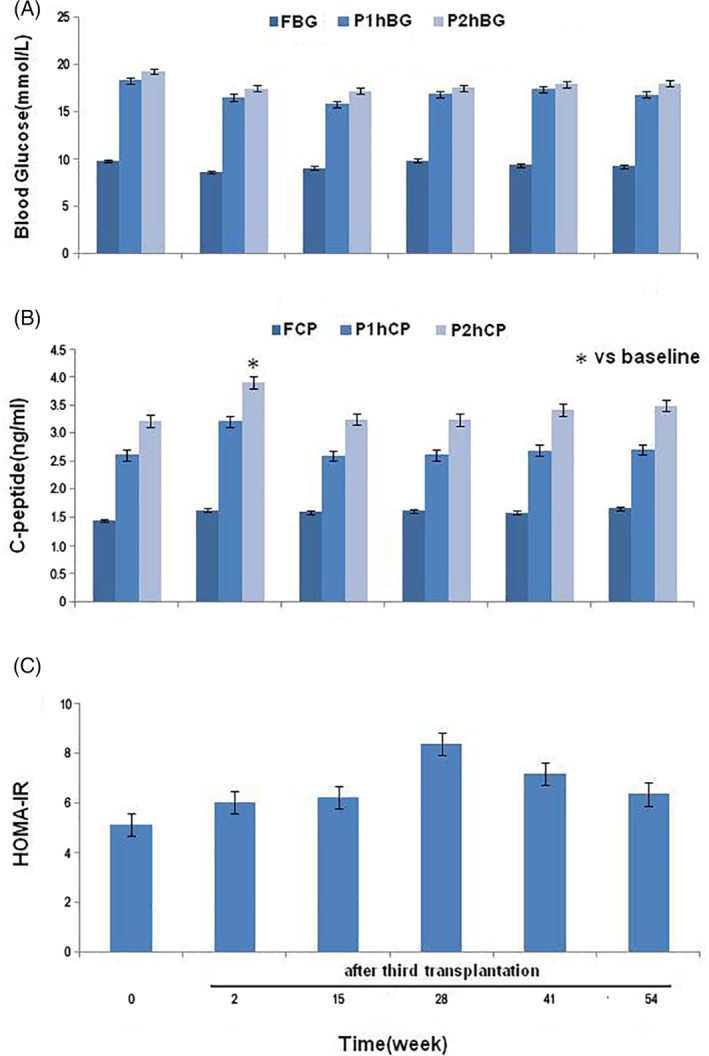
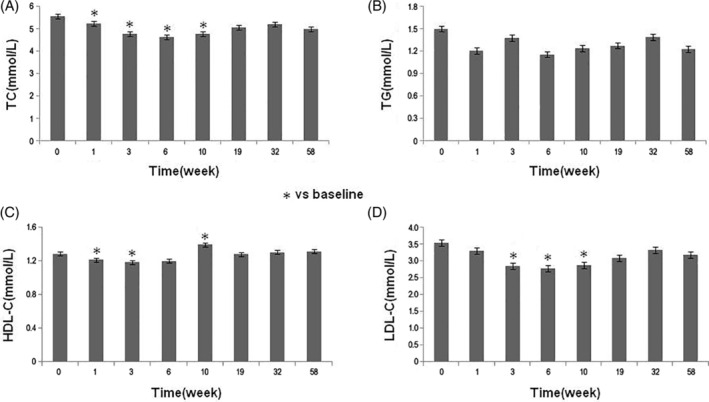
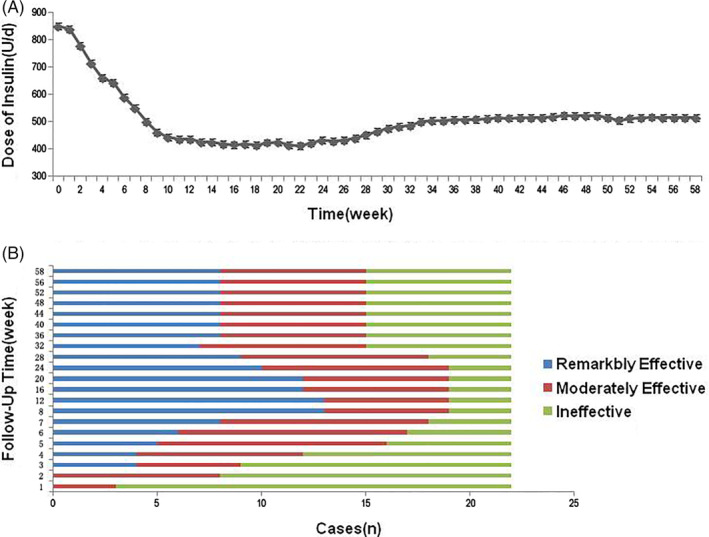
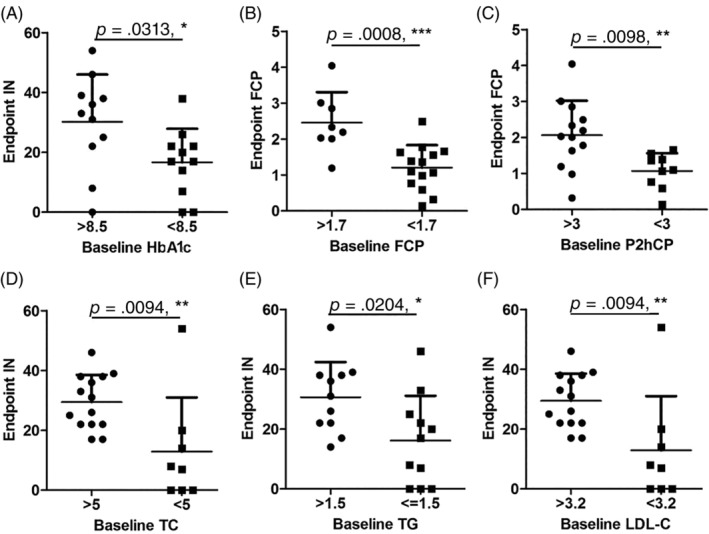
Mesenchymal stem cells (MSCs) hold great potential in treating patients with diabetes, but the therapeutic effects are not always achieved. Particularly, the clinical factors regulating MSC therapy in this setting are largely unknown. In this study, 24 patients with type 2 diabetes mellitus (T2DM) treated with insulin were selected to receive three intravenous infusions of stem cells from human exfoliated deciduous teeth (SHED) over the course of 6 weeks and were followed up for 12 months. We observed a significant reduction of glycosylated serum albumin level (P < .05) and glycosylated hemoglobin level (P < .05) after SHED transplantation. The total effective rate was 86.36% and 68.18%, respectively, at the end of treatment and follow-up periods. Three patients ceased insulin injections after SHED transplantation. A steamed bread meal test showed that the serum levels of postprandial C-peptide at 2 hours were significantly higher than those at the baseline (P < .05). Further analysis showed that patients with a high level of blood cholesterol and a low baseline level of C-peptide had poor response to SHED transplantation. Some patients experienced a transient fever (11.11%), fatigue (4.17%), or rash (1.39%) after SHED transplantation, which were easily resolved. In summary, SHED infusion is a safe and effective therapy to improve glucose metabolism and islet function in patients with T2DM. Blood lipid levels and baseline islet function may serve as key factors contributing to the therapeutic outcome of MSC transplantation in patients with T2DM.
间充质干细胞(MSCs)在治疗糖尿病患者方面具有巨大潜力,但治疗效果并不总是能够实现。特别是,调节这种情况下 MSC 治疗的临床因素在很大程度上尚不清楚。在这项研究中,选择了 24 名接受胰岛素治疗的 2 型糖尿病(T2DM)患者,在 6 周内接受三次人脱落乳牙间充质干细胞(SHED)的静脉输注,并随访 12 个月。我们观察到 SHED 移植后血清糖化白蛋白水平(P <.05)和糖化血红蛋白水平(P <.05)显著降低。治疗结束和随访期末,总有效率分别为 86.36%和 68.18%。SHED 移植后,有 3 名患者停止了胰岛素注射。馒头餐试验显示,餐后 2 小时血清 C 肽水平明显高于基线(P <.05)。进一步分析表明,血胆固醇水平高和 C 肽基线水平低的患者对 SHED 移植反应不佳。一些患者在 SHED 移植后出现短暂发热(11.11%)、疲劳(4.17%)或皮疹(1.39%),这些症状很容易解决。总之,SHED 输注是一种安全有效的治疗方法,可改善 T2DM 患者的葡萄糖代谢和胰岛功能。血脂水平和基线胰岛功能可能是影响 T2DM 患者 MSC 移植治疗效果的关键因素。