Department of Biomedical Sciences, Colorado State University, Fort Collins, CO, USA.
Physiol Rep. 2021 Mar;9(5):e14788. doi: 10.14814/phy2.14788.
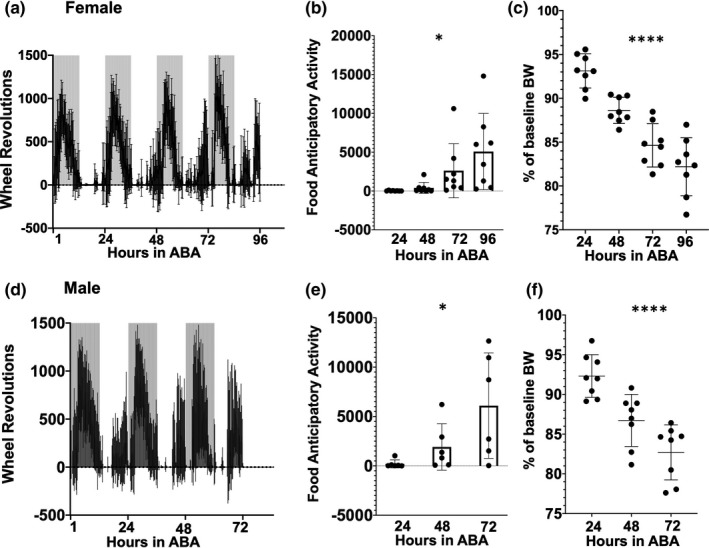
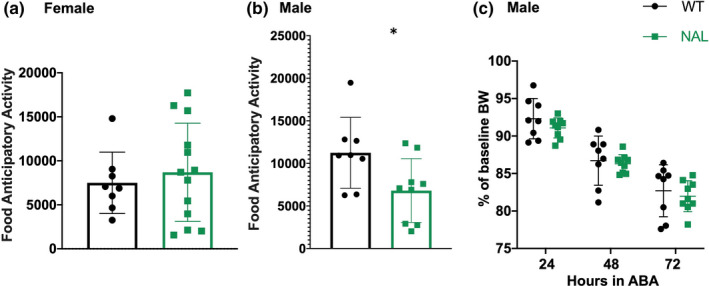
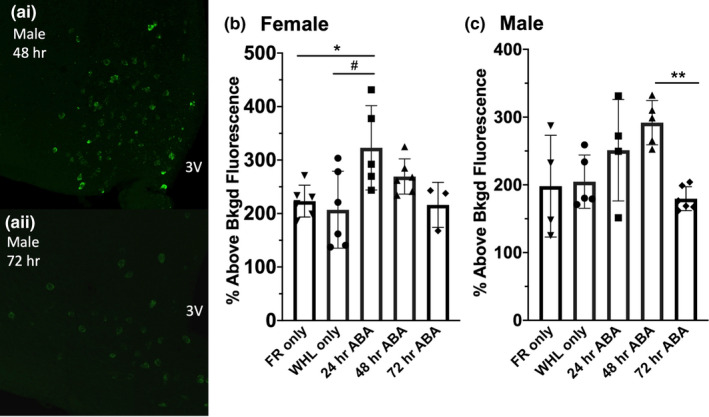
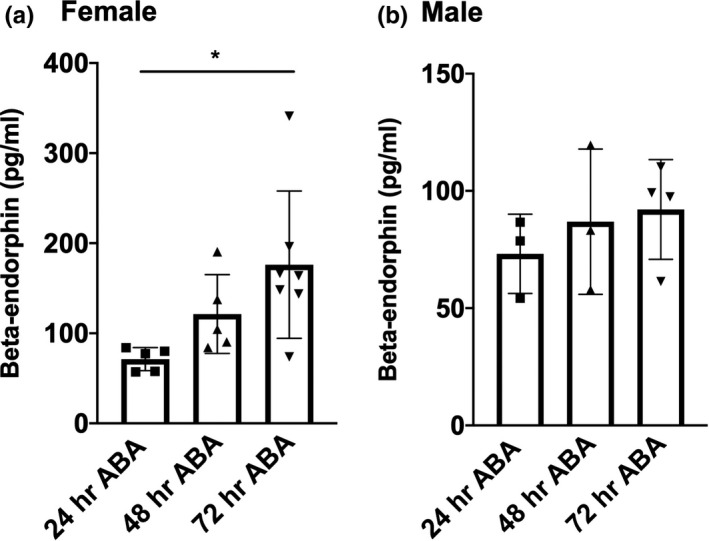
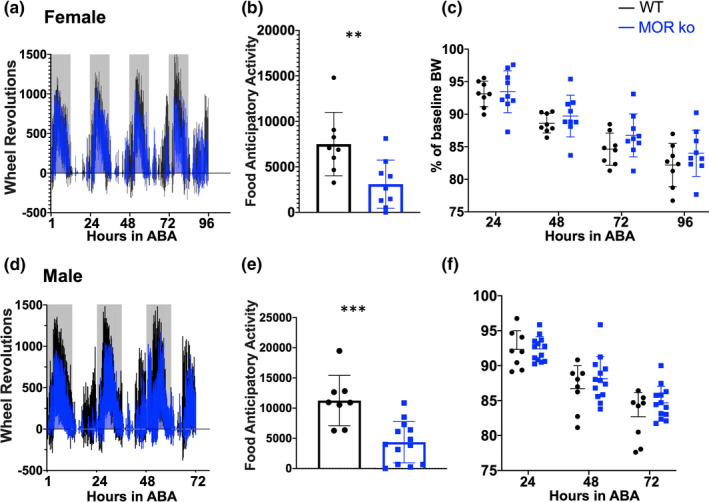
Anorexia nervosa (AN) has a lifetime prevalence of up to 4% and a high mortality rate (~5-10%), yet little is known regarding the etiology of this disease. In an attempt to fill the gaps in knowledge, activity-based anorexia (ABA) in rodents has been a widely used model as it mimics several key features of AN including severely restricted food intake and excessive exercise. Using this model, a role for the hypothalamic proopiomelanocortin (POMC) system has been implicated in the development of ABA as Pomc mRNA is elevated in female rats undergoing the ABA paradigm. Since the Pomc gene product α-MSH potently inhibits food intake, it could be that elevated α-MSH might promote ABA. However, the α-MSH receptor antagonist SHU9119 does not protect against the development of ABA. Interestingly, it has also been shown that female mice lacking the mu opioid receptor (MOR), the primary receptor activated by the Pomc-gene-derived opioid β-endorphin, display blunted food anticipatory behavior (FAA), a key feature of ABA. Thus, we hypothesized that the elevation in Pomc mRNA observed during ABA may lead to increased β-endorphin concentrations and MOR activation to promote ABA. Further, given the known sex differences in AN and ABA, we hypothesized that MORs may contribute differentially in male and female mice. Using wild-type and MOR knockout mice of both sexes, a MOR antagonist and careful analysis of food anticipatory behavior and β-endorphin levels, we found 1) increased Pomc mRNA levels in both female and male mice that underwent ABA, 2) increased β-endorphin in female mice that underwent ABA, and 3) blunted FAA in both sexes in response to MOR genetic deletion yet blunted FAA only in males in response to MOR antagonism. The results presented provide support for both hypotheses and suggest that it may be the β-endorphin resulting from increased Pomc transcription that supports the development of some features of ABA.
神经性厌食症(AN)的终身患病率高达 4%,死亡率较高(~5-10%),但人们对这种疾病的病因知之甚少。为了填补知识空白,啮齿动物的活动性厌食症(ABA)已被广泛用作模型,因为它模拟了 AN 的几个关键特征,包括严重限制食物摄入和过度运动。使用这种模型,下丘脑前阿黑皮素原(POMC)系统在 ABA 的发展中起作用,因为在经历 ABA 范式的雌性大鼠中,Pomc mRNA 升高。由于 POMC 基因产物 α-MSH 强烈抑制食物摄入,因此升高的 α-MSH 可能促进 ABA。然而,α-MSH 受体拮抗剂 SHU9119 不能防止 ABA 的发展。有趣的是,还表明缺乏μ阿片受体(MOR)的雌性小鼠,即由 Pomc 基因衍生的阿片β-内啡肽的主要受体,表现出食物预期行为(FAA)减弱,这是 ABA 的一个关键特征。因此,我们假设在 ABA 期间观察到的 Pomc mRNA 升高可能导致 β-内啡肽浓度增加和 MOR 激活,从而促进 ABA。此外,鉴于 AN 和 ABA 中的已知性别差异,我们假设 MOR 在雄性和雌性小鼠中可能有不同的贡献。使用两性野生型和 MOR 敲除小鼠,MOR 拮抗剂和对食物预期行为和 β-内啡肽水平的仔细分析,我们发现 1)ABA 后两性小鼠的 Pomc mRNA 水平升高,2)ABA 后雌性小鼠的 β-内啡肽增加,3)MOR 基因缺失对两性 FAA 产生抑制作用,但 MOR 拮抗作用仅对雄性 FAA 产生抑制作用。提出的结果支持这两个假设,并表明可能是增加的 Pomc 转录产生的 β-内啡肽支持了 ABA 某些特征的发展。