State Key Laboratory for Diagnosis and Treatment of Infectious Diseases, National Clinical Research Center for Infectious Diseases, Collaborative Innovation Center for Diagnosis and Treatment of Infectious Diseases, The First Affiliated Hospital, College of Medicine, Zhejiang University, Hangzhou 310003, China.
State Key Laboratory for Diagnosis and Treatment of Infectious Diseases, National Clinical Research Center for Infectious Diseases, Collaborative Innovation Center for Diagnosis and Treatment of Infectious Diseases, The First Affiliated Hospital, College of Medicine, Zhejiang University, Hangzhou 310003, China.
Metabolism. 2021 May;118:154739. doi: 10.1016/j.metabol.2021.154739. Epub 2021 Mar 2.
Metabolism is critical for sustaining life, immunity and infection, but its role in COVID-19 is not fully understood.
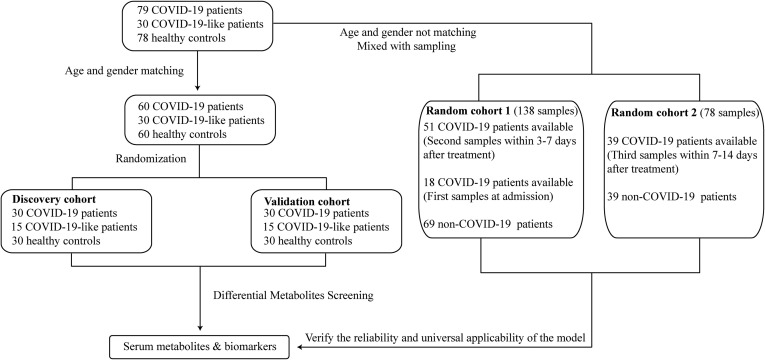
Seventy-nine COVID-19 patients, 78 healthy controls (HCs) and 30 COVID-19-like patients were recruited in a prospective cohort study. Samples were collected from COVID-19 patients with mild or severe symptoms on admission, patients who progressed from mild to severe symptoms, and patients who were followed from hospital admission to discharge. The metabolome was assayed using gas chromatography-mass spectrometry.
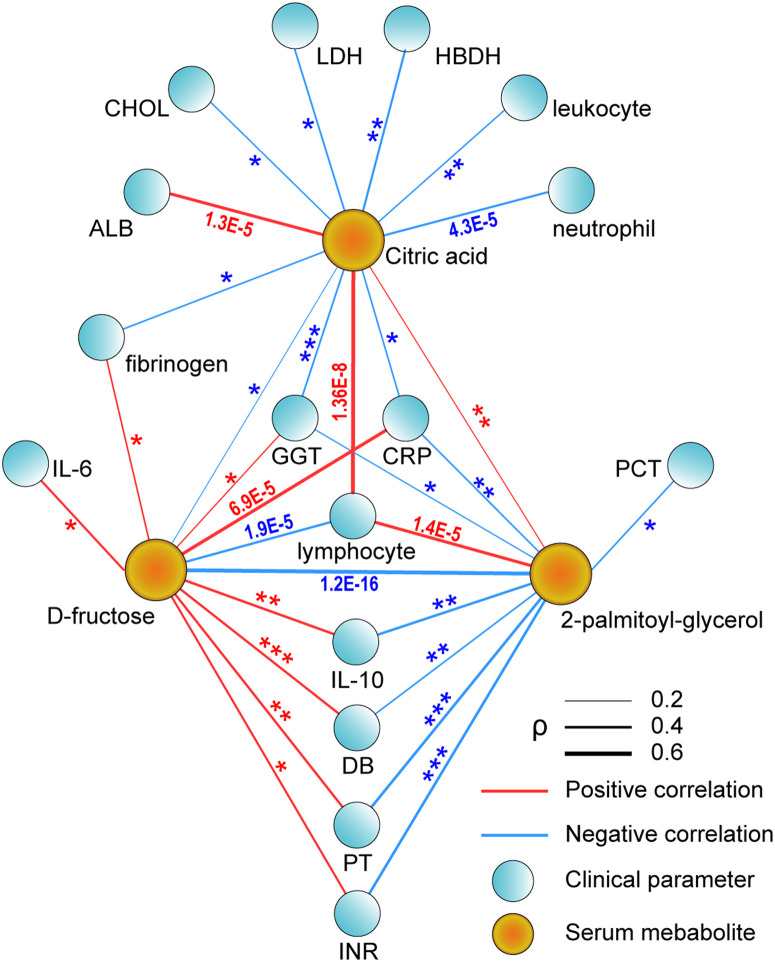
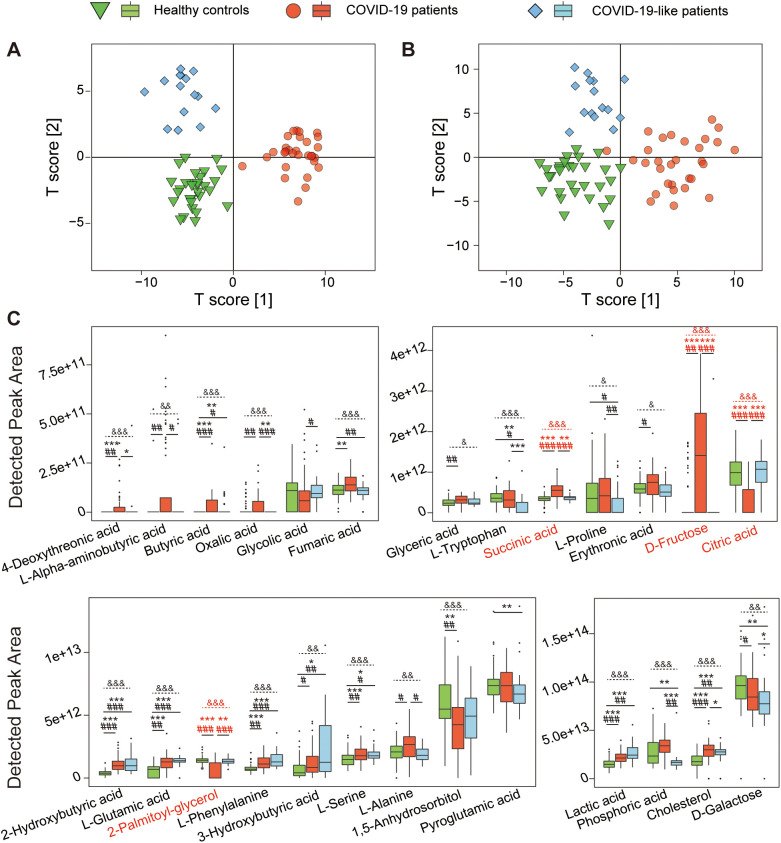
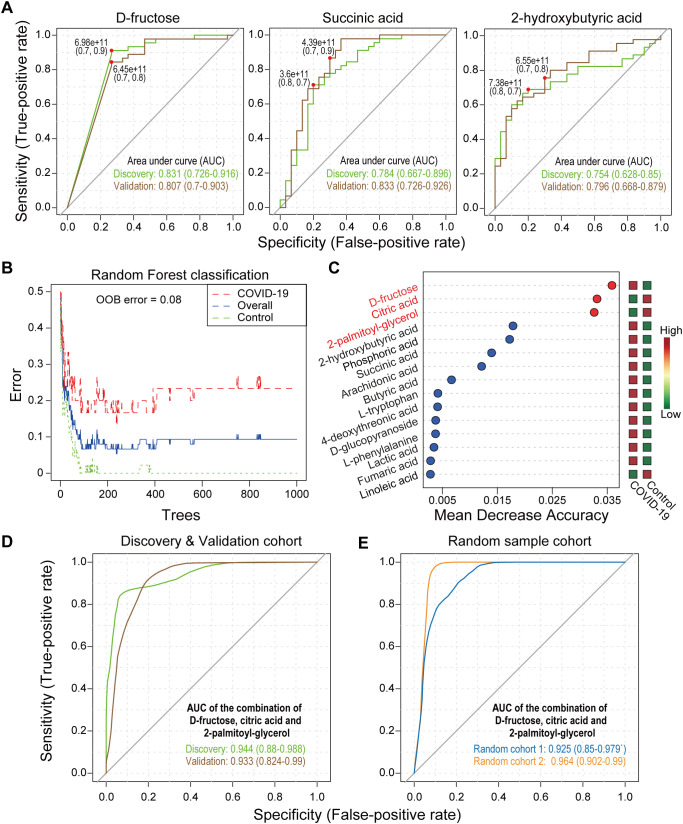
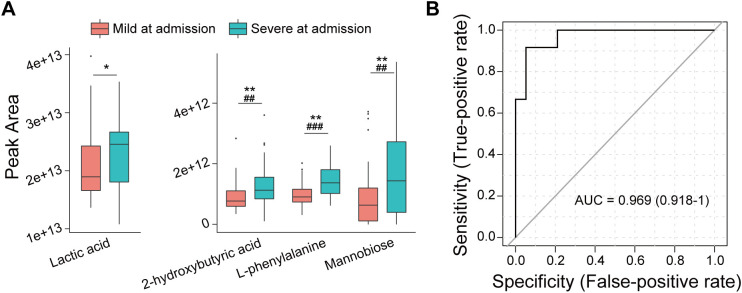
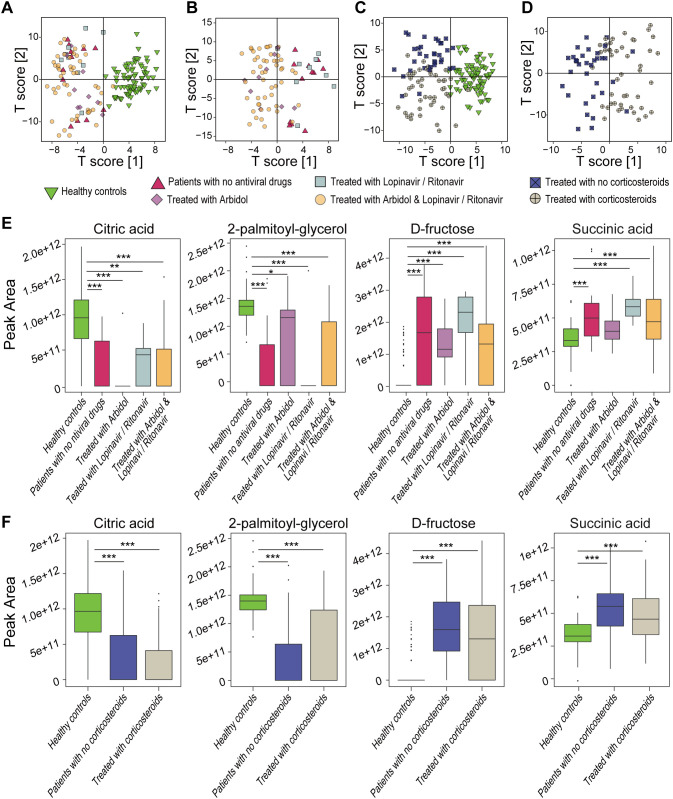
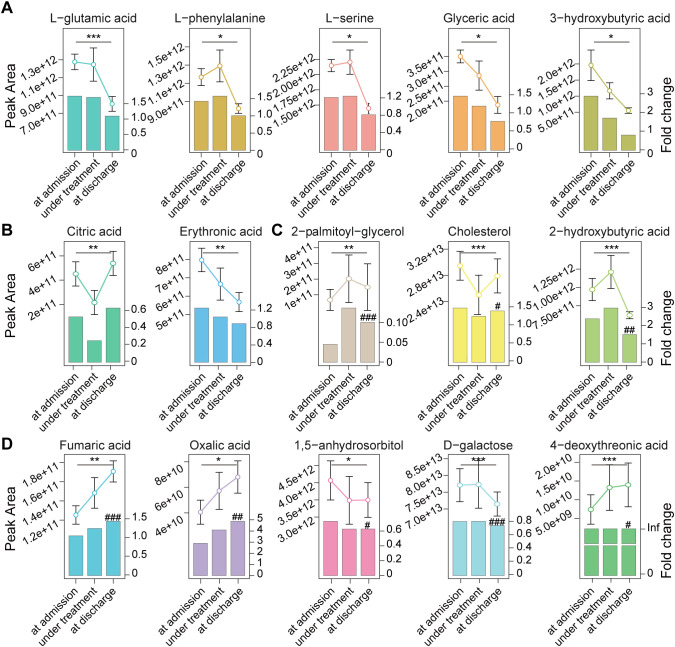
Serum butyric acid, 2-hydroxybutyric acid, l-glutamic acid, l-phenylalanine, l-serine, l-lactic acid, and cholesterol were enriched in COVID-19 and COVID-19-like patients versus HCs. Notably, d-fructose and succinic acid were enriched, and citric acid and 2-palmitoyl-glycerol were depleted in COVID-19 patients compared to COVID-19-like patients and HCs, and these four metabolites were not differentially distributed in non-COVID-19 groups. COVID-19 patients had enriched 4-deoxythreonic acid and depleted 1,5-anhydroglucitol compared to HCs and enriched oxalic acid and depleted phosphoric acid compared to COVID-19-like patients. A combination of d-fructose, citric acid and 2-palmitoyl-glycerol distinguished COVID-19 patients from HCs and COVID-19-like patients, with an area under the curve (AUC) > 0.92 after validation. The combination of 2-hydroxy-3-methylbutyric acid, 3-hydroxybutyric acid, cholesterol, succinic acid, L-ornithine, oleic acid and palmitelaidic acid predicted patients who progressed from mild to severe COVID-19, with an AUC of 0.969. After discharge, nearly one-third of metabolites were recovered in COVID-19 patients.
The serum metabolome of COVID-19 patients is distinctive and has important value in investigating pathogenesis, determining a diagnosis, predicting severe cases, and improving treatment.
新陈代谢对于维持生命、免疫力和感染至关重要,但它在 COVID-19 中的作用尚未完全阐明。
在一项前瞻性队列研究中,招募了 79 名 COVID-19 患者、78 名健康对照(HCs)和 30 名 COVID-19 样患者。从入院时症状较轻或较重的 COVID-19 患者、从轻症转为重症的患者以及从入院到出院的患者中采集样本。使用气相色谱-质谱法测定代谢组。
血清丁酸、2-羟基丁酸、谷氨酸、苯丙氨酸、丝氨酸、乳酸和胆固醇在 COVID-19 患者和 COVID-19 样患者中富集,而在 HCs 中则较少。值得注意的是,与 COVID-19 样患者和 HCs 相比,COVID-19 患者中 D-果糖和琥珀酸丰富,柠檬酸和 2-棕榈酰甘油减少,这些四种代谢物在非 COVID-19 组中没有差异分布。与 HCs 相比,COVID-19 患者中 4-脱氧苏氨酸丰富,1,5-脱水葡萄糖醇减少,与 COVID-19 样患者相比,草酸丰富,磷酸减少。D-果糖、柠檬酸和 2-棕榈酰甘油的组合可以区分 COVID-19 患者与 HCs 和 COVID-19 样患者,验证后的 AUC>0.92。2-羟基-3-甲基丁酸、3-羟基丁酸、胆固醇、琥珀酸、L-鸟氨酸、油酸和棕榈烯酸的组合预测了从轻症到重症 COVID-19 的患者,AUC 为 0.969。出院后,COVID-19 患者中有近三分之一的代谢物恢复。
COVID-19 患者的血清代谢组学具有独特性,在探讨发病机制、确定诊断、预测重症病例和改善治疗方面具有重要价值。