Department of Clinical Biochemistry and Molecular Diagnostics, National Liver Institute, Menoufia University, Shebin El-Kom, Menoufia, Egypt.
Faculty of Veterinary Medicine, Department of Zoonoses, Zagazig University, Zagazig, Egypt.
PLoS One. 2024 May 30;19(5):e0302977. doi: 10.1371/journal.pone.0302977. eCollection 2024.
After its emergence in China, the coronavirus SARS-CoV-2 has swept the world, leading to global health crises with millions of deaths. COVID-19 clinical manifestations differ in severity, ranging from mild symptoms to severe disease. Although perturbation of metabolism has been reported as a part of the host response to COVID-19 infection, scarce data exist that describe stage-specific changes in host metabolites during the infection and how this could stratify patients based on severity.
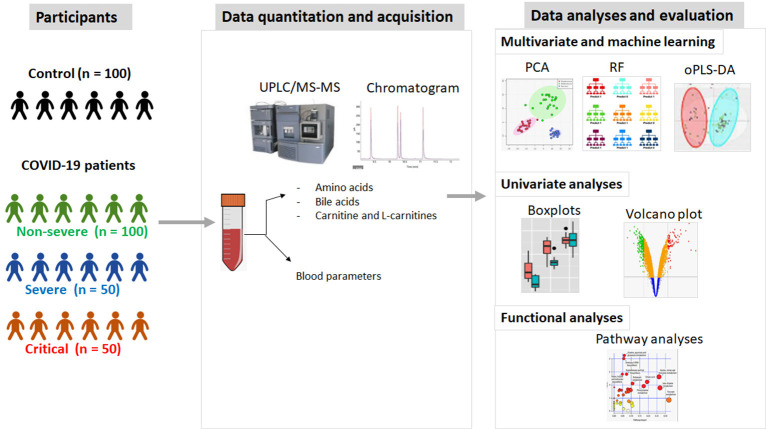
Given this knowledge gap, we performed targeted metabolomics profiling and then used machine learning models and biostatistics to characterize the alteration patterns of 50 metabolites and 17 blood parameters measured in a cohort of 295 human subjects. They were categorized into healthy controls, non-severe, severe and critical groups with their outcomes. Subject's demographic and clinical data were also used in the analyses to provide more robust predictive models.
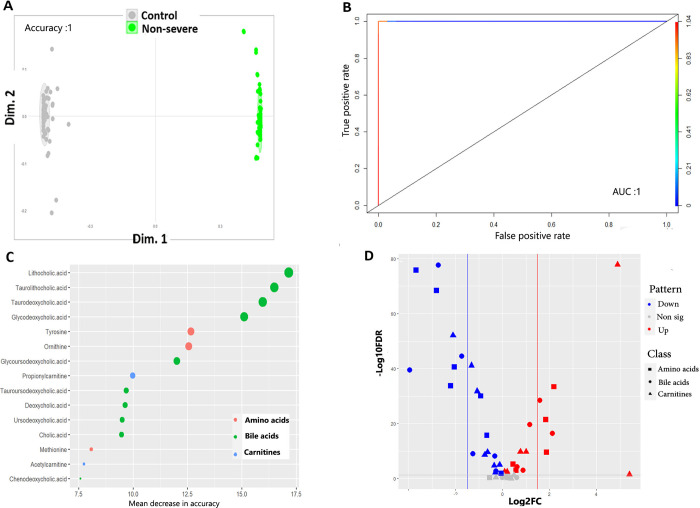
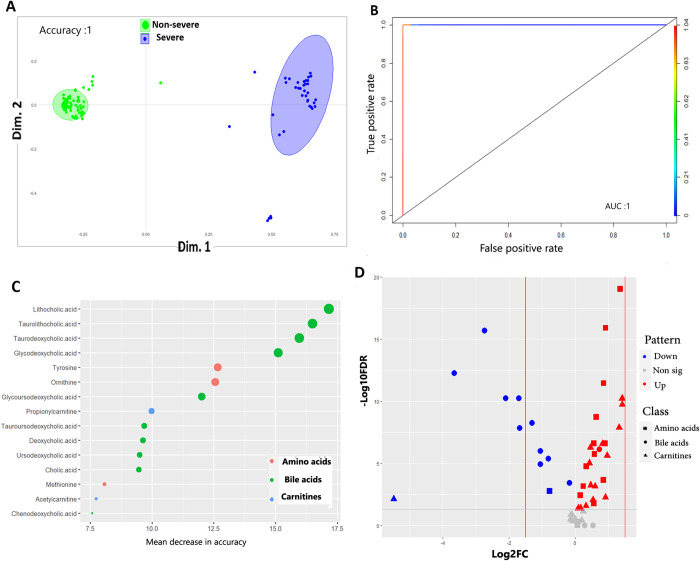
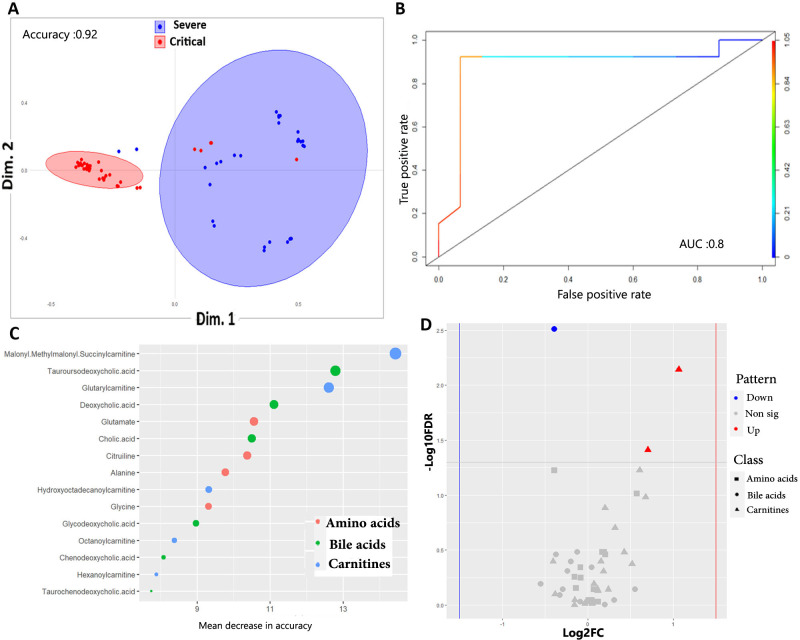
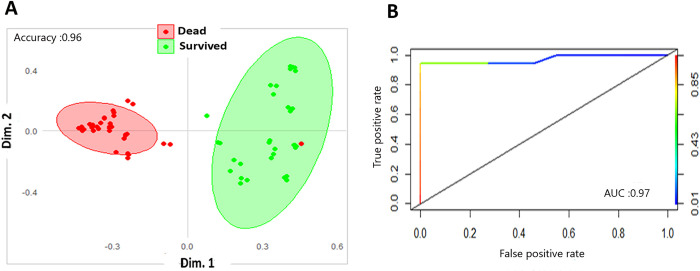
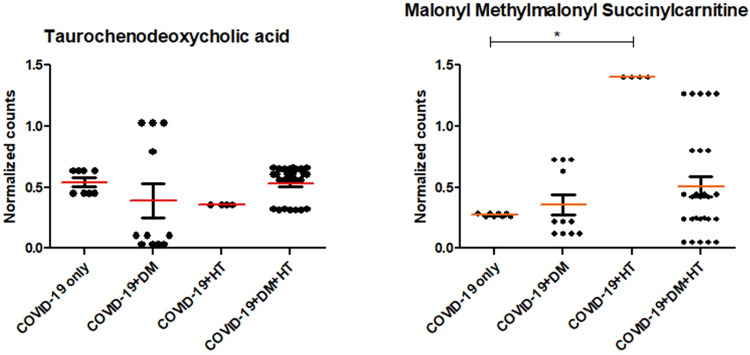
The non-severe and severe COVID-19 patients experienced the strongest changes in metabolite repertoire, whereas less intense changes occur during the critical phase. Panels of 15, 14, 2 and 2 key metabolites were identified as predictors for non-severe, severe, critical and dead patients, respectively. Specifically, arginine and malonyl methylmalonyl succinylcarnitine were significant biomarkers for the onset of COVID-19 infection and tauroursodeoxycholic acid were potential biomarkers for disease progression. Measuring blood parameters enhanced the predictive power of metabolic signatures during critical illness.
Metabolomic signatures are distinctive for each stage of COVID-19 infection. This has great translation potential as it opens new therapeutic and diagnostic prospective based on key metabolites.
在中国出现后,冠状病毒 SARS-CoV-2 席卷全球,导致数百万人死亡的全球健康危机。COVID-19 的临床表现严重程度不同,从轻度症状到严重疾病不等。尽管已经报道代谢紊乱是宿主对 COVID-19 感染反应的一部分,但很少有数据描述感染过程中宿主代谢物的阶段性变化,以及如何根据严重程度对患者进行分层。
鉴于这一知识空白,我们进行了靶向代谢组学分析,然后使用机器学习模型和生物统计学方法来描述 295 个人类研究对象的 50 种代谢物和 17 种血液参数的改变模式。这些研究对象分为健康对照组、非重症组、重症组和危重组,并根据他们的结局进行分类。研究对象的人口统计学和临床数据也用于分析,以提供更稳健的预测模型。
非重症和重症 COVID-19 患者的代谢物谱变化最强,而在危重症阶段变化较弱。15、14、2 和 2 种关键代谢物的组合被确定为非重症、重症、危重症和死亡患者的预测因子。具体而言,精氨酸和丙二酰基甲基丙二酰基琥珀酰肉碱是 COVID-19 感染发作的重要生物标志物,牛磺熊脱氧胆酸是疾病进展的潜在生物标志物。测量血液参数增强了代谢特征在危重病期间的预测能力。
代谢组学特征在 COVID-19 感染的每个阶段都是独特的。这具有很大的转化潜力,因为它基于关键代谢物为治疗和诊断开辟了新的前景。