Stringer-Reasor Erica M, May Jori E, Olariu Eva, Caterinicchia Valerie, Li Yufeng, Chen Dongquan, Della Manna Deborah L, Rocque Gabrielle B, Vaklavas Christos, Falkson Carla I, Nabell Lisle M, Acosta Edward P, Forero-Torres Andres, Yang Eddy S
Department of Medicine, Division of Hematology Oncology, University of Alabama at Birmingham, Birmingham, AL, USA.
Department of Medicine, Brookwood Baptist Health, Birmingham, AL, USA.
Breast Cancer Res. 2021 Mar 4;23(1):30. doi: 10.1186/s13058-021-01408-9.
Poly (ADP-ribose)-polymerase inhibitors (PARPi) have been approved for cancer patients with germline BRCA1/2 (gBRCA1/2) mutations, and efforts to expand the utility of PARPi beyond BRCA1/2 are ongoing. In preclinical models of triple-negative breast cancer (TNBC) with intact DNA repair, we have previously shown an induced synthetic lethality with combined EGFR inhibition and PARPi. Here, we report the safety and clinical activity of lapatinib and veliparib in patients with metastatic TNBC.
A first-in-human, pilot study of lapatinib and veliparib was conducted in metastatic TNBC (NCT02158507). The primary endpoint was safety and tolerability. Secondary endpoints were objective response rates and pharmacokinetic evaluation. Gene expression analysis of pre-treatment tumor biopsies was performed. Key eligibility included TNBC patients with measurable disease and prior anthracycline-based and taxane chemotherapy. Patients with gBRCA1/2 mutations were excluded.
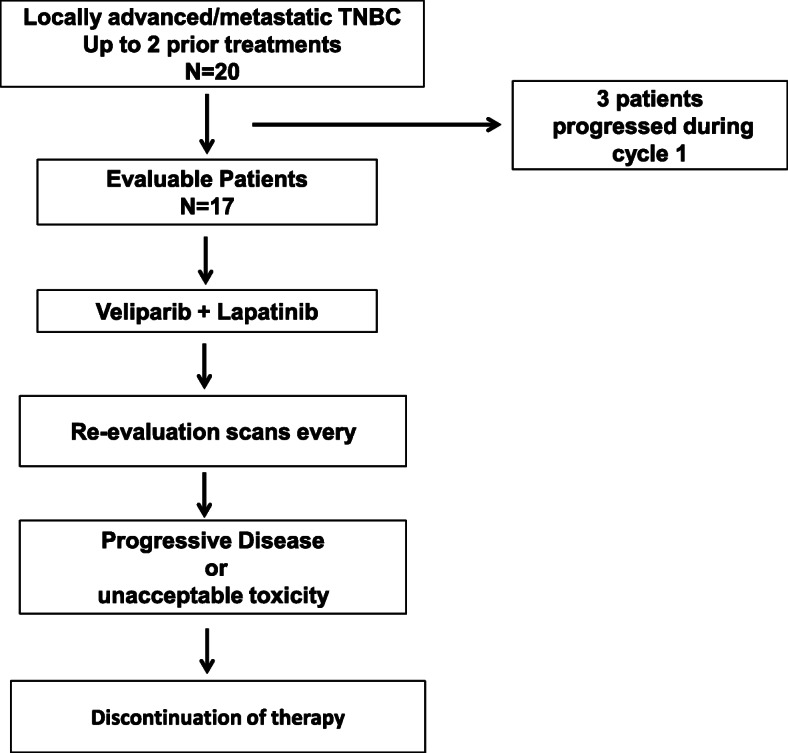
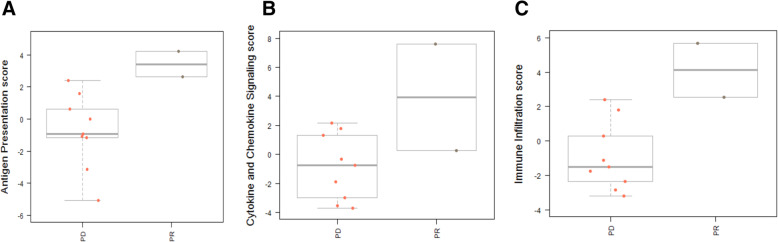
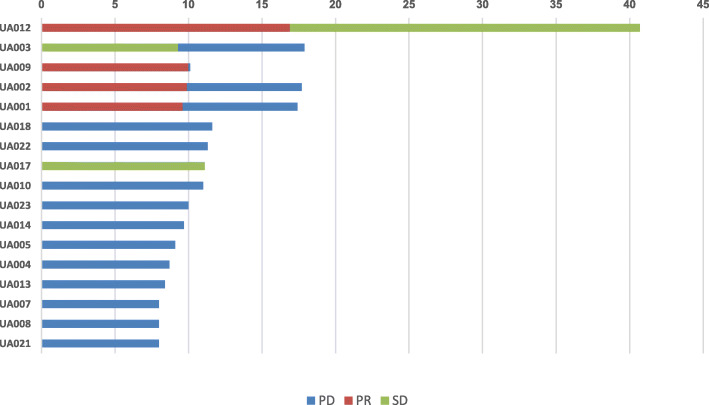
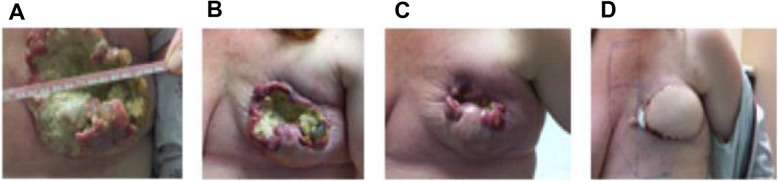
Twenty patients were enrolled, of which 17 were evaluable for response. The median number of prior therapies in the metastatic setting was 1 (range 0-2). Fifty percent of patients were Caucasian, 45% African-American, and 5% Hispanic. Of evaluable patients, 4 demonstrated a partial response and 2 had stable disease. There were no dose-limiting toxicities. Most AEs were limited to grade 1 or 2 and no drug-drug interactions noted. Exploratory gene expression analysis suggested baseline DNA repair pathway score was lower and baseline immunogenicity was higher in the responders compared to non-responders.
Lapatinib plus veliparib therapy has a manageable safety profile and promising antitumor activity in advanced TNBC. Further investigation of dual therapy with EGFR inhibition and PARP inhibition is needed.
ClinicalTrials.gov , NCT02158507 . Registered on 12 September 2014.
聚(ADP - 核糖)聚合酶抑制剂(PARPi)已被批准用于患有种系BRCA1/2(gBRCA1/2)突变的癌症患者,并且正在努力扩大PARPi在BRCA1/2以外的应用。在具有完整DNA修复功能的三阴性乳腺癌(TNBC)临床前模型中,我们之前已经证明联合表皮生长因子受体(EGFR)抑制和PARPi可诱导合成致死性。在此,我们报告拉帕替尼和维利帕尼在转移性TNBC患者中的安全性和临床活性。
在转移性TNBC中开展了一项关于拉帕替尼和维利帕尼的首次人体试验性研究(NCT02158507)。主要终点是安全性和耐受性。次要终点是客观缓解率和药代动力学评估。对治疗前肿瘤活检样本进行基因表达分析。主要入选标准包括患有可测量疾病且先前接受过基于蒽环类和紫杉烷的化疗的TNBC患者。排除gBRCA1/2突变患者。
入组20例患者,其中17例可评估疗效。转移性疾病先前治疗的中位数为1次(范围0 - 2次)。50%的患者为白种人,45%为非裔美国人,5%为西班牙裔。在可评估疗效的患者中,4例出现部分缓解,2例病情稳定。没有剂量限制性毒性。大多数不良事件限于1级或2级,未发现药物相互作用。探索性基因表达分析表明,与无反应者相比,反应者的基线DNA修复途径评分较低,基线免疫原性较高。
拉帕替尼加维利帕尼治疗在晚期TNBC中具有可控的安全性和有前景的抗肿瘤活性。需要对EGFR抑制和PARP抑制的联合治疗进行进一步研究。
ClinicalTrials.gov,NCT02158507。于2014年9月12日注册。