CNRS, UMR 9018, Gustave Roussy and Université Paris-Saclay, 39 Rue Camille Desmoulins, F-94805, Villejuif, France.
Inserm, U1170, Gustave Roussy, 39 Rue Camille Desmoulins, F-94805, Villejuif, France.
Sci Rep. 2021 Mar 4;11(1):5227. doi: 10.1038/s41598-021-84270-1.
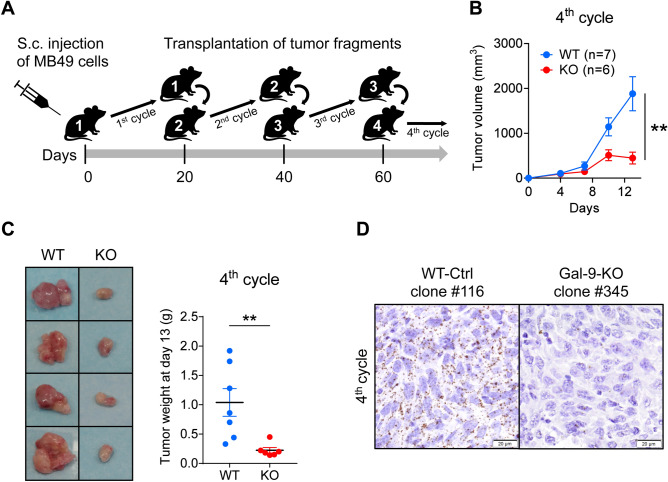
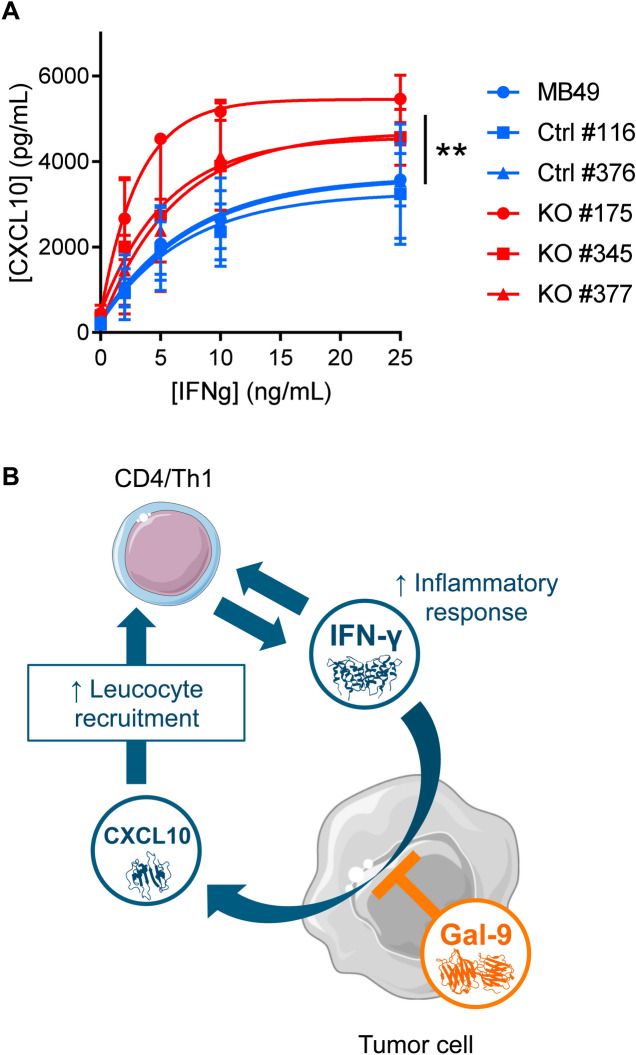
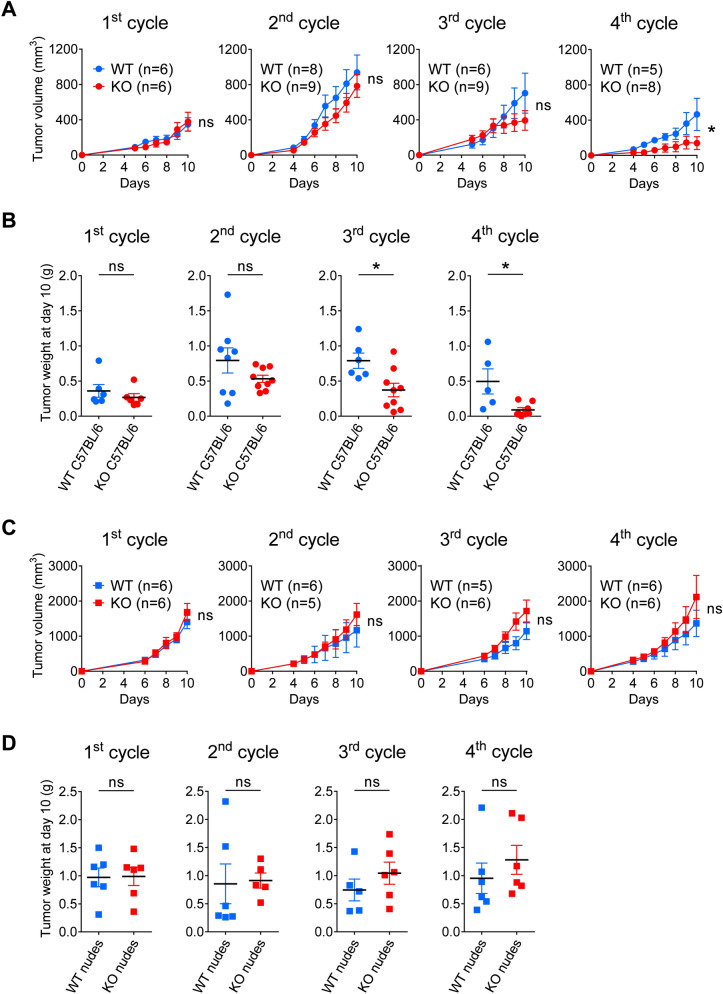
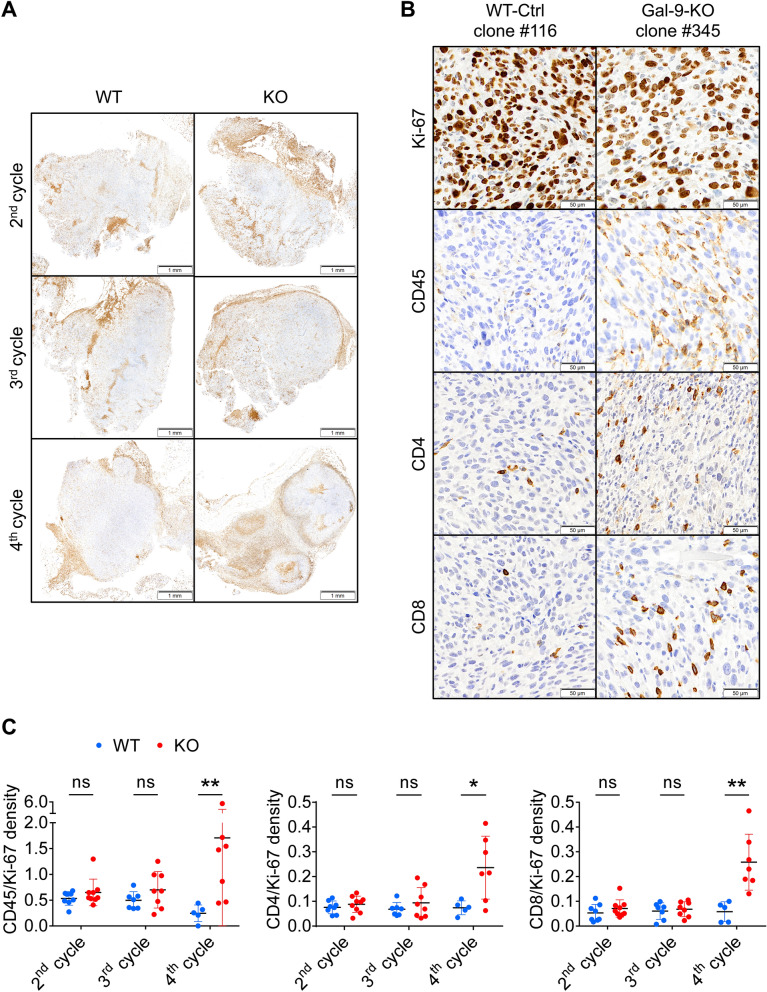
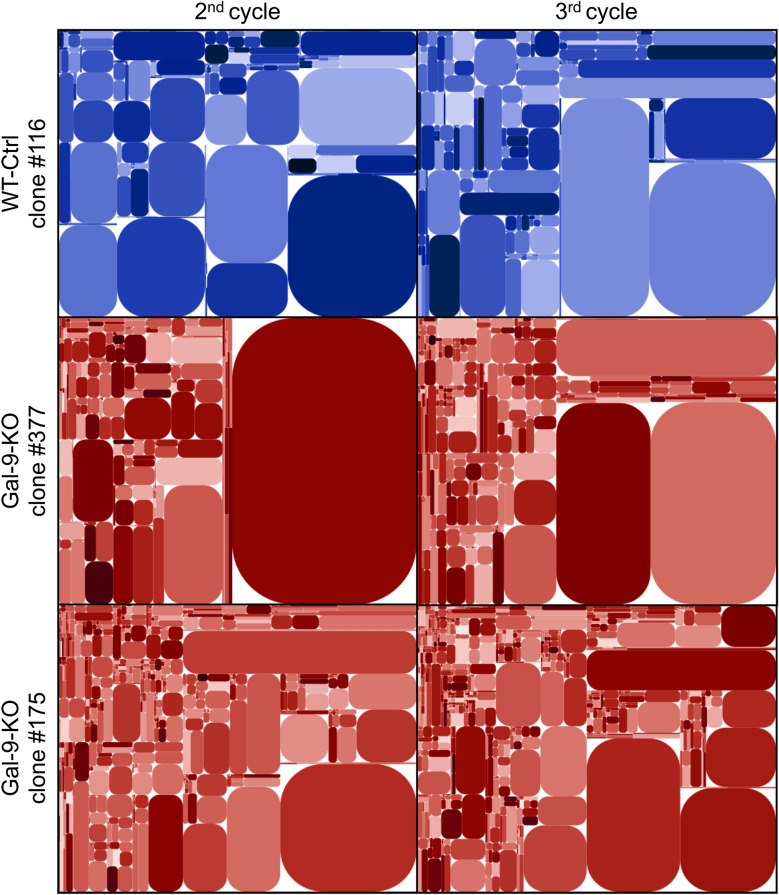
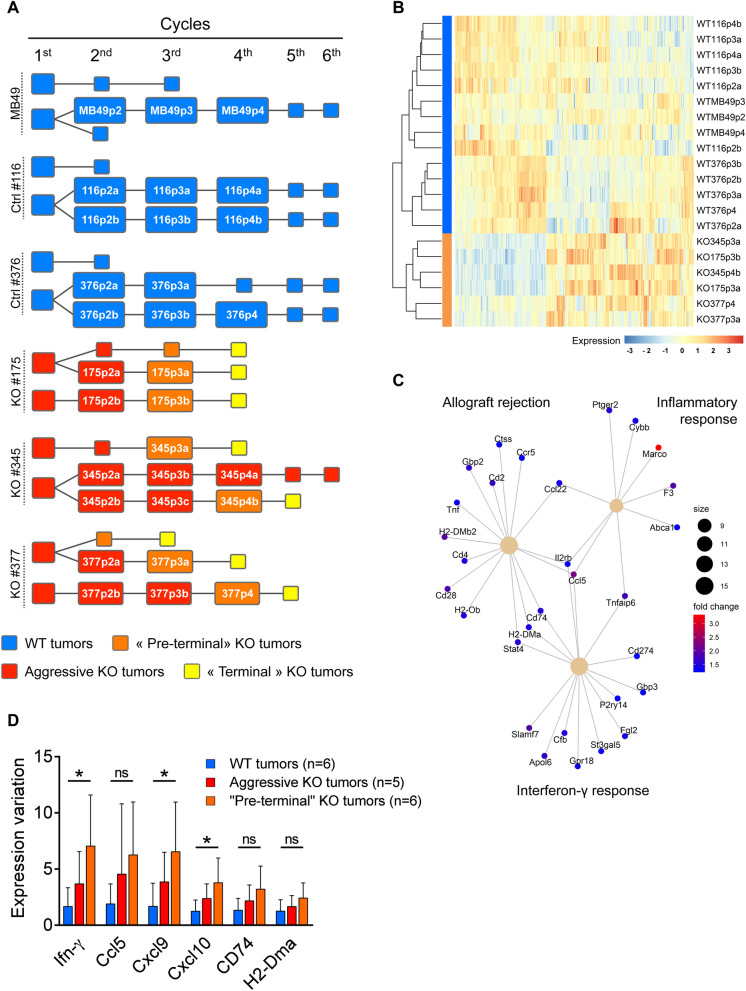
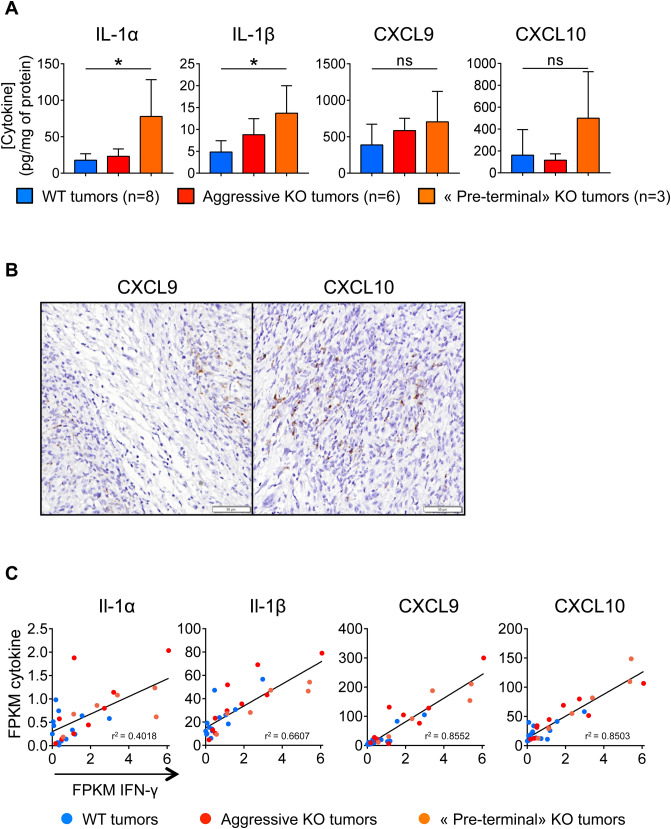
Mechanisms of tumor immune escape are quite diverse and require specific approaches for their exploration in syngeneic tumor models. In several human malignancies, galectin-9 (gal-9) is suspected to contribute to the immune escape. However, in contrast with what has been done for the infiltrating cells, the contribution of gal-9 produced by malignant cells has never been demonstrated in an animal model. Therefore, we derived isogenic clones-either positive or negative for gal-9-from the MB49 murine bladder carcinoma cell line. A progressive and consistent reduction of tumor growth was observed when gal-9-KO cells were subjected to serial transplantations into syngeneic mice. In contrast, tumor growth was unaffected during parallel serial transplantations into nude mice, thus linking tumor inhibition to the enhancement of the immune response against gal-9-KO tumors. This stronger immune response was at least in part explained by changing patterns of response to interferon-γ. One consistent change was a more abundant production of CXCL10, a major inflammatory factor whose production is often induced by interferon-γ. Overall, these observations demonstrate for the first time that serial transplantation into syngeneic mice can be a valuable experimental approach for the exploration of novel mechanisms of tumor immune escape.
肿瘤免疫逃逸的机制多种多样,需要针对其在同基因肿瘤模型中的探索采用特定的方法。在几种人类恶性肿瘤中,半乳糖凝集素-9(galectin-9,gal-9)被怀疑有助于免疫逃逸。然而,与浸润细胞所做的不同,恶性细胞产生的 gal-9 的贡献从未在动物模型中得到证明。因此,我们从 MB49 小鼠膀胱癌细胞系中衍生出了同基因克隆——gal-9 阳性或阴性。当 gal-9-KO 细胞被连续移植到同基因小鼠中时,观察到肿瘤生长的逐渐和一致减少。相比之下,在平行连续移植到裸鼠中时,肿瘤生长不受影响,因此将肿瘤抑制与针对 gal-9-KO 肿瘤的免疫反应增强联系起来。这种更强的免疫反应至少部分解释了干扰素-γ反应模式的变化。一个一致的变化是 CXCL10 的产生更为丰富,CXCL10 是一种主要的炎症因子,其产生通常由干扰素-γ诱导。总的来说,这些观察结果首次证明,连续移植到同基因小鼠中可以成为探索肿瘤免疫逃逸新机制的有价值的实验方法。