University Centre of Legal Medicine, Lausanne-Geneva, Rue Michel-Servet 1, 1211, Geneva, Switzerland.
University Centre of Legal Medicine, Lausanne-Geneva, Rue Vulliette 04, 1000, Lausanne, Switzerland.
Sci Rep. 2021 Mar 4;11(1):5135. doi: 10.1038/s41598-021-84523-z.
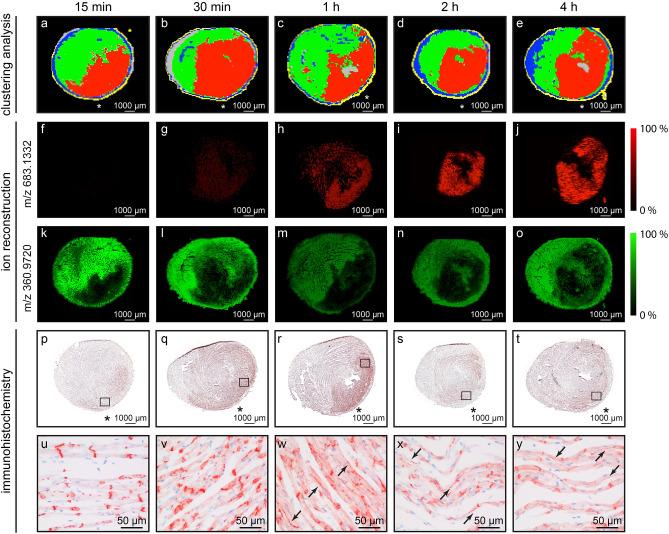
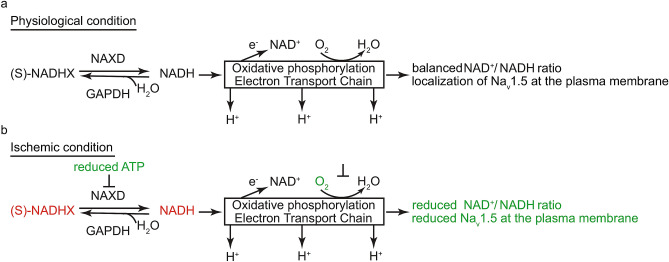
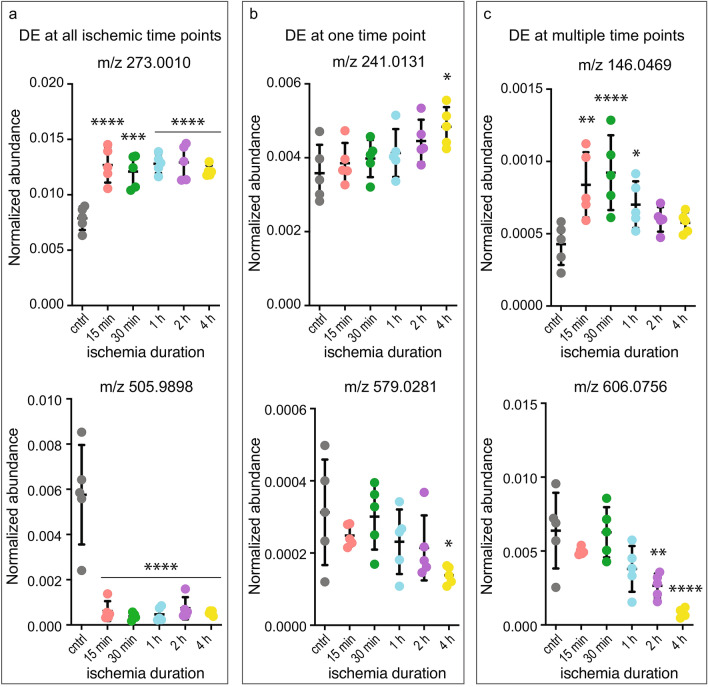
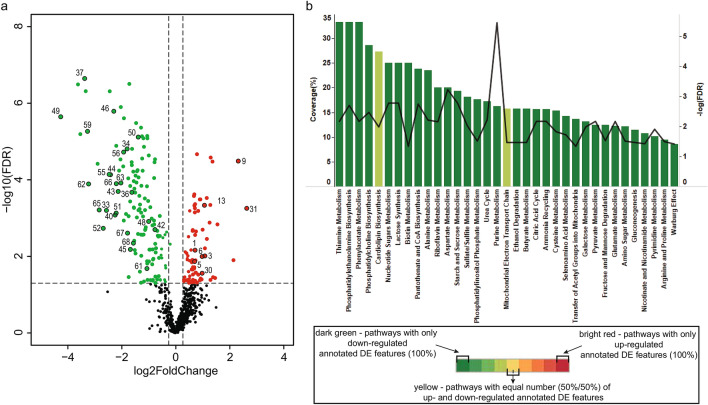
Diagnostics of myocardial infarction in human post-mortem hearts can be achieved only if ischemia persisted for at least 6-12 h when certain morphological changes appear in myocardium. The initial 4 h of ischemia is difficult to diagnose due to lack of a standardized method. Developing a panel of molecular tissue markers is a promising approach and can be accelerated by characterization of molecular changes. This study is the first untargeted metabolomic profiling of ischemic myocardium during the initial 4 h directly from tissue section. Ischemic hearts from an ex-vivo Langendorff model were analysed using matrix assisted laser desorption/ionization imaging mass spectrometry (MALDI IMS) at 15 min, 30 min, 1 h, 2 h, and 4 h. Region-specific molecular changes were identified even in absence of evident histological lesions and were segregated by unsupervised cluster analysis. Significantly differentially expressed features were detected by multivariate analysis starting at 15 min while their number increased with prolonged ischemia. The biggest significant increase at 15 min was observed for m/z 682.1294 (likely corresponding to S-NADHX-a damage product of nicotinamide adenine dinucleotide (NADH)). Based on the previously reported role of NAD/NADH ratio in regulating localization of the sodium channel (Na1.5) at the plasma membrane, Na1.5 was evaluated by immunofluorescence. As expected, a fainter signal was observed at the plasma membrane in the predicted ischemic region starting 30 min of ischemia and the change became the most pronounced by 4 h. Metabolomic changes occur early during ischemia, can assist in identifying markers for post-mortem diagnostics and improve understanding of molecular mechanisms.
只有在缺血持续至少 6-12 小时,心肌出现某些形态变化时,才能在人类死后心脏中诊断心肌梗死。由于缺乏标准化方法,最初 4 小时的缺血很难诊断。开发分子组织标志物组合是一种很有前途的方法,可以通过对分子变化的特征描述来加速。本研究是首次在组织切片上直接对缺血心肌在最初 4 小时内进行无靶向代谢组学分析。使用基质辅助激光解吸/电离成像质谱 (MALDI IMS) 在 15 分钟、30 分钟、1 小时、2 小时和 4 小时时分析来自离体 Langendorff 模型的缺血心脏。即使没有明显的组织学损伤,也可以通过非监督聚类分析来识别区域特异性分子变化。通过多元分析从 15 分钟开始检测到差异显著表达的特征,随着缺血时间的延长,其数量增加。在 15 分钟时观察到最大的显著增加,m/z 682.1294(可能对应于烟酰胺腺嘌呤二核苷酸(NADH)的 S-NADHX-a 损伤产物)。基于先前报道的 NAD/NADH 比值在调节钠离子通道 (Na1.5) 在质膜上定位的作用,通过免疫荧光评估 Na1.5。正如预期的那样,在缺血预测区域的质膜上观察到的信号从缺血 30 分钟开始变弱,到 4 小时时变化变得最为明显。代谢组学变化在缺血早期发生,可以协助识别用于死后诊断的标志物,并增进对分子机制的理解。