Valle-Martos Rosario, Valle Miguel, Martos Rosario, Cañete Ramón, Jiménez-Reina Luis, Cañete María Dolores
Maimonides Biomedical Research Institute of Córdoba, University of Cordoba, Córdoba, Spain.
Valle de los Pedroches Hospital, Maimonides Biomedical Research Institute of Córdoba, Córdoba, Spain.
Front Pediatr. 2021 Feb 16;9:629346. doi: 10.3389/fped.2021.629346. eCollection 2021.
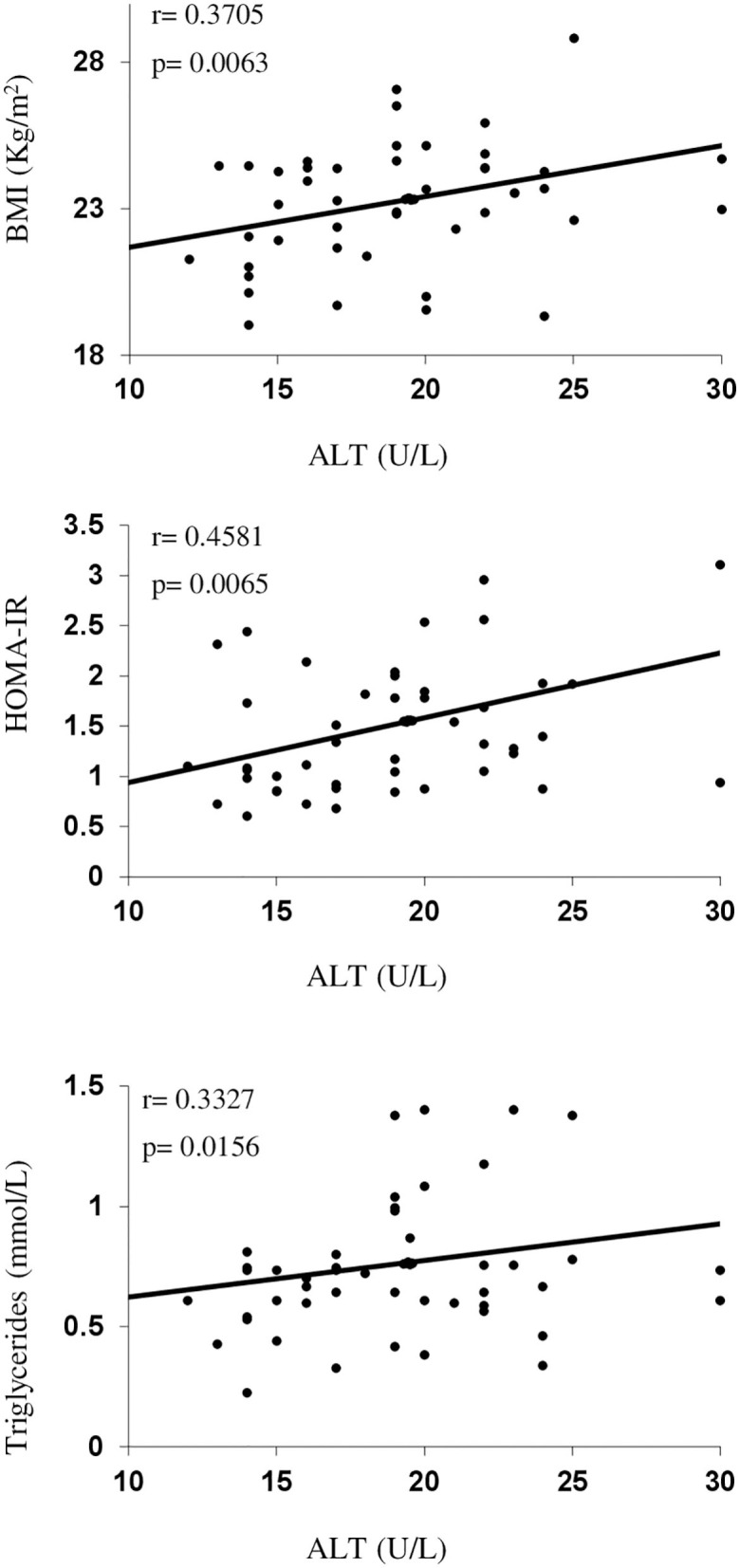
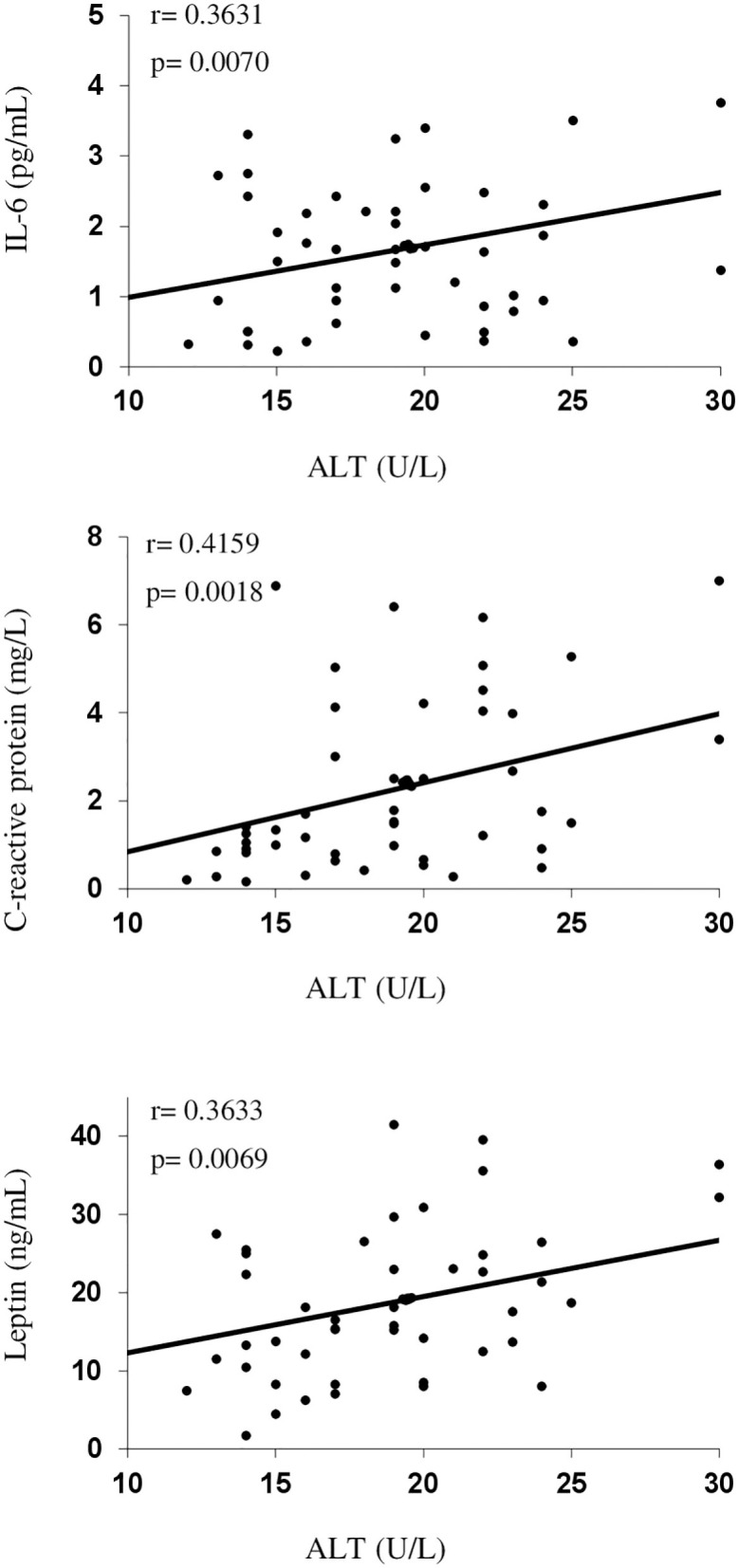
Metabolic syndrome (MetS) can start in children with obesity at very young ages. Non-alcoholic fatty liver disease (NAFLD) is considered to be the hepatic component of metabolic syndrome. If left untreated, the clinical course of NAFLD can be progressive and can become chronic if not detected at an early stage. We aimed to quantify the differences in liver enzymes between prepubertal children with obesity and children with normal weight to determine any associations between them and parameters related to MetS, adipokines, or markers of endothelial dysfunction and inflammation. This cross-sectional study included 54 prepuberal children with obesity (aged 6-9 years) and 54 children with normal weight, matched by age and sex. Liver enzymes, C-reactive protein (CRP), interleukin-6, soluble intercellular adhesion molecule-1 (sICAM-1), adipokines, and parameters related to metabolic syndrome (MetS) were all measured. Alanine aminotransferase (ALT) levels, serum butyryl cholinesterase (BChE), leptin, CRP, sICAM-1, triglycerides, blood pressure, and homeostasis model assessment for insulin resistance were significantly higher in children with obesity, while Apolipoprotein A-1, HDL-cholesterol, and adiponectin were significantly lower. In the children with obesity group, ALT and BChE levels correlated with anthropometric measurements, insulin resistance, and lipid parameters, leptin, interleukin-6, CRP, and sICAM-1 while BChE levels negatively correlated with adiponectin. Compared to children with normal weight, prepubertal children with obesity had elevated values for liver enzymes, leptin, markers of insulin resistance, inflammation, and endothelial dysfunction, and variables associated with MetS. There was also a correlation between these disorders and liver enzyme levels.
代谢综合征(MetS)在肥胖儿童很小的时候就可能开始出现。非酒精性脂肪性肝病(NAFLD)被认为是代谢综合征的肝脏组成部分。如果不进行治疗,NAFLD的临床病程可能会进展,如果早期未被发现,可能会发展为慢性疾病。我们旨在量化肥胖青春期前儿童与正常体重儿童之间肝酶的差异,以确定它们与代谢综合征、脂肪因子或内皮功能障碍和炎症标志物相关参数之间的任何关联。这项横断面研究纳入了54名肥胖青春期前儿童(6至9岁)和54名正常体重儿童,根据年龄和性别进行匹配。测量了肝酶、C反应蛋白(CRP)、白细胞介素-6、可溶性细胞间黏附分子-1(sICAM-1)、脂肪因子以及与代谢综合征(MetS)相关的参数。肥胖儿童的丙氨酸氨基转移酶(ALT)水平、血清丁酰胆碱酯酶(BChE)、瘦素、CRP、sICAM-1、甘油三酯、血压和胰岛素抵抗的稳态模型评估值显著更高,而载脂蛋白A-1、高密度脂蛋白胆固醇和脂联素则显著更低。在肥胖儿童组中,ALT和BChE水平与人体测量指标、胰岛素抵抗和脂质参数、瘦素、白细胞介素-6、CRP和sICAM-1相关,而BChE水平与脂联素呈负相关。与正常体重儿童相比,肥胖青春期前儿童的肝酶、瘦素、胰岛素抵抗标志物、炎症和内皮功能障碍指标以及与MetS相关的变量值升高。这些疾病与肝酶水平之间也存在相关性。