White Katherine A, Nelvagal Hemanth R, Poole Timothy A, Lu Bin, Johnson Tyler B, Davis Samantha, Pratt Melissa A, Brudvig Jon, Assis Ana B, Likhite Shibi, Meyer Kathrin, Kaspar Brian K, Cooper Jonathan D, Wang Shaomei, Weimer Jill M
Pediatrics and Rare Diseases Group, Sanford Research, Sioux Falls, SD 57104, USA.
Pediatric Storage Disorders Laboratory, Division of Genetics and Genomics, Department of Pediatrics, Washington University School of Medicine, St. Louis, MO 63110, USA.
Mol Ther Methods Clin Dev. 2021 Jan 5;20:497-507. doi: 10.1016/j.omtm.2020.12.014. eCollection 2021 Mar 12.
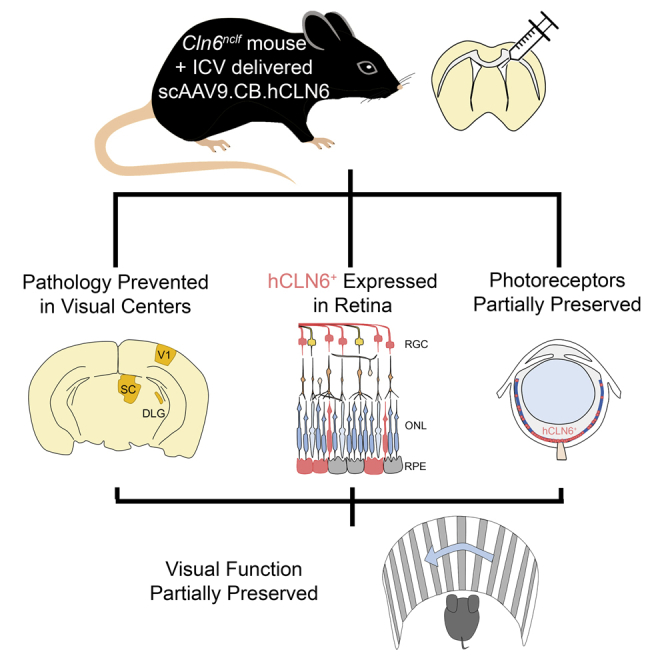
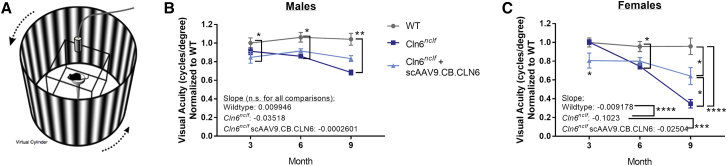
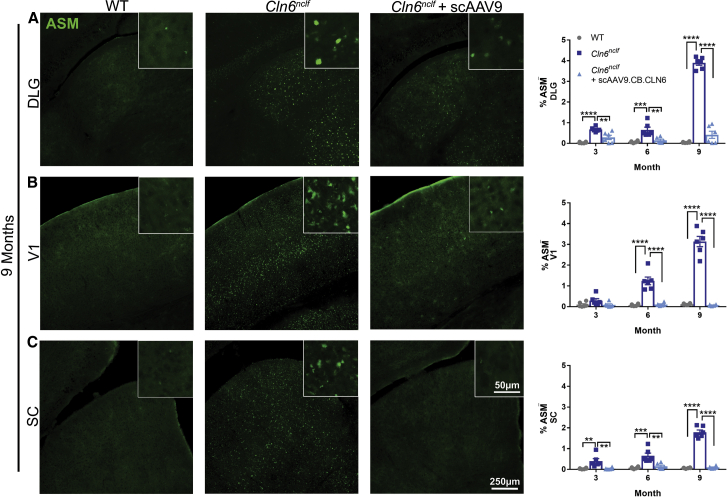
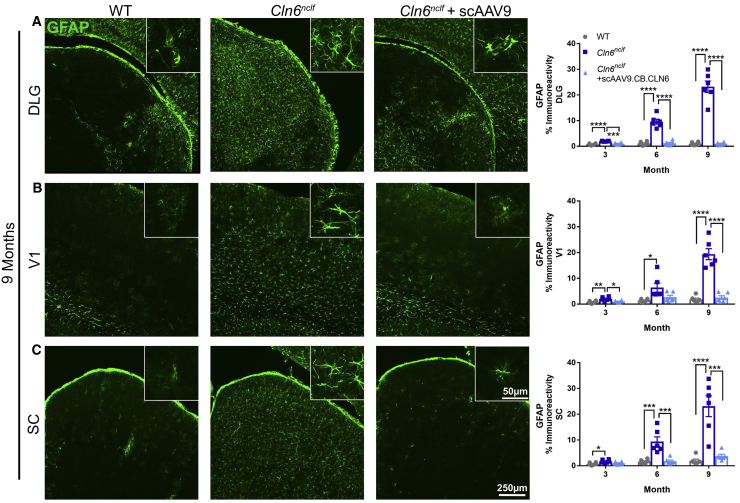
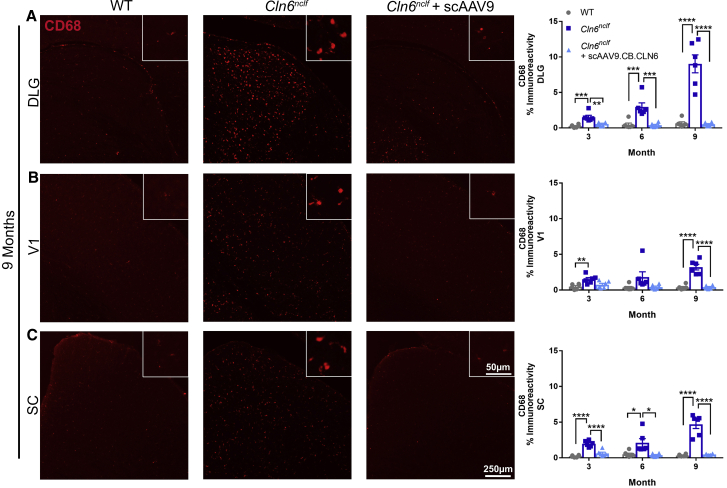
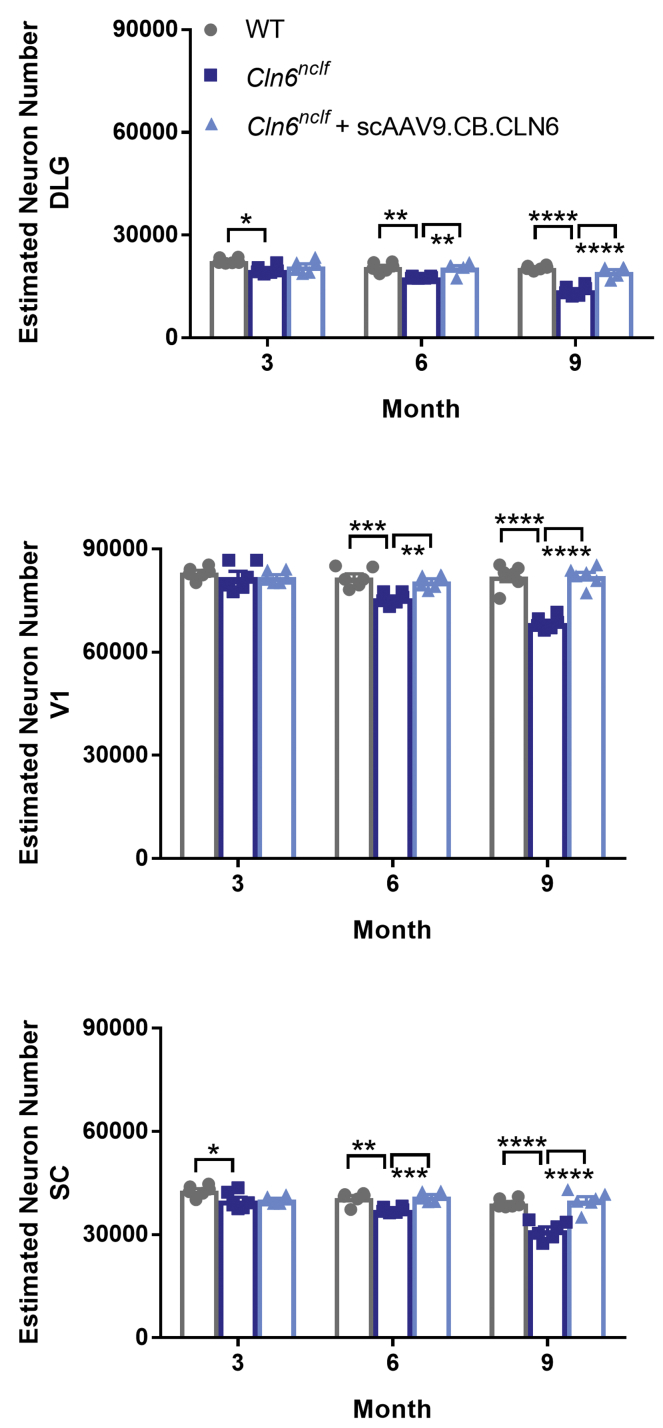
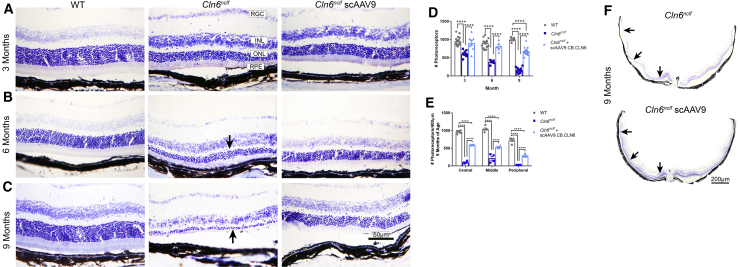
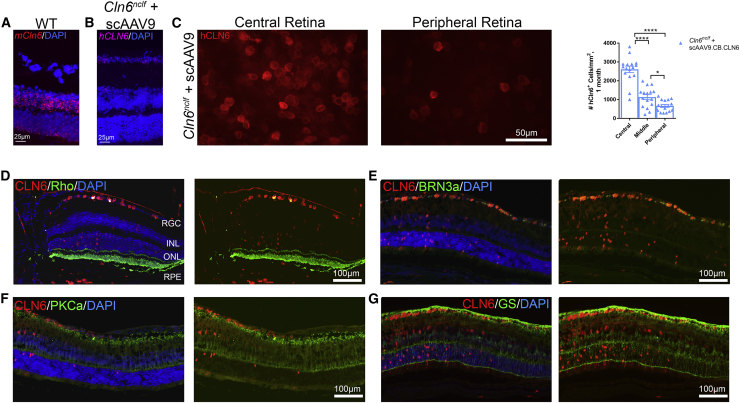
Batten disease is a family of rare, fatal, neuropediatric diseases presenting with memory/learning decline, blindness, and loss of motor function. Recently, we reported the use of an AAV9-mediated gene therapy that prevents disease progression in a mouse model of CLN6-Batten disease ( ), restoring lifespans in treated animals. Despite the success of our viral-mediated gene therapy, the dosing strategy was optimized for delivery to the brain parenchyma and may limit the therapeutic potential to other disease-relevant tissues, such as the eye. Here, we examine whether cerebrospinal fluid (CSF) delivery of scAAV9.CB.CLN6 is sufficient to ameliorate visual deficits in mice. We show that intracerebroventricular (i.c.v.) delivery of scAAV9.CB.CLN6 completely prevents hallmark Batten disease pathology in the visual processing centers of the brain, preserving neurons of the superior colliculus, thalamus, and cerebral cortex. Importantly, i.c.v.-delivered scAAV9.CB.CLN6 also expresses in many cells throughout the central retina, preserving many photoreceptors typically lost in mice. Lastly, scAAV9.CB.CLN6 treatment partially preserved visual acuity in mice as measured by optokinetic response. Taken together, we report the first instance of CSF-delivered viral gene reaching and rescuing pathology in both the brain parenchyma and retinal neurons, thereby partially slowing visual deterioration.
巴滕病是一类罕见的、致命的神经儿科疾病,表现为记忆/学习能力下降、失明和运动功能丧失。最近,我们报道了使用腺相关病毒9(AAV9)介导的基因疗法,该疗法可防止CLN6型巴滕病小鼠模型中的疾病进展,延长治疗动物的寿命。尽管我们的病毒介导基因疗法取得了成功,但给药策略是针对脑实质递送进行优化的,可能会限制对其他与疾病相关组织(如眼睛)的治疗潜力。在此,我们研究通过脑脊液(CSF)递送单链AAV9.CB.CLN6是否足以改善[具体小鼠品系]小鼠的视觉缺陷。我们发现,通过脑室内(i.c.v.)递送单链AAV9.CB.CLN6可完全预防巴滕病在大脑视觉处理中心的典型病理变化,保护上丘、丘脑和大脑皮层的神经元。重要的是,通过i.c.v.递送的单链AAV9.CB.CLN6也在整个视网膜中央的许多细胞中表达,保护了[具体小鼠品系]小鼠中通常会丢失的许多光感受器。最后,通过视动反应测量,单链AAV9.CB.CLN6治疗部分保留了[具体小鼠品系]小鼠的视力。综上所述,我们报道了首次通过脑脊液递送病毒基因到达并挽救脑实质和视网膜神经元中的病理变化,从而部分减缓视觉退化的情况。