Bartosova Zdenka, Ertesvåg Helga, Nyfløt Eirin Lishaugen, Kämpe Kristoffer, Aasen Inga Marie, Bruheim Per
Department of Biotechnology and Food Science, NTNU Norwegian University of Science and Technology, 7491 Trondheim, Norway.
Biotechnology and Nanomedicine, SINTEF Industry, 4730 Trondheim, Norway.
Metabolites. 2021 Feb 25;11(3):135. doi: 10.3390/metabo11030135.
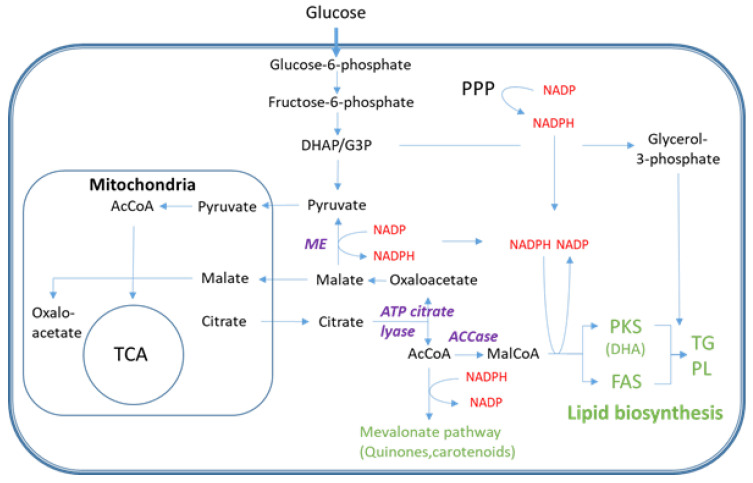
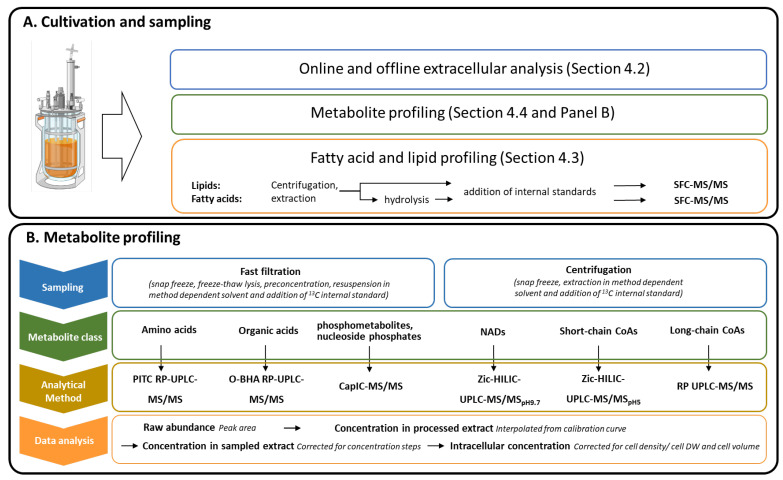
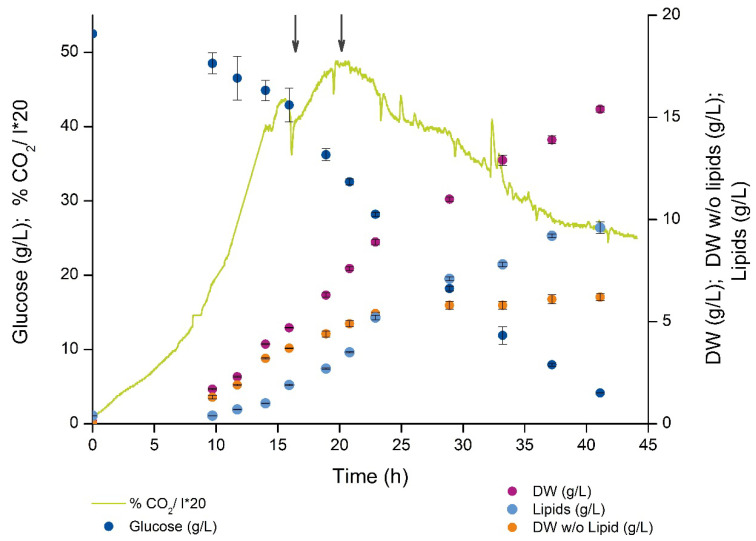
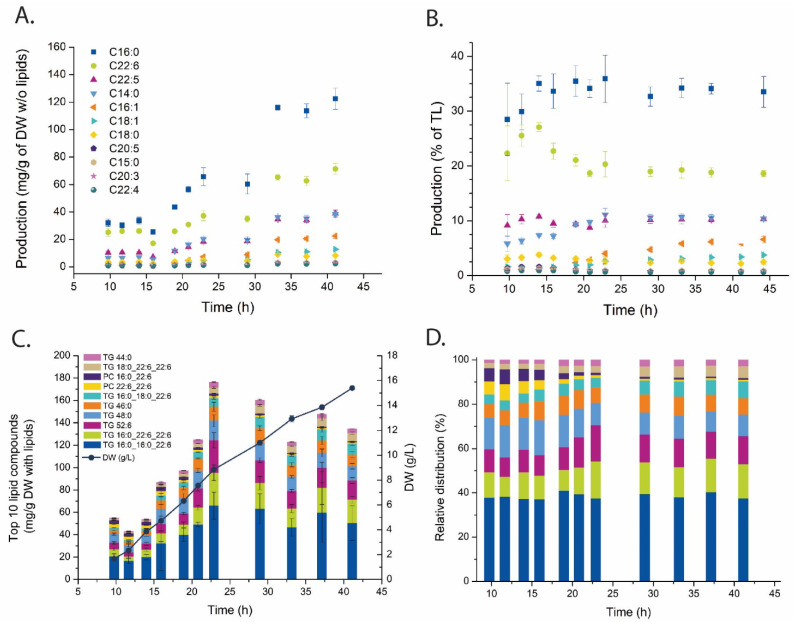
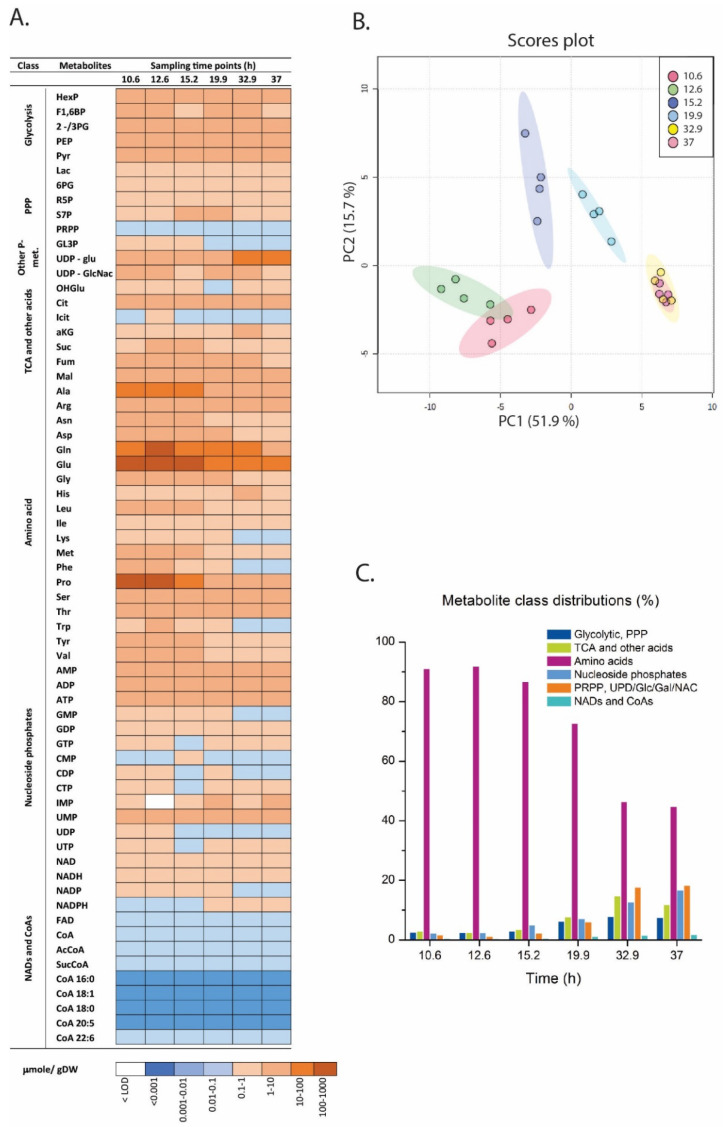
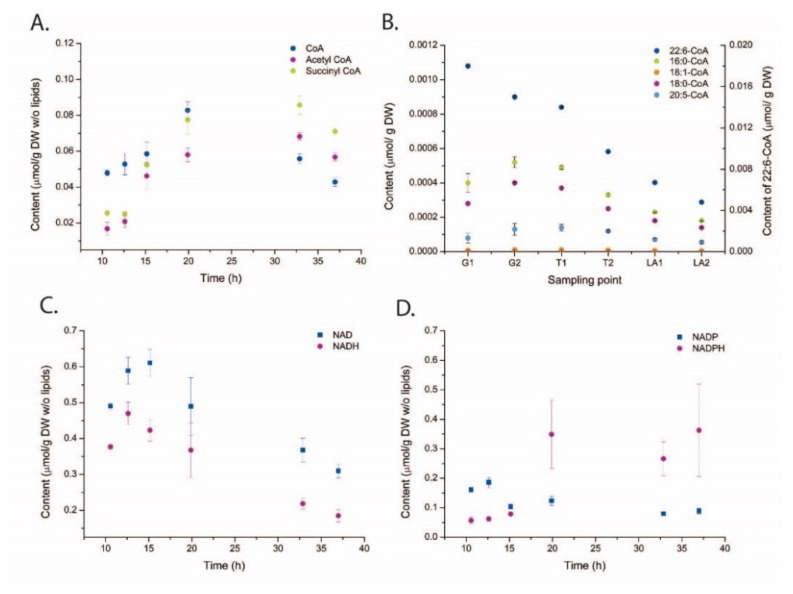
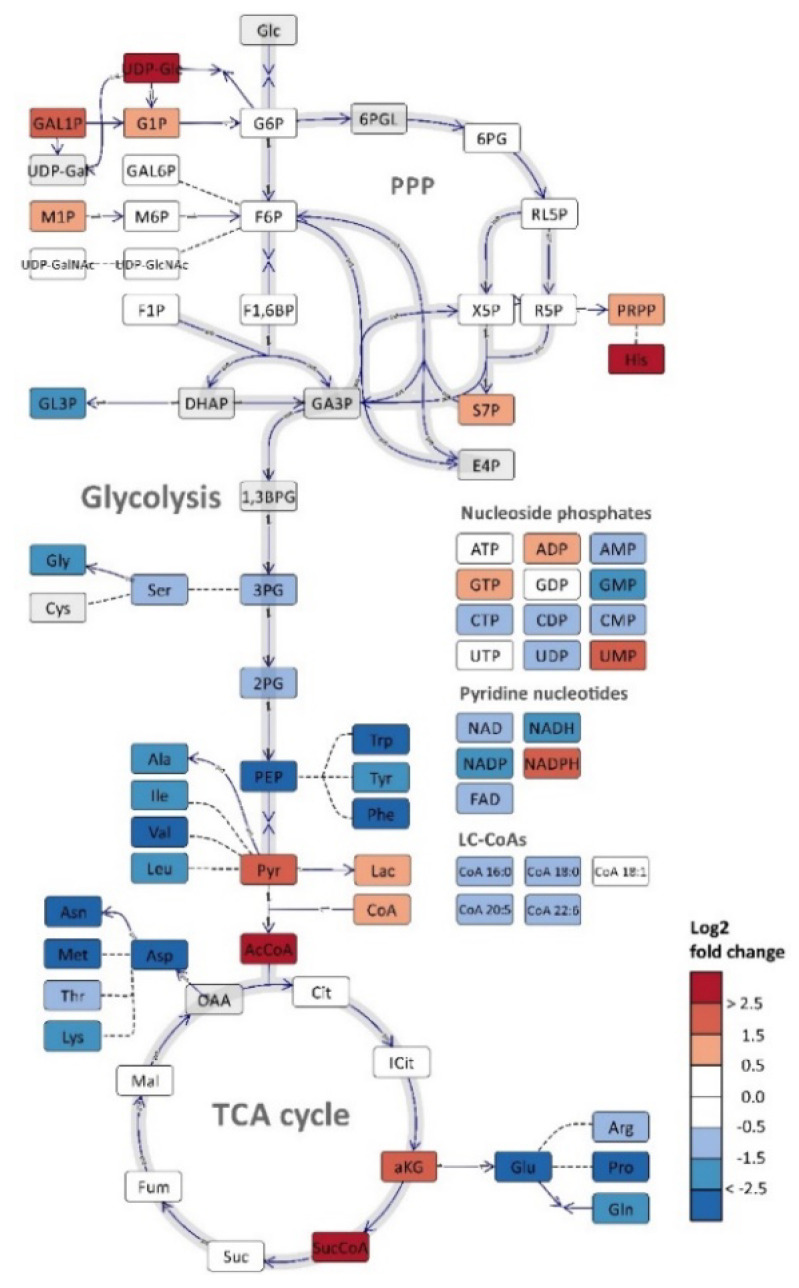
Thraustochytrids are marine heterotrophic microorganisms known for their potential to accumulate docosahexaenoic acid (DHA)-enriched lipids. There have been many attempts to improve thraustochytrid DHA bioprocesses, especially through traditional optimization of cultivation and media conditions. Nevertheless, thraustochytrid-based bioprocesses are still not commercially competitive for high volume-low cost production of DHA. Thus, it is realized that genetic and metabolic engineering strategies are needed for the development of commercially competitive thraustochytrid DHA cell factories. Here, we present an analytical workflow for high resolution phenotyping at metabolite and lipid levels to generate deeper insight into the thraustochytrid physiology, with particular focus on central carbon and redox metabolism. We use time-series sampling during unlimited growth and nitrogen depleted triggering of DHA synthesis and lipid accumulation (LA) to show-case our methodology. The mass spectrometric absolute quantitative metabolite profiling covered glycolytic, pentose phosphate pathway (PPP) and tricarboxylic acid cycle (TCA) metabolites, amino acids, complete (deoxy)nucleoside phosphate pools, CoA and NAD metabolites, while semiquantitative high-resolution supercritical fluid chromatography MS/MS was applied for the lipid profiling. Interestingly, trace amounts of a triacylglycerols (TG) with DHA incorporated in all three acyl positions was detected, while TGs 16:0_16:0_22:6 and 16:0_22:6_22:6 were among the dominant lipid species. The metabolite profiling data indicated that lipid accumulation is not limited by availability of the acyl chain carbon precursor acetyl-CoA nor reducing power (NADPH) but rather points to the TG head group precursor glycerol-3-phosphate as the potential cause at the metabolite level for the gradual decline in lipid production throughout the cultivation. This high-resolution phenotyping provides new knowledge of changes in the central metabolism during growth and LA in thraustochytrids and will guide target selection for metabolic engineering needed for further improvements of this DHA cell factory.
破囊壶菌是海洋异养微生物,以其积累富含二十二碳六烯酸(DHA)脂质的潜力而闻名。人们进行了许多尝试来改进破囊壶菌DHA生物工艺,特别是通过传统的培养和培养基条件优化。然而,基于破囊壶菌的生物工艺在高产量低成本生产DHA方面仍缺乏商业竞争力。因此,人们意识到需要遗传和代谢工程策略来开发具有商业竞争力的破囊壶菌DHA细胞工厂。在此,我们提出了一种用于代谢物和脂质水平高分辨率表型分析的分析工作流程,以更深入地了解破囊壶菌生理学,特别关注中心碳代谢和氧化还原代谢。我们在无限生长以及氮耗尽触发DHA合成和脂质积累(LA)期间进行时间序列采样,以展示我们的方法。质谱绝对定量代谢物分析涵盖糖酵解、磷酸戊糖途径(PPP)和三羧酸循环(TCA)代谢物、氨基酸、完整的(脱氧)核苷磷酸库、辅酶A和NAD代谢物,而半定量高分辨率超临界流体色谱-质谱/质谱用于脂质分析。有趣的是,检测到微量的三酰基甘油(TG),其中DHA存在于所有三个酰基位置,而TG 16:0_16:0_22:6和16:0_22:6_22:6是主要的脂质种类。代谢物分析数据表明,脂质积累不受酰基链碳前体乙酰辅酶A可用性或还原力(NADPH)的限制,而是指向TG头部基团前体3-磷酸甘油,这可能是整个培养过程中脂质产量逐渐下降在代谢物水平上的潜在原因。这种高分辨率表型分析提供了关于破囊壶菌生长和LA期间中心代谢变化的新知识,并将指导进一步改进这种DHA细胞工厂所需的代谢工程目标选择。