Bauer Peter, Lienhart Werner, Jost Samuel
Institute of Engineering Geodesy and Measurement Systems, Graz University of Technology, 8010 Graz, Austria.
Sensors (Basel). 2021 Feb 25;21(5):1622. doi: 10.3390/s21051622.
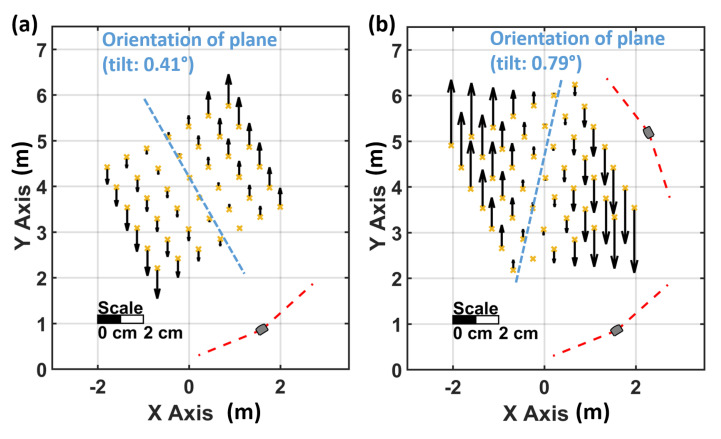
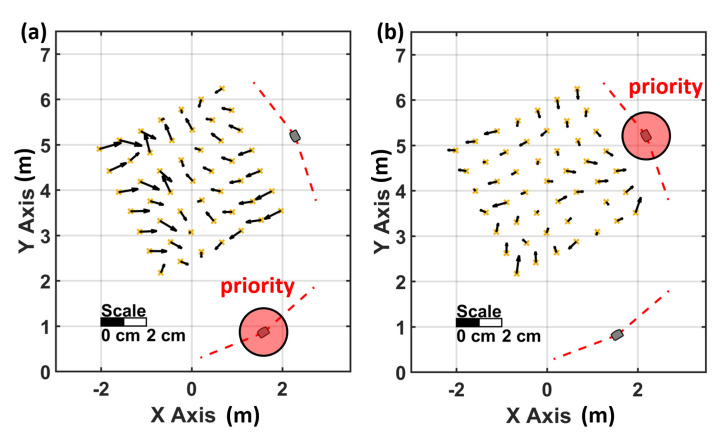
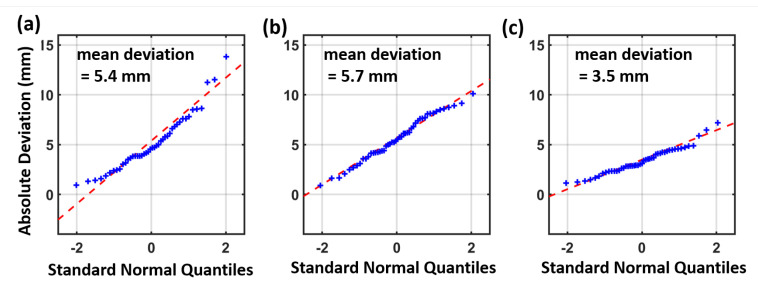
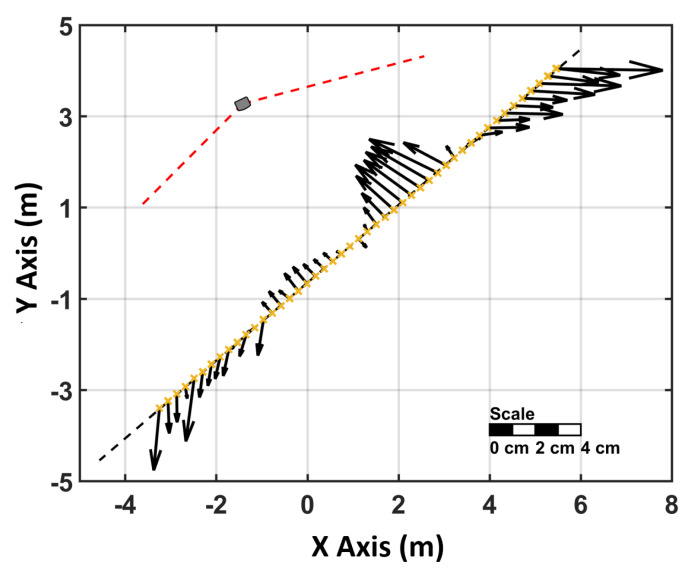
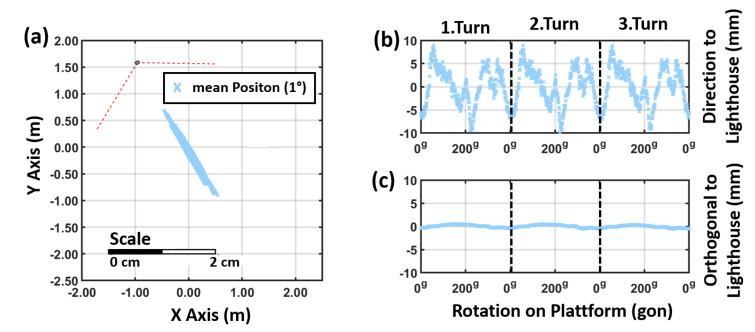
The usage of VR gear in mixed reality applications demands a high position and orientation accuracy of all devices to achieve a satisfying user experience. This paper investigates the system behaviour of the VR system HTC Vive Pro at a testing facility that is designed for the calibration of highly accurate positioning instruments like geodetic total stations, tilt sensors, geodetic gyroscopes or industrial laser scanners. Although the experiments show a high reproducibility of the position readings within a few millimetres, the VR system has systematic effects with magnitudes of several centimetres. A tilt of about 0.4∘ of the reference plane with respect to the horizontal plane was detected. Moreover, our results demonstrate that the tracking algorithm faces problems when several lighthouses are used.
在混合现实应用中使用虚拟现实设备需要所有设备具有较高的位置和方向精度,以实现令人满意的用户体验。本文在一个测试设施中研究了虚拟现实系统HTC Vive Pro的系统行为,该测试设施专为校准高精度定位仪器而设计,如大地测量全站仪、倾斜传感器、大地测量陀螺仪或工业激光扫描仪。尽管实验表明位置读数在几毫米内具有很高的可重复性,但该虚拟现实系统存在几厘米量级的系统效应。检测到参考平面相对于水平面约有0.4°的倾斜。此外,我们的结果表明,当使用多个灯塔时,跟踪算法会面临问题。